QUESTION IMAGE
Question
read the passage. then answer the question that follows.
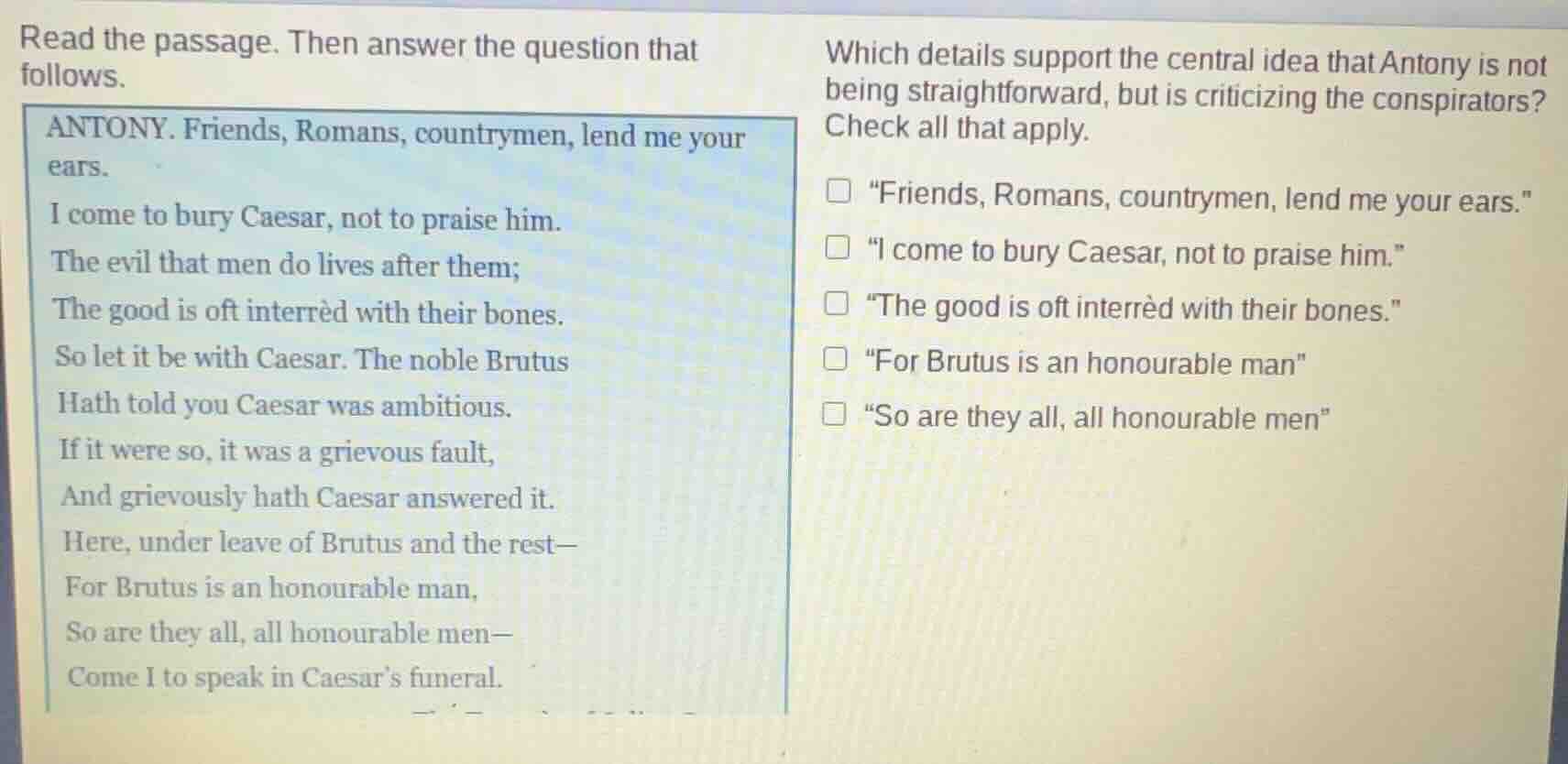
antony. friends, romans, countrymen, lend me your ears.
i come to bury caesar, not to praise him.
the evil that men do lives after them;
the good is oft interrèd with their bones.
so let it be with caesar. the noble brutus
hath told you caesar was ambitious.
if it were so, it was a grievous fault,
and grievously hath caesar answered it.
here, under leave of brutus and the rest—
for brutus is an honourable man,
so are they all, all honourable men—
come i to speak in caesar’s funeral.
which details support the central idea that antony is not being straightforward, but is criticizing the conspirators? check all that apply.
□ \friends, romans, countrymen, lend me your ears.\
□ \i come to bury caesar, not to praise him.\
□ \the good is oft interrèd with their bones.\
□ \for brutus is an honourable man\
□ \so are they all, all honourable men\
- "The good is oft interrèd with their bones": This implies that Caesar's good deeds are buried, contrasting with the conspirators' view of him as ambitious, hinting at criticism.
- "For Brutus is an honourable man": Repeating this phrase sarcastically (as he later shows Brutus' actions are not honorable) is a form of indirect criticism.
- "So are they all, all honourable men": Similarly, this repeated statement about all conspirators being honorable is sarcastic, criticizing their actions.
- "I come to bury Caesar, not to praise him" is just stating his initial purpose, not criticism. "Friends, Romans, countrymen, lend me your ears" is a call for attention, not criticism.

Snap & solve any problem in the app
Get step-by-step solutions on Sovi AI
Photo-based solutions with guided steps
Explore more problems and detailed explanations
- "The good is oft interrèd with their bones."
- "For Brutus is an honourable man"
- "So are they all, all honourable men"