QUESTION IMAGE
Question
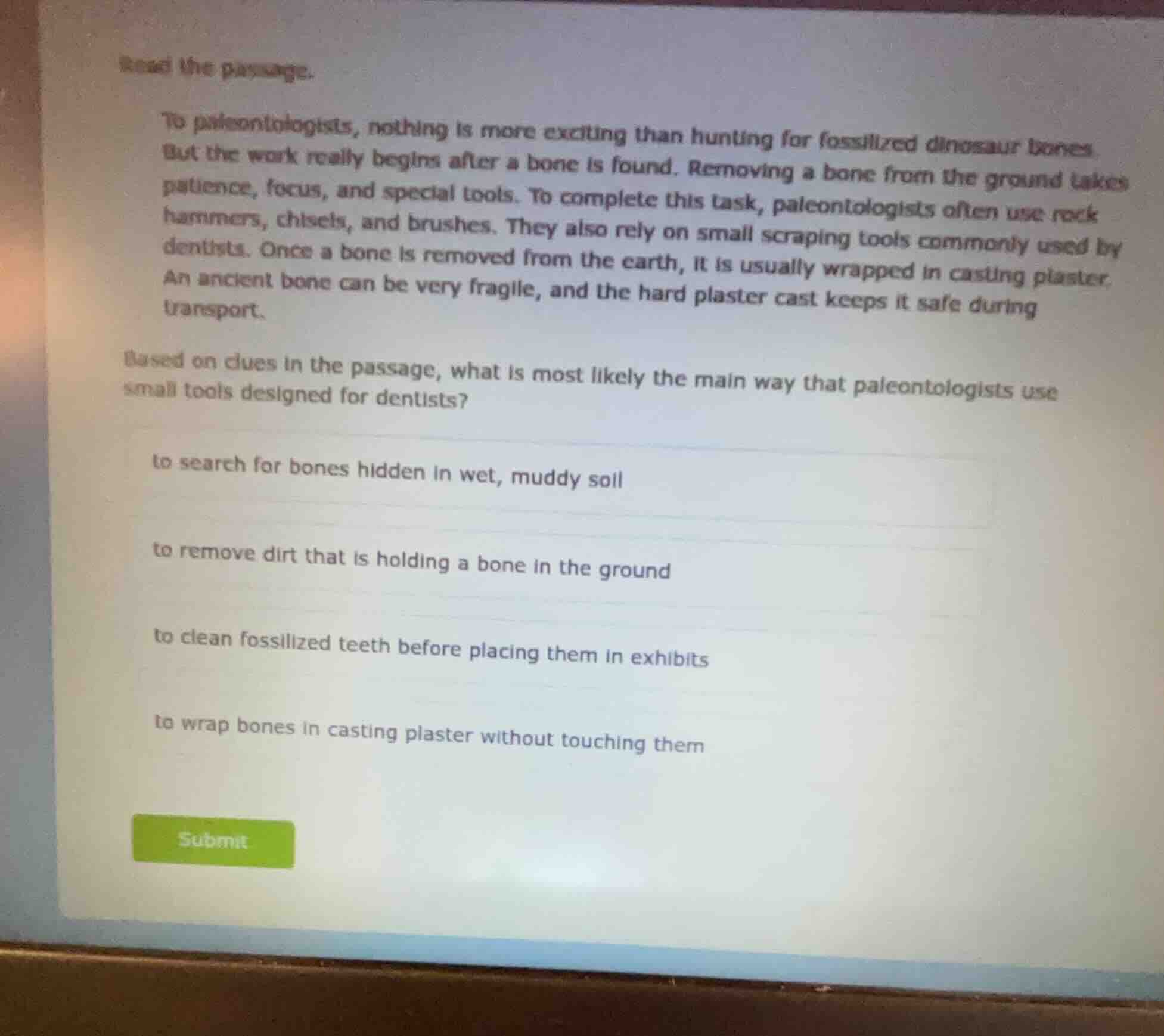
read the passage.
to paleontologists, nothing is more exciting than hunting for fossilized dinosaur bones. but the work really begins after a bone is found. removing a bone from the ground takes patience, focus, and special tools. to complete this task, paleontologists often use rock hammers, chisels, and brushes. they also rely on small scraping tools commonly used by dentists. once a bone is removed from the earth, it is usually wrapped in casting plaster. an ancient bone can be very fragile, and the hard plaster cast keeps it safe during transport.
based on clues in the passage, what is most likely the main way that paleontologists use small tools designed for dentists?
- to search for bones hidden in wet, muddy soil
- to remove dirt that is holding a bone in the ground
- to clean fossilized teeth before placing them in exhibits
- to wrap bones in casting plaster without touching them
The passage says removing a bone from the ground needs patience, focus, and special tools (rock hammers, chisels, brushes, and small dentist - like scraping tools). We analyze each option:
- Option 1: Searching for bones in wet, muddy soil is about finding bones, but the tools are for removing bones from the ground, so this is wrong.
- Option 2: The tools are used to remove the dirt that holds the bone in the ground, which matches the context of removing the bone from the ground.
- Option 3: The passage doesn't mention cleaning fossilized teeth for exhibits, so this is incorrect.
- Option 4: Wrapping bones in plaster is a different step (after removal), and the tools are for removal, not wrapping, so this is wrong.

Snap & solve any problem in the app
Get step-by-step solutions on Sovi AI
Photo-based solutions with guided steps
Explore more problems and detailed explanations
B. to remove dirt that is holding a bone in the ground