QUESTION IMAGE
Question
rev. 01/27/2022
the women of world war i
directions: use the information from the previous page, to help you answer the following questions.
- what were two things that women proved through their heroic service in world war i?
- how are the roles of women in society and in the military different today than from what they were during world war i?
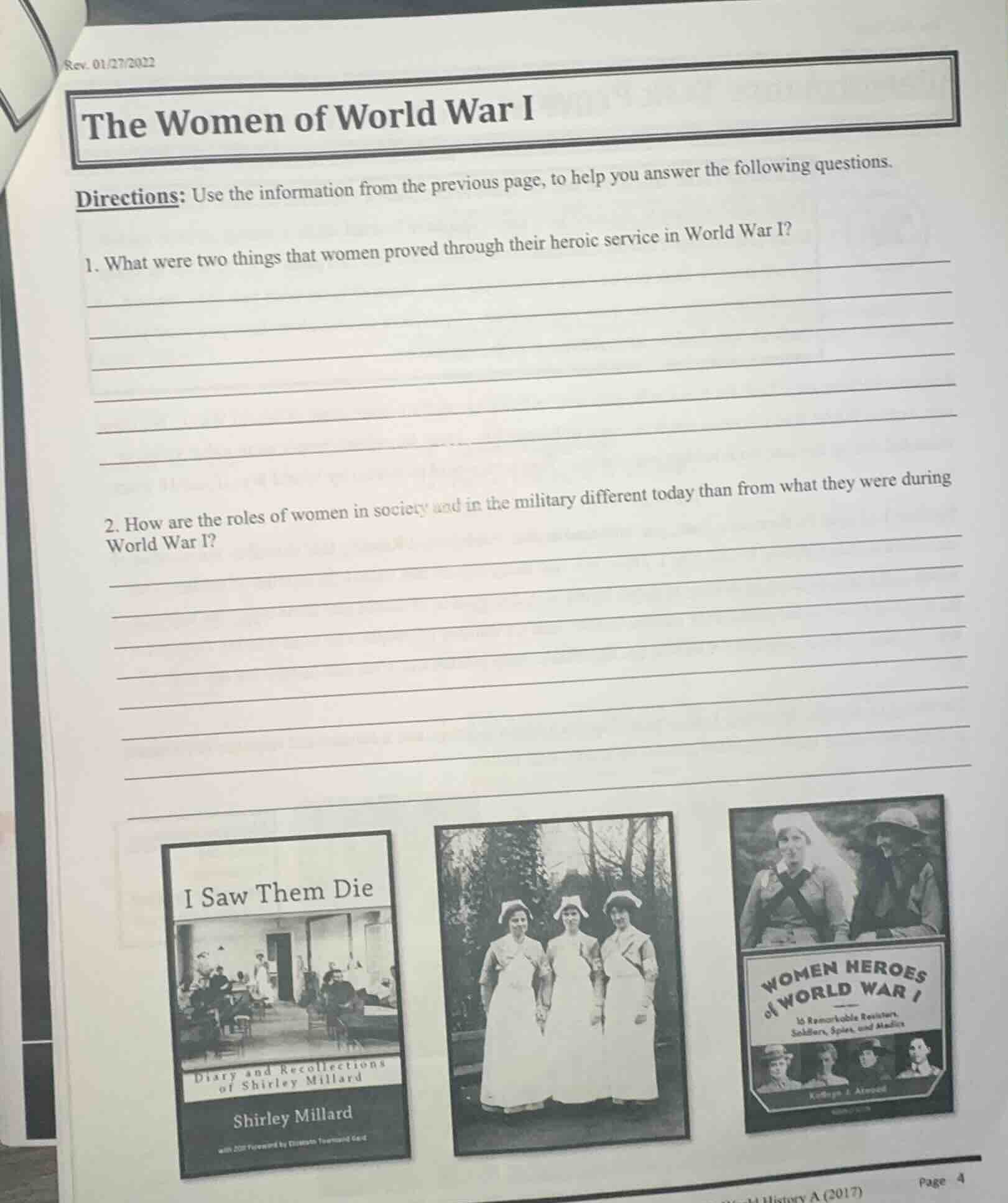
images: i saw them die (diary and recollections of shirley millard), three nurses, women heroes of world war i
To answer these questions, we would typically need the content from the "previous page" referenced in the directions. Since that information isn't provided here, I can give you a general approach to answering them based on historical knowledge about women in World War I:
For Question 1:
Historically, women’s service in WWI often proved:
- They were capable of taking on essential roles (e.g., nursing, factory work, administrative jobs) traditionally held by men, showing they could contribute to the war effort and society in impactful ways.
- They were resilient and heroic under challenging circumstances (e.g., nursing on the front lines, enduring dangerous conditions), challenging gender stereotypes of the era.
For Question 2:
Societal Roles:
- During WWI: Women’s roles were more limited to “support” (e.g., nursing, factory labor to replace men at war) and domestic duties. Many societies restricted women’s rights (e.g., voting, career choices).
- Today: Women have broader access to education, careers, and leadership positions. Gender roles are more flexible, and women are active in politics, STEM, business, and other fields once dominated by men.
Military Roles:
- During WWI: Most women served in non - combat roles (e.g., nurses, clerks, signal operators). Combat positions were almost entirely closed to them.
- Today: In many countries, women can serve in combat roles, hold high - ranking military positions, and have more equal opportunities to advance in military careers.
If you can share the content from the “previous page” (or more context about the lesson’s focus), I can help refine these answers to match the specific information provided!

Snap & solve any problem in the app
Get step-by-step solutions on Sovi AI
Photo-based solutions with guided steps
Explore more problems and detailed explanations
To answer these questions, we would typically need the content from the "previous page" referenced in the directions. Since that information isn't provided here, I can give you a general approach to answering them based on historical knowledge about women in World War I:
For Question 1:
Historically, women’s service in WWI often proved:
- They were capable of taking on essential roles (e.g., nursing, factory work, administrative jobs) traditionally held by men, showing they could contribute to the war effort and society in impactful ways.
- They were resilient and heroic under challenging circumstances (e.g., nursing on the front lines, enduring dangerous conditions), challenging gender stereotypes of the era.
For Question 2:
Societal Roles:
- During WWI: Women’s roles were more limited to “support” (e.g., nursing, factory labor to replace men at war) and domestic duties. Many societies restricted women’s rights (e.g., voting, career choices).
- Today: Women have broader access to education, careers, and leadership positions. Gender roles are more flexible, and women are active in politics, STEM, business, and other fields once dominated by men.
Military Roles:
- During WWI: Most women served in non - combat roles (e.g., nurses, clerks, signal operators). Combat positions were almost entirely closed to them.
- Today: In many countries, women can serve in combat roles, hold high - ranking military positions, and have more equal opportunities to advance in military careers.
If you can share the content from the “previous page” (or more context about the lesson’s focus), I can help refine these answers to match the specific information provided!