QUESTION IMAGE
Question
review the text.
manzanar: a site of conscience
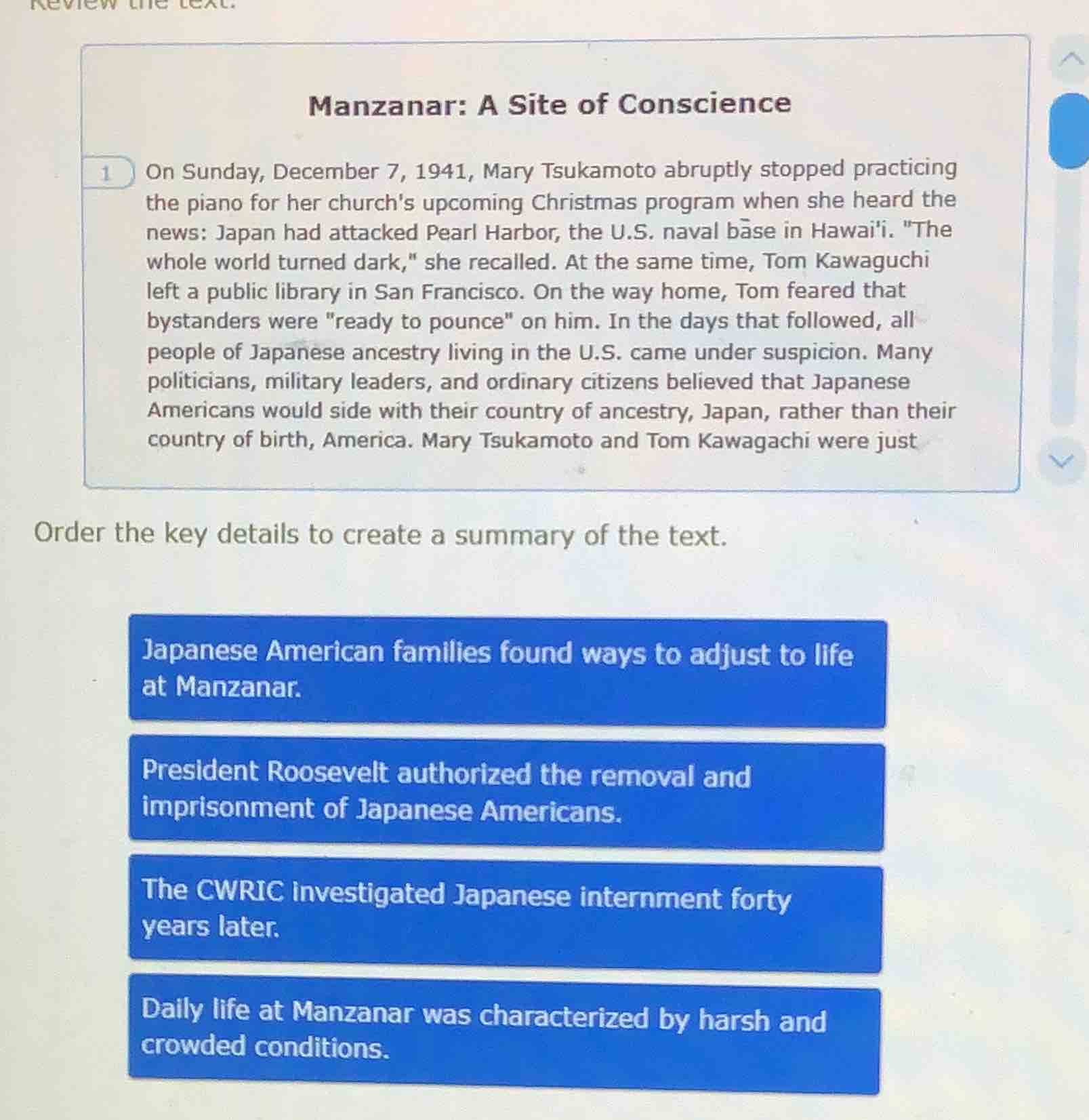
1 on sunday, december 7, 1941, mary tsukamoto abruptly stopped practicing the piano for her churchs upcoming christmas program when she heard the news: japan had attacked pearl harbor, the u.s. naval base in hawaii. \the whole world turned dark,\ she recalled. at the same time, tom kawaguchi left a public library in san francisco. on the way home, tom feared that bystanders were
eady to pounce\ on him. in the days that followed, all people of japanese ancestry living in the u.s. came under suspicion. many politicians, military leaders, and ordinary citizens believed that japanese americans would side with their country of ancestry, japan, rather than their country of birth, america. mary tsukamoto and tom kawagachi were just
order the key details to create a summary of the text.
japanese american families found ways to adjust to life at manzanar.
president roosevelt authorized the removal and imprisonment of japanese americans.
the cwric investigated japanese internment forty years later.
daily life at manzanar was characterized by harsh and crowded conditions.
To solve this, we analyze the chronological and logical flow of events related to Japanese American internment:
- President Roosevelt’s Authorization: This is the policy decision that led to internment (cause of the events).
- Daily Life at Manzanar: After internment, conditions in the camp (effect of the policy).
- Adjustment by Families: How families coped with camp life (response to conditions).
- CWRIC Investigation: A later event, 40 years after internment (consequence/historical reckoning).

Snap & solve any problem in the app
Get step-by-step solutions on Sovi AI
Photo-based solutions with guided steps
Explore more problems and detailed explanations
- President Roosevelt authorized the removal and imprisonment of Japanese Americans.
- Daily life at Manzanar was characterized by harsh and crowded conditions.
- Japanese American families found ways to adjust to life at Manzanar.
- The CWRIC investigated Japanese internment forty years later.