QUESTION IMAGE
Question
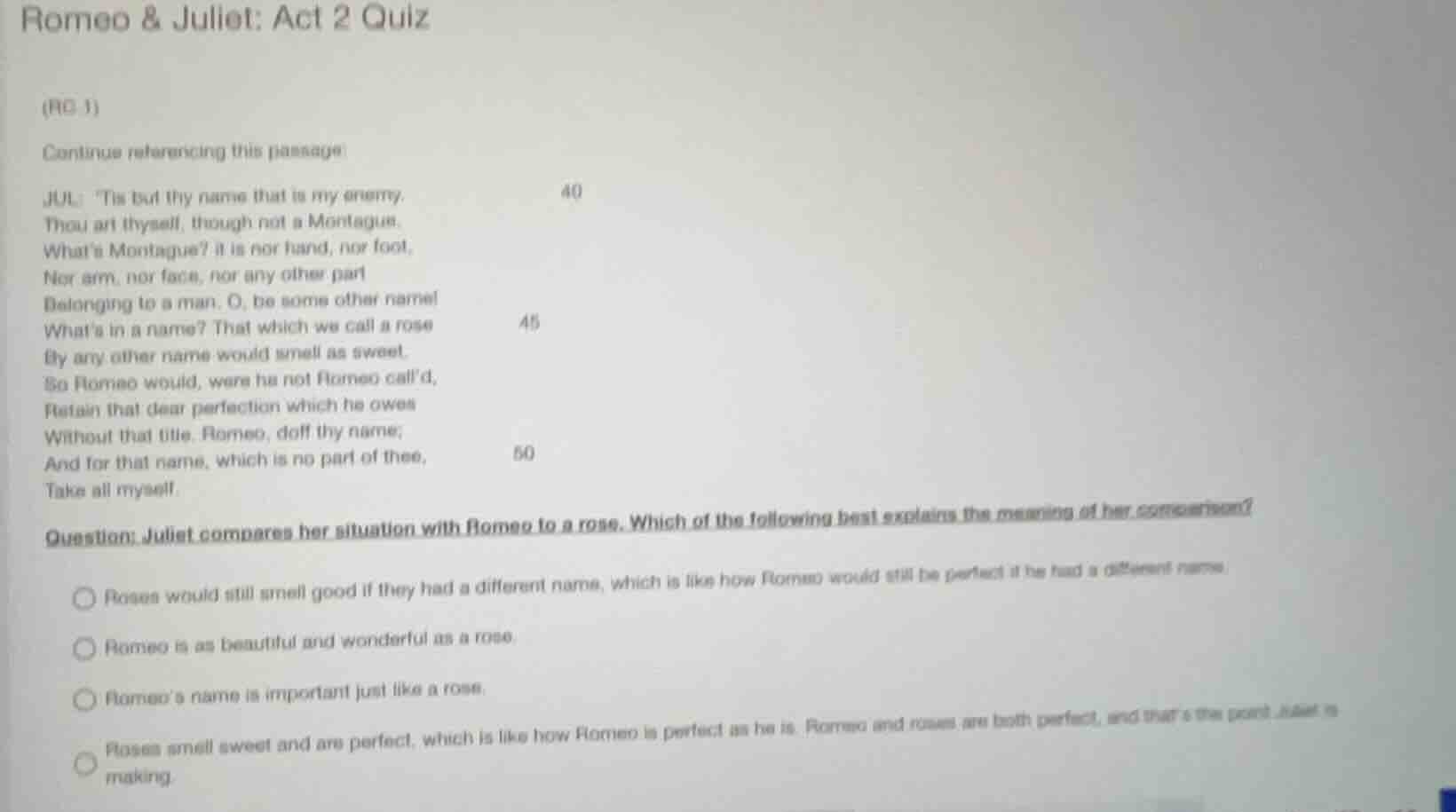
romeo & juliet: act 2 quiz(rc 1)continue referencing this passage:jul: tis but thy name that is my enemy.thou art thyself, though not a montague.whats montague? it is nor hand, nor foot,nor arm, nor face, nor any other partbelonging to a man. o, be some other name!whats in a name? that which we call a roseby any other name would smell as sweet.so romeo would, were he not romeo calld,retain that dear perfection which he oweswithout that title. romeo, doff thy name;and for that name, which is no part of thee,take all myself.question: juliet compares her situation with romeo to a rose. which of the following best explains the meaning of her comparison?□ roses would still smell good if they had a different name, which is like how romeo would still be perfect if he had a different name.□ romeo is as beautiful and wonderful as a rose.□ romeos name is important just like a rose.□ roses smell sweet and are perfect, which is like how romeo is perfect as he is. romeo and roses are both perfect, and thats the point juliet is making.
Juliet's core point is that a thing's essence is separate from its name. She uses the rose to argue that Romeo's worth comes from who he is, not his family name (Montague). The correct option directly mirrors this analogy: the rose's sweet scent (its essence) doesn't depend on its name, just as Romeo's perfection doesn't depend on his surname.

Snap & solve any problem in the app
Get step-by-step solutions on Sovi AI
Photo-based solutions with guided steps
Explore more problems and detailed explanations
A. Roses would still smell good if they had a different name, which is like how Romeo would still be perfect if he had a different name.