QUESTION IMAGE
Question
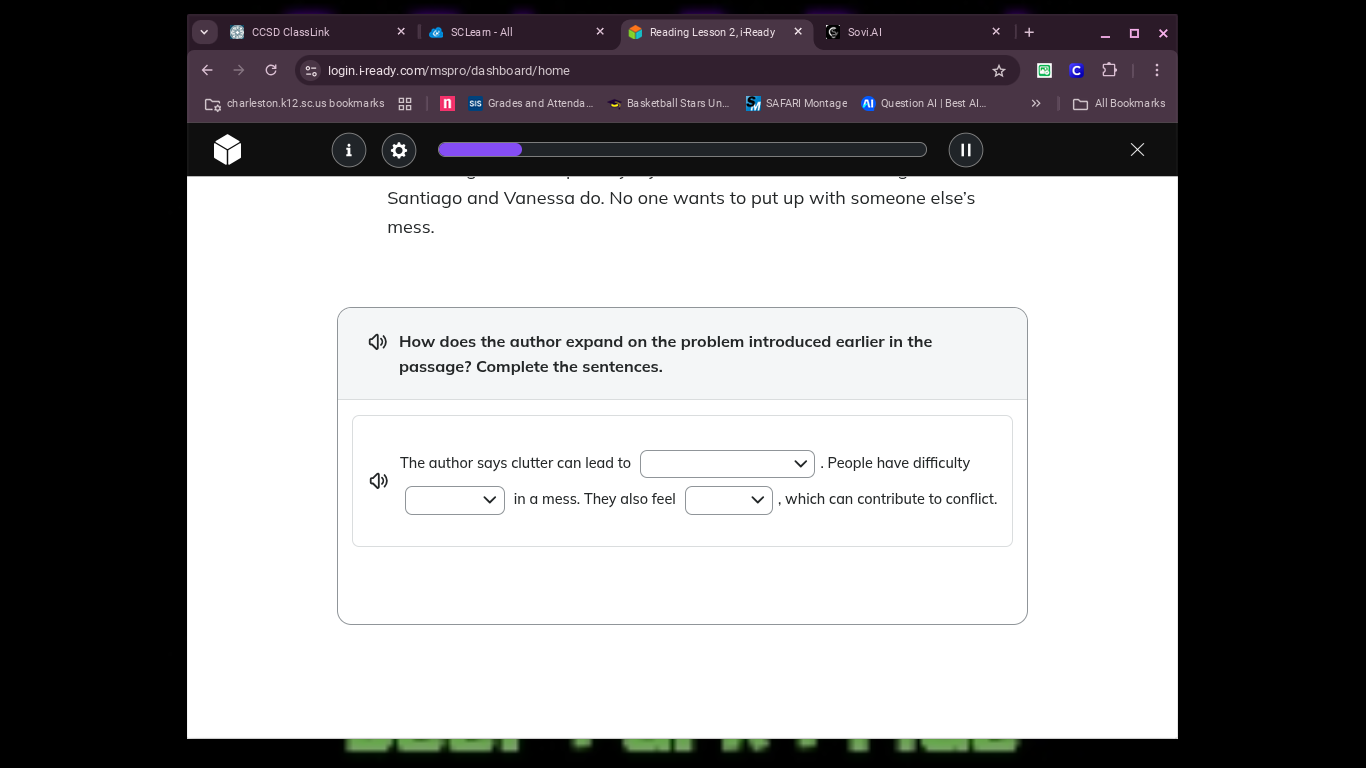
santiago and vanessa do. no one wants to put up with someone elses mess.
how does the author expand on the problem introduced earlier in the passage? complete the sentences.
the author says clutter can lead to. people have difficulty in a mess. they also feel, which can contribute to conflict.
To solve this, we need context from the passage (not fully shown here, but typical for such reading questions):
- For the first blank ("clutter can lead to ___"), common in organizational/cleanliness passages: conflict (since later it says "contribute to conflict").
- Second blank ("People have difficulty ___ in a mess"): focusing (or similar action, as messes disrupt focus).
- Third blank ("They also feel ___"): frustrated (emotion from dealing with mess, leading to conflict).
(Note: Without full passage text, these are educated guesses based on typical i-Ready reading prompts. The actual answers depend on the passage’s specific content about clutter’s effects.)
If we assume standard i-Ready passage content (e.g., clutter causes conflict, disrupts focus, causes frustration):
- First blank: Clutter often leads to conflict (matches later "contribute to conflict").
- Second blank: People struggle to focus (or "working") in a mess (disruption of tasks).
- Third blank: Emotion like frustrated (negative feeling from mess, leading to conflict).

Snap & solve any problem in the app
Get step-by-step solutions on Sovi AI
Photo-based solutions with guided steps
Explore more problems and detailed explanations
(Example, subject to passage):
- conflict
- focusing
- frustrated
(Replace with exact passage-derived terms if known.)