QUESTION IMAGE
Question
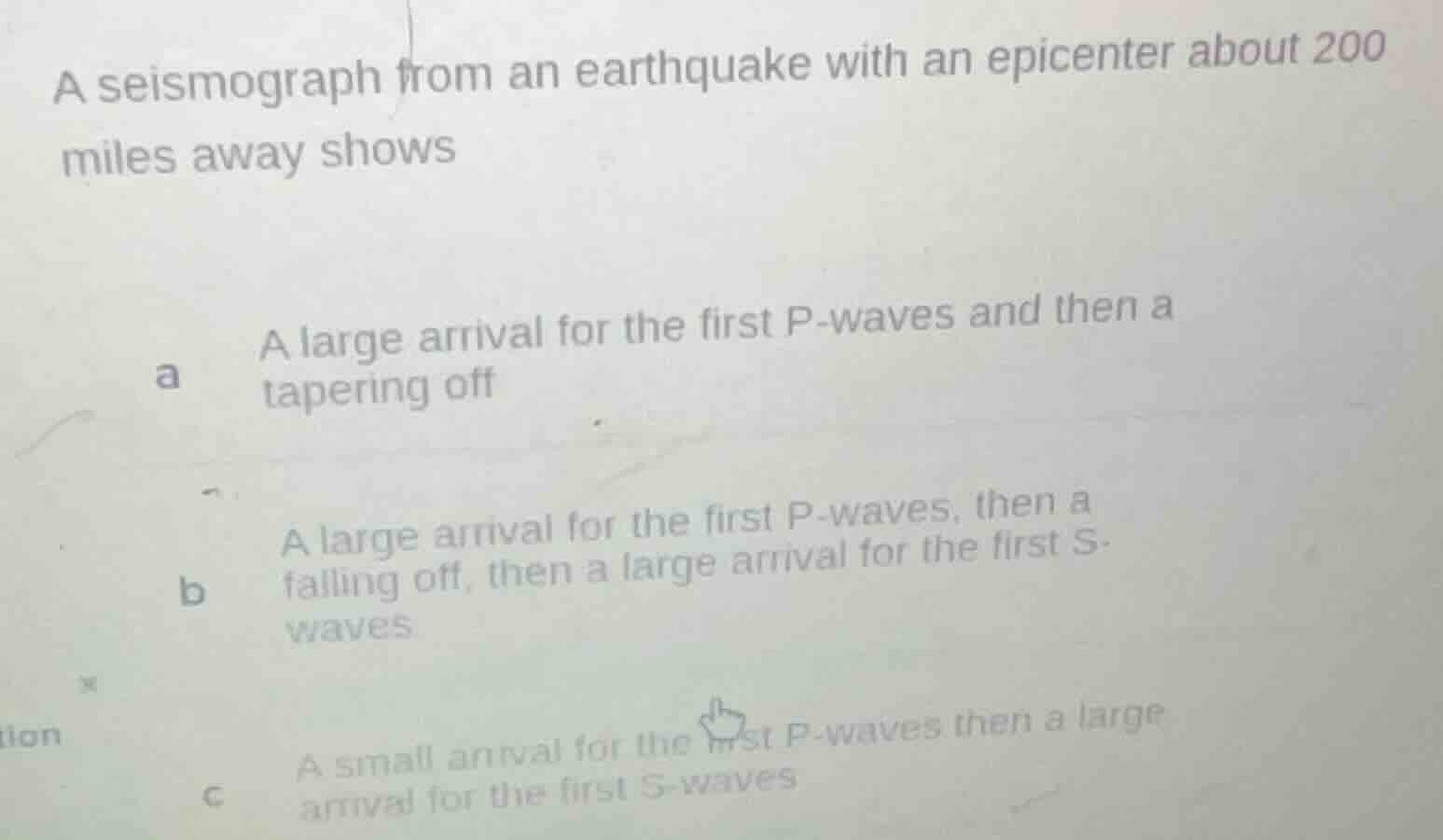
a seismograph from an earthquake with an epicenter about 200 miles away shows
a a large arrival for the first p-waves and then a tapering off
b a large arrival for the first p-waves, then a falling off, then a large arrival for the first s-waves
c a small arrival for the first p-waves then a large arrival for the first s-waves
P-waves are the fastest seismic waves, so they arrive first at a seismograph. They are compressional waves and produce smaller initial amplitude signals compared to the larger, more destructive shear (S)-waves that arrive later. For an earthquake 200 miles away, the seismograph will first detect small P-waves, followed by larger S-waves.

Snap & solve any problem in the app
Get step-by-step solutions on Sovi AI
Photo-based solutions with guided steps
Explore more problems and detailed explanations
c. A small arrival for the first P-waves then a large arrival for the first S-waves