QUESTION IMAGE
Question
select all the correct text in the passage.
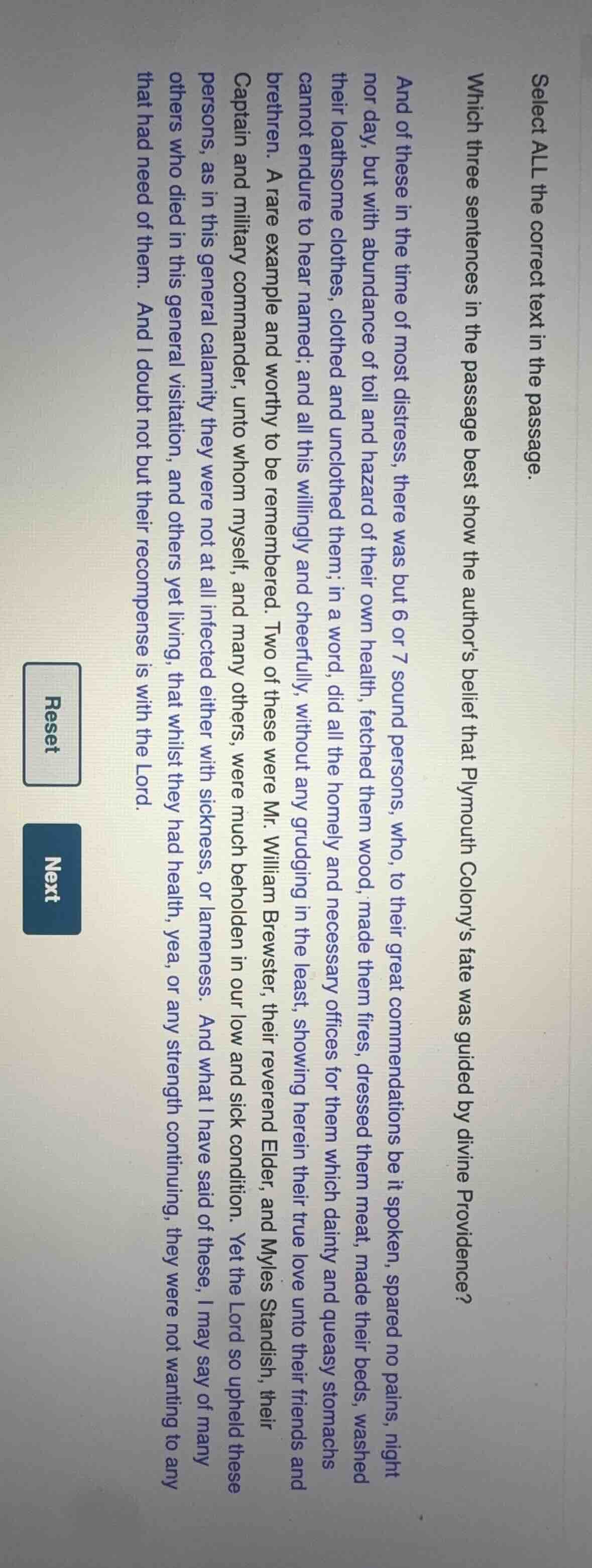
which three sentences in the passage best show the author’s belief that plymouth colony’s fate was guided by divine providence?
and of these in the time of most distress, there was but 6 or 7 sound persons, who, to their great commendations be it spoken, spared no pains, night nor day, but with abundance of toil and hazard of their own health, fetched them wood, made them fires, dressed them meat, made their beds, washed their loathsome clothes, clothed and unclothed them; in a word, did all the homely and necessary offices for them which dainty and queasy stomachs cannot endure to hear named; and all this willingly and cheerfully, without any grudging in the least, showing herein their true love unto their friends and brethren. a rare example and worthy to be remembered. two of these were mr. william brewster, their reverend elder, and myles standish, their captain and military commander, unto whom myself, and many others, were much beholden in our low and sick condition. yet the lord so upheld these persons, as in this general calamity they were not at all infected either with sickness, or lameness. and what i have said of these, i may say of many others who died in this general visitation, and others yet living, that whilst they had health, yea, or any strength continuing, they were not wanting to any that had need of them. and i doubt not but their recompense is with the lord.
- First, analyze each sentence:
- "A rare example and worthy to be remembered." This sentence is about remembering the good deeds of some people, but it doesn't directly show divine guidance.
- "Two of these were Mr. William Brewster, their reverend Elder, and Myles Standish, their Captain and military commander, unto whom myself, and many others, were much beholden in our low and sick condition." This is about being grateful to certain people, not about divine providence.
- "Yet the Lord so upheld these persons, as in this general calamity they were not at all infected either with sickness, or lameness." This sentence shows that the Lord (divine power) protected these people from sickness and lameness during a calamity, indicating divine guidance.
- "And I doubt not but their recompense is with the Lord." This sentence expresses the belief that the people's reward is from the Lord, showing the belief in divine providence guiding their fate.
- The sentence "And of these in the time of most distress, there was but 6 or 7 sound persons, who, to their great commendations be it spoken, spared no pains, night nor day, but with abundance of toil and hazard of their own health, fetched them wood, made them fires, dressed them meat, made their beds, washed their loathsome clothes, clothed and unclothed them; in a word, did all the homely and necessary offices for them which dainty and queasy stomachs cannot endure to hear named; and all this willingly and cheerfully, without any grudging in the least, showing herein their true love unto their friends and brethren." This is about the good deeds of the healthy people, not directly about divine guidance.
- Now, identify the sentences that show the author's belief that Plymouth Colony’s fate was guided by divine Providence:
- "Yet the Lord so upheld these persons, as in this general calamity they were not at all infected either with sickness, or lameness."
- "And I doubt not but their recompense is with the Lord."

Snap & solve any problem in the app
Get step-by-step solutions on Sovi AI
Photo-based solutions with guided steps
Explore more problems and detailed explanations
- "Yet the Lord so upheld these persons, as in this general calamity they were not at all infected either with sickness, or lameness."
- "And I doubt not but their recompense is with the Lord."