QUESTION IMAGE
Question
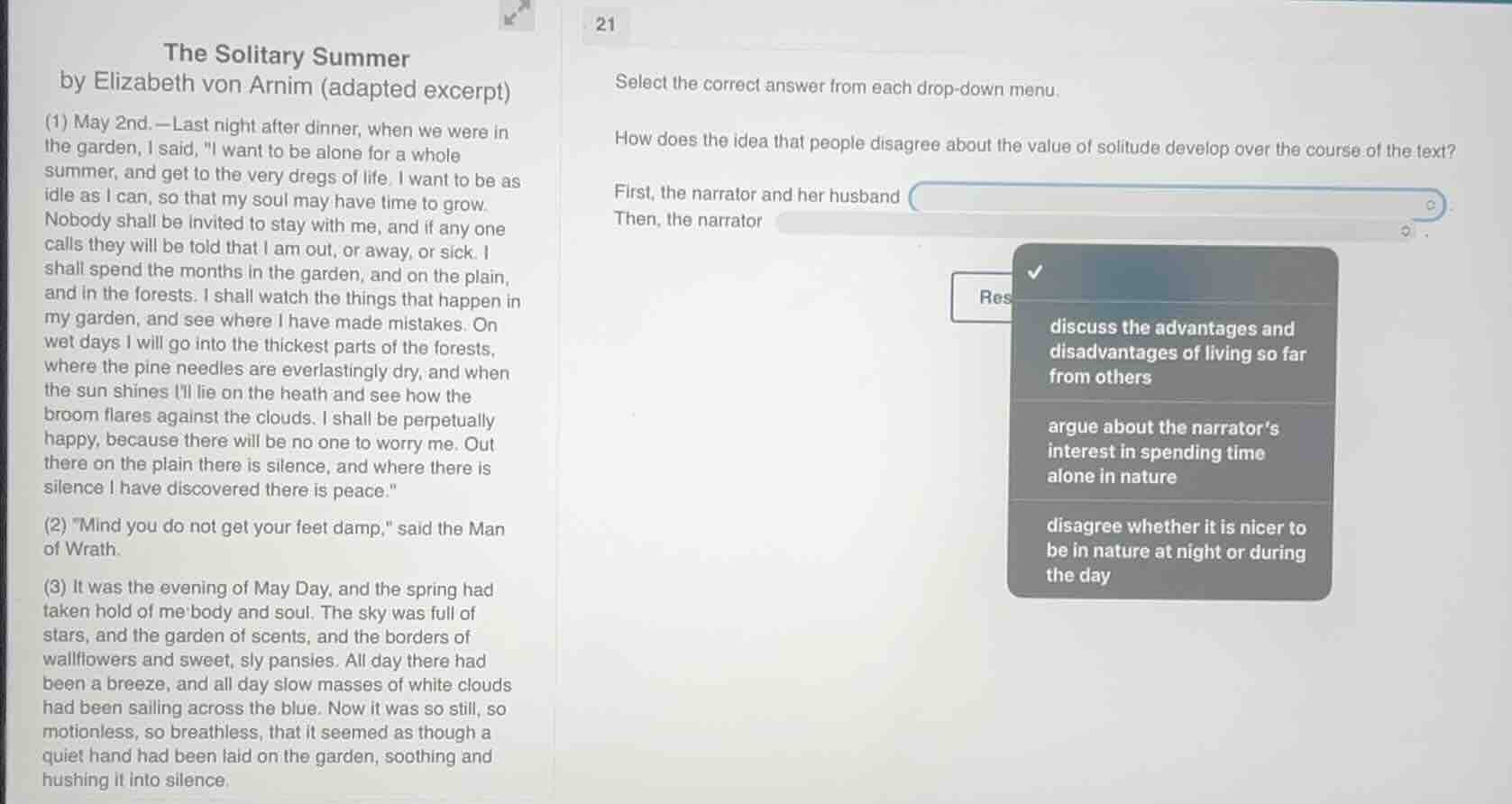
the solitary summer by elizabeth von arnim (adapted excerpt) (1) may 2nd.—last night after dinner, when we were in the garden, i said, \i want to be alone for a whole summer, and get to the very dregs of life. i want to be as idle as i can, so that my soul may have time to grow. nobody shall be invited to stay with me, and if any one calls they will be told that i am out, or away, or sick. i shall spend the months in the garden, and on the plain, and in the forests. i shall watch the things that happen in my garden, and see where i have made mistakes. on wet days i will go into the thickest parts of the forests, where the pine needles are everlastingly dry, and when the sun shines ill lie on the heath and see how the broom flares against the clouds. i shall be perpetually happy, because there will be no one to worry me. out there on the plain there is silence, and where there is silence i have discovered there is peace.\ (2) \mind you do not get your feet damp,\ said the man of wrath. (3) it was the evening of may day, and the spring had taken hold of me body and soul. the sky was full of stars, and the garden of scents, and the borders of wallflowers and sweet, sly pansies. all day there had been a breeze, and all day slow masses of white clouds had been sailing across the blue. now it was so still, so motionless, so breathless, that it seemed as though a quiet hand had been laid on the garden, soothing and hushing it into silence. 21 select the correct answer from each drop - down menu. how does the idea that people disagree about the value of solitude develop over the course of the text? first, the narrator and her husband then, the narrator
For the first drop - down: The narrator expresses her desire to be alone in nature for the summer, and her husband's response (though brief here, the context of the text and the options show that the relevant interaction is about the narrator's wish to be alone in nature. Among the options, "argue about the narrator’s interest in spending time alone in nature" fits as the first step of how the idea of disagreement about solitude's value develops. The narrator presents her wish, and there's a sort of argument (even if the husband's response is short - "Mind you do not get your feet damp" can be seen as a minor pushback or a different take on her plan) about her interest in being alone in nature.
For the second drop - down: After the initial argument about her interest in solitude in nature, the narrator would then likely discuss the advantages and disadvantages of living so far from others as part of the development of the idea about the value of solitude. This is because once the initial disagreement about her wanting to be alone is introduced, exploring the pros and cons of being isolated (living far from others) is a logical next step in developing the theme of differing views on solitude.

Snap & solve any problem in the app
Get step-by-step solutions on Sovi AI
Photo-based solutions with guided steps
Explore more problems and detailed explanations
First, the narrator and her husband: argue about the narrator’s interest in spending time alone in nature
Then, the narrator: discuss the advantages and disadvantages of living so far from others