QUESTION IMAGE
Question
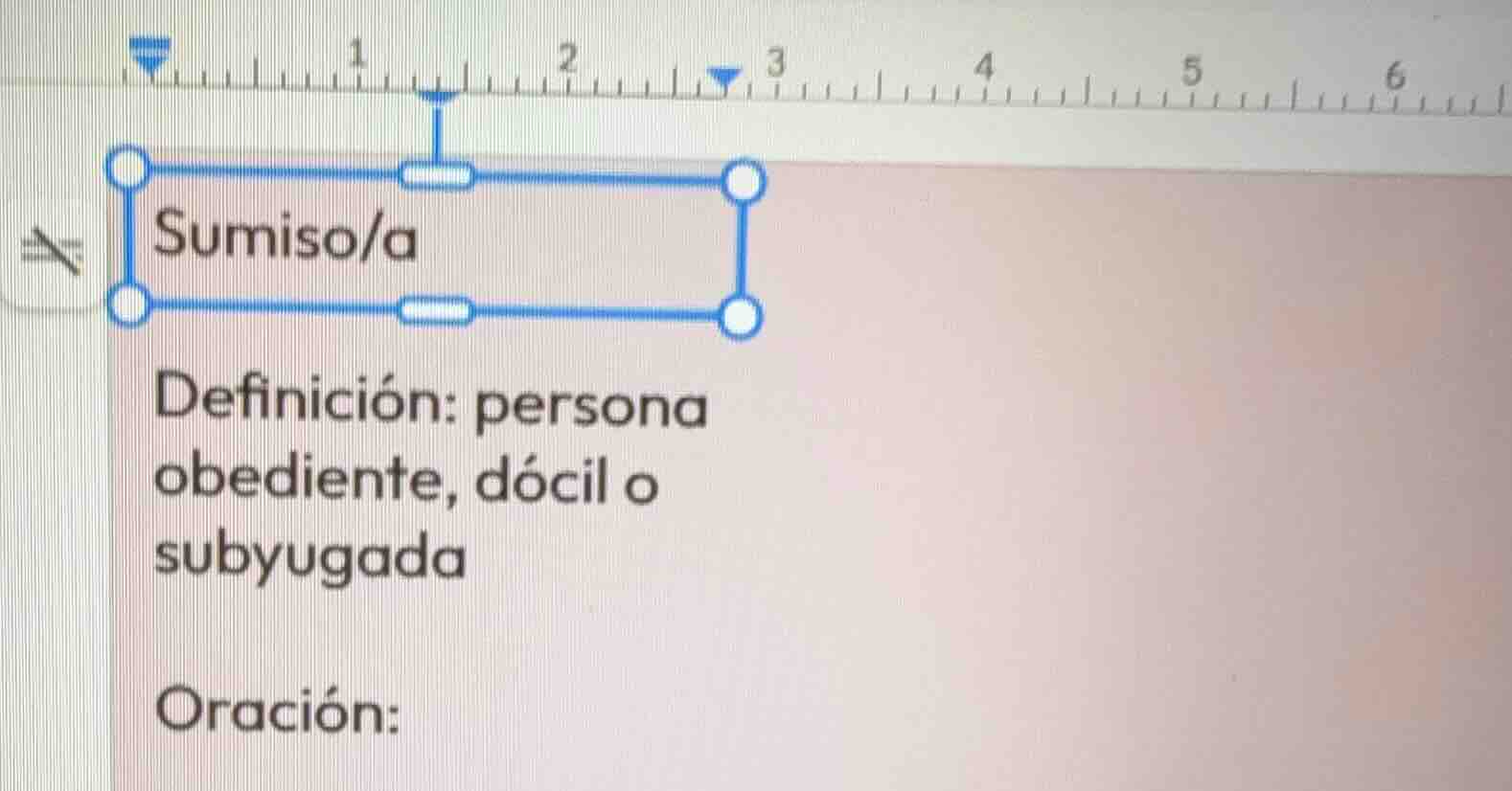
sumiso/a
definición: persona
obediente, dócil o
subyugada
oración:
To solve the problem of creating a sentence (oración) using the word "sumiso/a" (which means a submissive, obedient, or docile person), we can follow these steps:
Step 1: Understand the Meaning
First, recall the definition of "sumiso/a": a person who is obedient, docile, or subjugated.
Step 2: Choose a Context
We can create a context where the trait of being sumiso/a is relevant. For example, a family setting, a workplace, or a social situation.
Step 3: Construct the Sentence
Let's build a simple sentence. For example: "María es sumisa y siempre obedece a sus padres." (María is submissive and always obeys her parents.) Or, in a more general context: "El perro sumiso se sentó cuando su dueño le dio la orden." (The submissive dog sat down when its owner gave the order.)
Final Answer
A possible sentence (oración) using "sumiso/a" is: "María es sumisa y siempre obedece a sus padres." (You can also use other appropriate contexts and structures to form the sentence.)

Snap & solve any problem in the app
Get step-by-step solutions on Sovi AI
Photo-based solutions with guided steps
Explore more problems and detailed explanations
To solve the problem of creating a sentence (oración) using the word "sumiso/a" (which means a submissive, obedient, or docile person), we can follow these steps:
Step 1: Understand the Meaning
First, recall the definition of "sumiso/a": a person who is obedient, docile, or subjugated.
Step 2: Choose a Context
We can create a context where the trait of being sumiso/a is relevant. For example, a family setting, a workplace, or a social situation.
Step 3: Construct the Sentence
Let's build a simple sentence. For example: "María es sumisa y siempre obedece a sus padres." (María is submissive and always obeys her parents.) Or, in a more general context: "El perro sumiso se sentó cuando su dueño le dio la orden." (The submissive dog sat down when its owner gave the order.)
Final Answer
A possible sentence (oración) using "sumiso/a" is: "María es sumisa y siempre obedece a sus padres." (You can also use other appropriate contexts and structures to form the sentence.)