QUESTION IMAGE
Question
survival of pond ecosystems
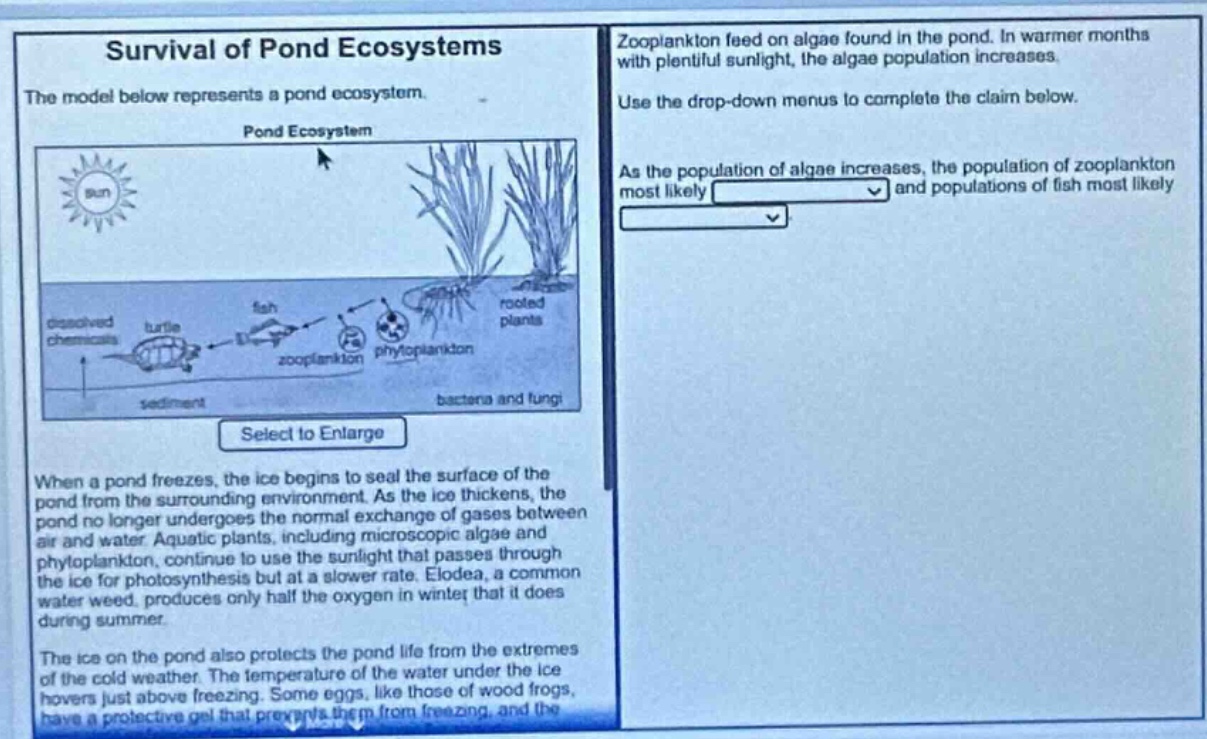
the model below represents a pond ecosystem.
pond ecosystem
select to enlarge
when a pond freezes, the ice begins to seal the surface of the pond from the surrounding environment. as the ice thickens, the pond no longer undergoes the normal exchange of gases between air and water. aquatic plants, including microscopic algae and phytoplankton, continue to use the sunlight that passes through the ice for photosynthesis but at a slower rate. elodea, a common water weed, produces only half the oxygen in winter that it does during summer.
the ice on the pond also protects the pond life from the extremes of the cold weather. the temperature of the water under the ice hovers just above freezing. some eggs, like those of wood frogs, have a protective gel that prevents them from freezing, and the
zooplankton feed on algae found in the pond. in warmer months with plentiful sunlight, the algae population increases.
use the drop-down menus to complete the claim below.
as the population of algae increases, the population of zooplankton most likely and populations of fish most likely
- Zooplankton feed directly on algae, so more algae means more food for zooplankton, allowing their population to grow.
- Fish rely on zooplankton as a food source. An increase in zooplankton provides more food for fish, supporting a larger fish population.

Snap & solve any problem in the app
Get step-by-step solutions on Sovi AI
Photo-based solutions with guided steps
Explore more problems and detailed explanations
As the population of algae increases, the population of zooplankton most likely increases and populations of fish most likely increases.