QUESTION IMAGE
Question
task 1
the post - civil war period in hindsight
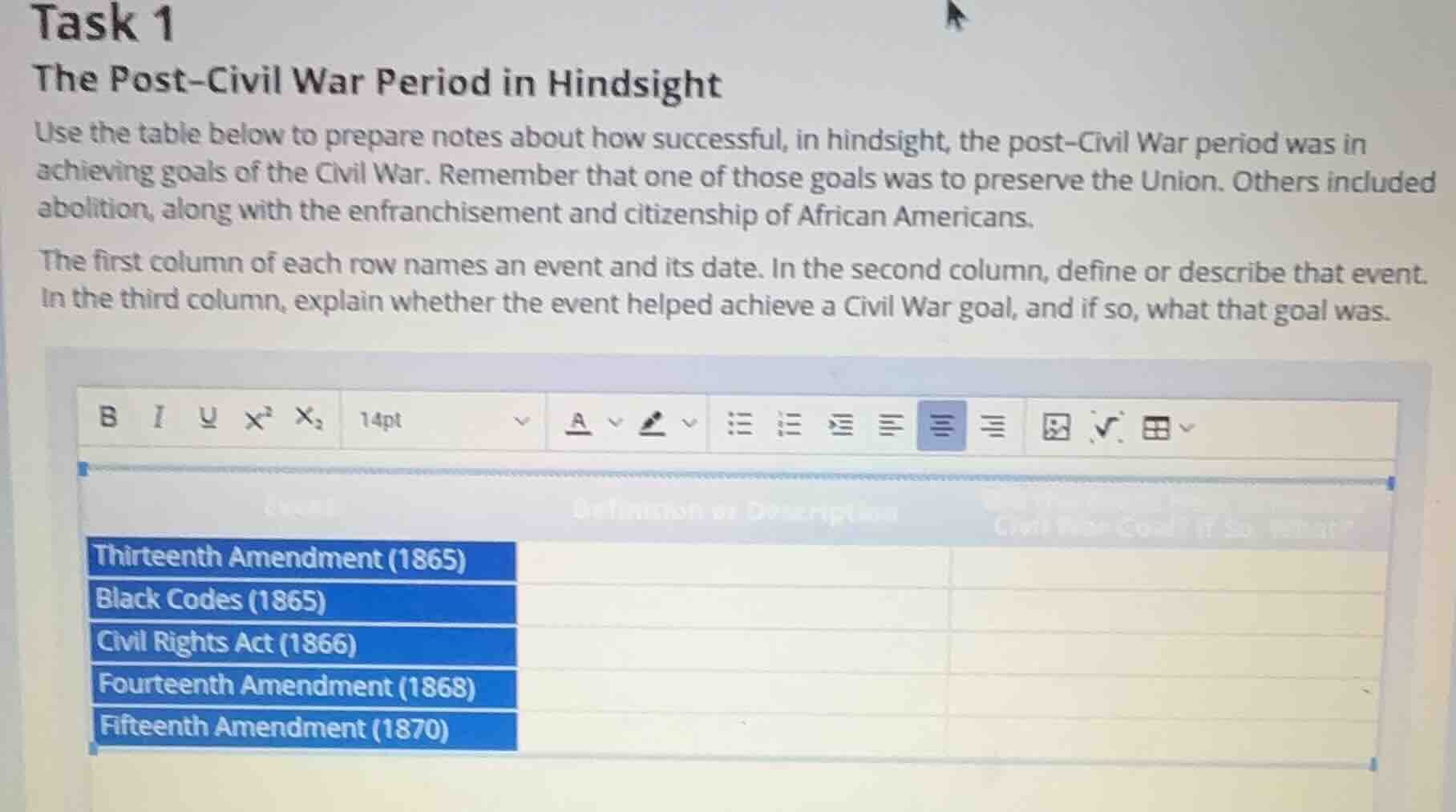
use the table below to prepare notes about how successful, in hindsight, the post - civil war period was in achieving goals of the civil war. remember that one of those goals was to preserve the union. others included abolition, along with the enfranchisement and citizenship of african americans.
the first column of each row names an event and its date. in the second column, define or describe that event. in the third column, explain whether the event helped achieve a civil war goal, and if so, what that goal was.
table with events: thirteenth amendment (1865), black codes (1865), civil rights act (1866), fourteenth amendment (1868), fifteenth amendment (1870) and columns for definition or description, civil war goal? if so, what?
To solve this, we analyze each event:
Thirteenth Amendment (1865)
- Definition/Description: Abolished slavery and involuntary servitude (except as punishment for a crime) in the United States.
- Civil War Goal? If So, What?: Yes. It achieved the abolition goal of the Civil War by legally ending slavery.
Black Codes (1865)
- Definition/Description: Laws passed by Southern states to restrict the rights and freedoms of African Americans, such as limiting their ability to vote, work, or move freely.
- Civil War Goal? If So, What?: No. These codes undermined the goals of enfranchisement and citizenship for African Americans, and worked against the broader goal of equality after the war.
Civil Rights Act (1866)
- Definition/Description: Granted citizenship and equal legal rights to African Americans (and all persons born in the US) and prohibited discrimination in public places and employment.
- Civil War Goal? If So, What?: Yes. It helped achieve the goal of enfranchisement and citizenship for African Americans by establishing legal equality.
Fourteenth Amendment (1868)
- Definition/Description: Granted citizenship to all persons born or naturalized in the US (including former slaves) and guaranteed equal protection of the laws.
- Civil War Goal? If So, What?: Yes. It advanced the goals of citizenship and equality for African Americans, and also helped preserve the Union by defining national citizenship.
Fifteenth Amendment (1870)
- Definition/Description: Prohibited the federal and state governments from denying a citizen the right to vote based on "race, color, or previous condition of servitude".
- Civil War Goal? If So, What?: Yes. It achieved the enfranchisement goal by protecting the voting rights of African American men.
| Event | Definition or Description | Civil War Goal? If So, What? |
|---|---|---|
| Black Codes (1865) | Southern laws restricting African Americans’ rights (voting, work, movement, etc.). | No - Undermined enfranchisement/citizenship goals for African Americans. |
| Civil Rights Act (1866) | Granted citizenship/equal legal rights to African Americans; prohibited public discrimination. | Yes - Advanced enfranchisement/citizenship goals via legal equality. |
| Fourteenth Amendment (1868) | Granted citizenship to all born/naturalized in US; guaranteed equal protection of laws. | Yes - Advanced citizenship/equality for African Americans; helped preserve the Union. |
| Fifteenth Amendment (1870) | Prohibited voting denial based on race/color/previous servitude. | Yes - Achieved enfranchisement goal by protecting African American men’s voting rights. |

Snap & solve any problem in the app
Get step-by-step solutions on Sovi AI
Photo-based solutions with guided steps
Explore more problems and detailed explanations
To solve this, we analyze each event:
Thirteenth Amendment (1865)
- Definition/Description: Abolished slavery and involuntary servitude (except as punishment for a crime) in the United States.
- Civil War Goal? If So, What?: Yes. It achieved the abolition goal of the Civil War by legally ending slavery.
Black Codes (1865)
- Definition/Description: Laws passed by Southern states to restrict the rights and freedoms of African Americans, such as limiting their ability to vote, work, or move freely.
- Civil War Goal? If So, What?: No. These codes undermined the goals of enfranchisement and citizenship for African Americans, and worked against the broader goal of equality after the war.
Civil Rights Act (1866)
- Definition/Description: Granted citizenship and equal legal rights to African Americans (and all persons born in the US) and prohibited discrimination in public places and employment.
- Civil War Goal? If So, What?: Yes. It helped achieve the goal of enfranchisement and citizenship for African Americans by establishing legal equality.
Fourteenth Amendment (1868)
- Definition/Description: Granted citizenship to all persons born or naturalized in the US (including former slaves) and guaranteed equal protection of the laws.
- Civil War Goal? If So, What?: Yes. It advanced the goals of citizenship and equality for African Americans, and also helped preserve the Union by defining national citizenship.
Fifteenth Amendment (1870)
- Definition/Description: Prohibited the federal and state governments from denying a citizen the right to vote based on "race, color, or previous condition of servitude".
- Civil War Goal? If So, What?: Yes. It achieved the enfranchisement goal by protecting the voting rights of African American men.
| Event | Definition or Description | Civil War Goal? If So, What? |
|---|---|---|
| Black Codes (1865) | Southern laws restricting African Americans’ rights (voting, work, movement, etc.). | No - Undermined enfranchisement/citizenship goals for African Americans. |
| Civil Rights Act (1866) | Granted citizenship/equal legal rights to African Americans; prohibited public discrimination. | Yes - Advanced enfranchisement/citizenship goals via legal equality. |
| Fourteenth Amendment (1868) | Granted citizenship to all born/naturalized in US; guaranteed equal protection of laws. | Yes - Advanced citizenship/equality for African Americans; helped preserve the Union. |
| Fifteenth Amendment (1870) | Prohibited voting denial based on race/color/previous servitude. | Yes - Achieved enfranchisement goal by protecting African American men’s voting rights. |