QUESTION IMAGE
Question
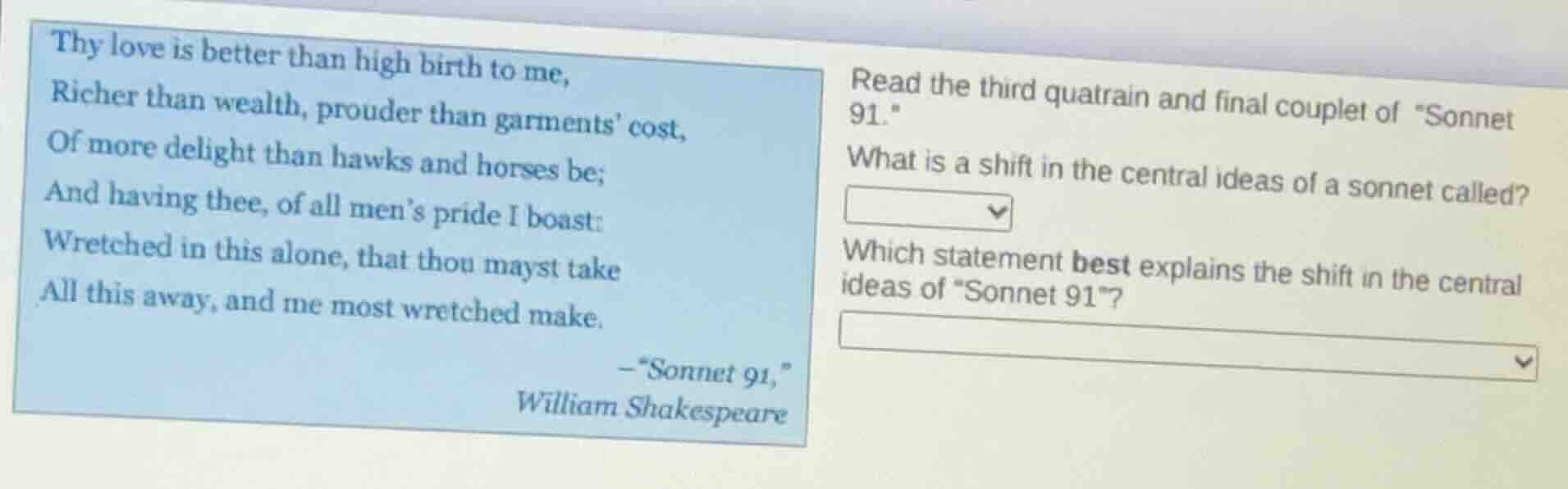
thy love is better than high birth to me,
richer than wealth, prouder than garments’ cost,
of more delight than hawks and horses be;
and having thee, of all men’s pride i boast:
wretched in this alone, that thou mayst take
all this away, and me most wretched make.
—“sonnet 91,”
william shakespeare
read the third quatrain and final couplet of “sonnet 91.”
what is a shift in the central ideas of a sonnet called?
which statement best explains the shift in the central ideas of “sonnet 91”?
First Question:
In sonnet structure, the shift in central ideas (often a change in tone, focus, or argument) is called a "volta". This is a key term in sonnet analysis, especially in Shakespearean sonnets where the volta typically occurs before the final couplet, marking a turn in the poem's theme or emotion.
In "Sonnet 91", the first part (third quatrain) celebrates the beloved’s love as superior to wealth, high birth, etc., and the speaker boasts of having the beloved. The final couplet shifts to a tone of anxiety: the speaker fears the beloved could take all these sources of pride (love, the sense of superiority) away, leaving the speaker wretched. So the shift is from celebrating the joy and pride of having the beloved to fearing the loss of that beloved (and the associated pride/joy). A statement explaining this would note the change from positive boasting about the beloved’s value to a negative fear of losing that value. For example, "The third quatrain praises the beloved’s love as a source of pride, while the couplet introduces the fear that the beloved could take this pride away, shifting from celebration to anxiety about loss."

Snap & solve any problem in the app
Get step-by-step solutions on Sovi AI
Photo-based solutions with guided steps
Explore more problems and detailed explanations
The shift in the central ideas of a sonnet is called a volta.