QUESTION IMAGE
Question
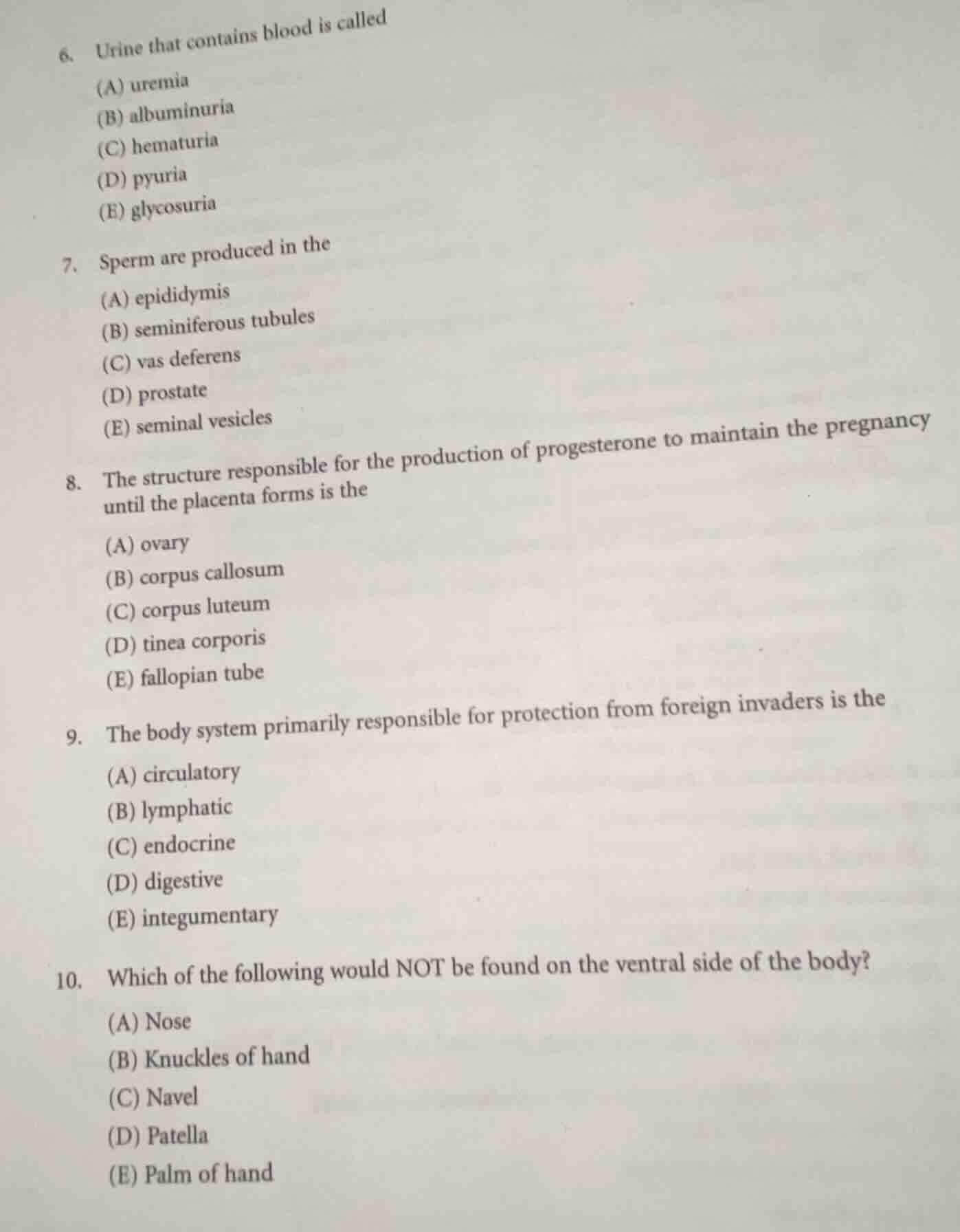
- urine that contains blood is called
(a) uremia
(b) albuminuria
(c) hematuria
(d) pyuria
(e) glycosuria
- sperm are produced in the
(a) epididymis
(b) seminiferous tubules
(c) vas deferens
(d) prostate
(e) seminal vesicles
- the structure responsible for the production of progesterone to maintain the pregnancy until the placenta forms is the
(a) ovary
(b) corpus callosum
(c) corpus luteum
(d) tinea corporis
(e) fallopian tube
- the body system primarily responsible for protection from foreign invaders is the
(a) circulatory
(b) lymphatic
(c) endocrine
(d) digestive
(e) integumentary
- which of the following would not be found on the ventral side of the body?
(a) nose
(b) knuckles of hand
(c) navel
(d) patella
(e) palm of hand
Response
Question 6
Brief Explanations
- Uremia is a condition with high urea in blood, not blood in urine.
- Albuminuria is protein (albumin) in urine.
- Hematuria specifically means blood (hemat - related to blood) in urine.
- Pyuria is pus in urine.
- Glycosuria is glucose in urine. So the correct term for urine with blood is hematuria.
Brief Explanations
- Epididymis is where sperm mature, not produced.
- Seminiferous tubules in the testes are the site of sperm production (spermatogenesis).
- Vas deferens transports sperm.
- Prostate and seminal vesicles contribute to seminal fluid, not produce sperm. So sperm are produced in seminiferous tubules.
Brief Explanations
- Ovary produces eggs and hormones, but after ovulation, the corpus luteum (formed from the ruptured follicle) produces progesterone to maintain pregnancy until the placenta takes over.
- Corpus callosum is in the brain.
- Tinea corporis is a fungal infection.
- Fallopian tube is for fertilization. So the corpus luteum produces progesterone for pregnancy maintenance.

Snap & solve any problem in the app
Get step-by-step solutions on Sovi AI
Photo-based solutions with guided steps
Explore more problems and detailed explanations
C. hematuria