QUESTION IMAGE
Question
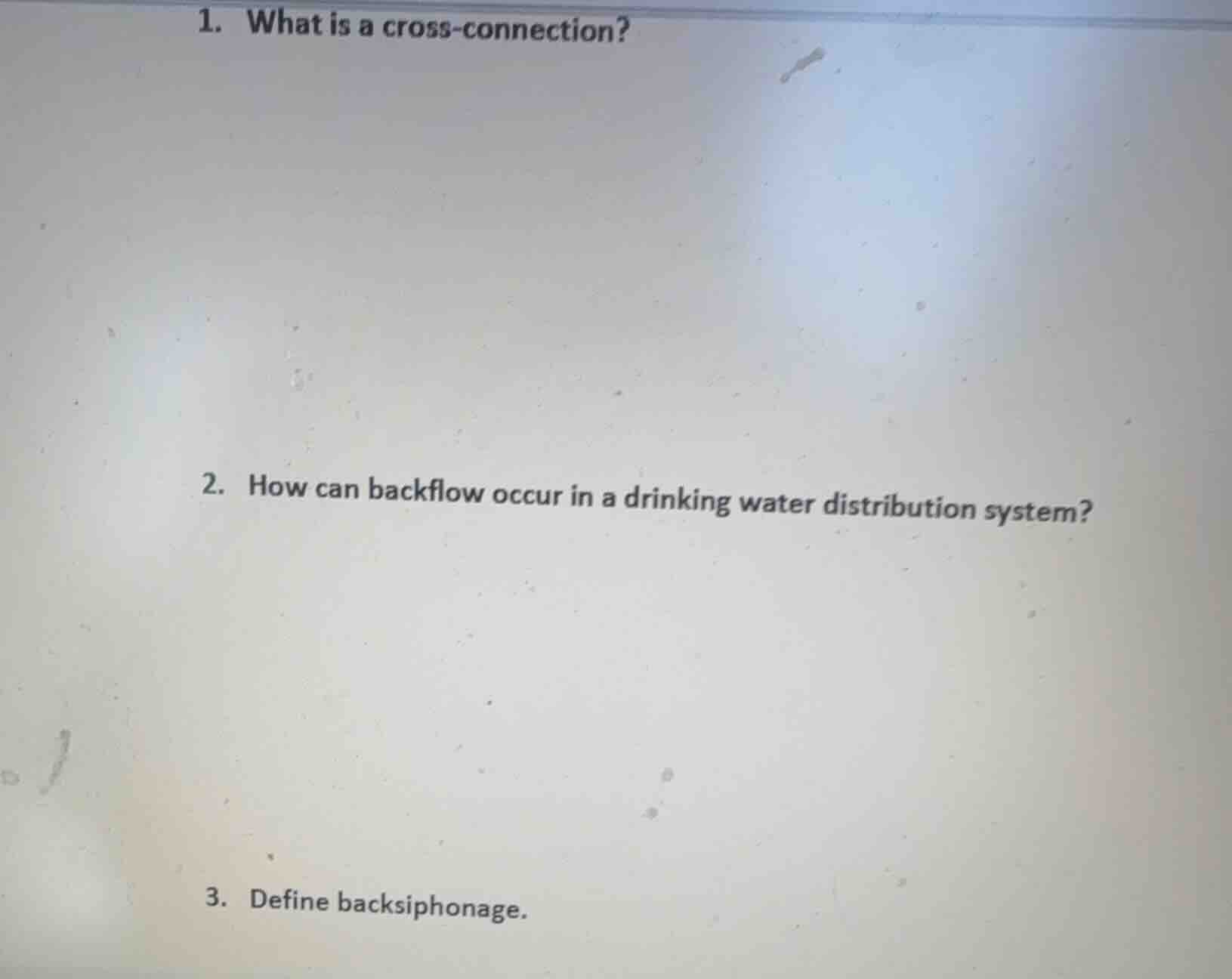
- what is a cross-connection?
- how can backflow occur in a drinking water distribution system?
- define backsiphonage.
Brief Explanations
- A cross-connection is a physical link between a potable (safe to drink) water supply and a non-potable or contaminated water source, creating a risk of contamination.
- Backflow in a drinking water system occurs when there is a reversal of normal water flow direction, caused by either a pressure difference where non-potable water has higher pressure than potable water or a vacuum/siphon effect in the potable system.
- Backsiphonage is a specific type of backflow that happens when a vacuum forms in the potable water distribution system, pulling non-potable or contaminated water back into the safe water supply.

Snap & solve any problem in the app
Get step-by-step solutions on Sovi AI
Photo-based solutions with guided steps
Explore more problems and detailed explanations
- A cross-connection is a physical link between a potable drinking water supply and a non-potable, unsafe, or contaminated water source, which creates a pathway for contamination of the safe water supply.
- Backflow can occur in two main ways:
- Backpressure: When the pressure in a non-potable water source becomes higher than the pressure in the potable drinking water system, forcing contaminated water into the safe supply.
- Backsiphonage: When a vacuum or negative pressure forms in the potable water system, pulling non-potable water back into the safe supply.
- Backsiphonage is a type of backflow where a vacuum or negative pressure in a potable drinking water distribution system causes non-potable, contaminated, or unsafe water to be siphoned back into the safe water supply through a cross-connection.