QUESTION IMAGE
Question
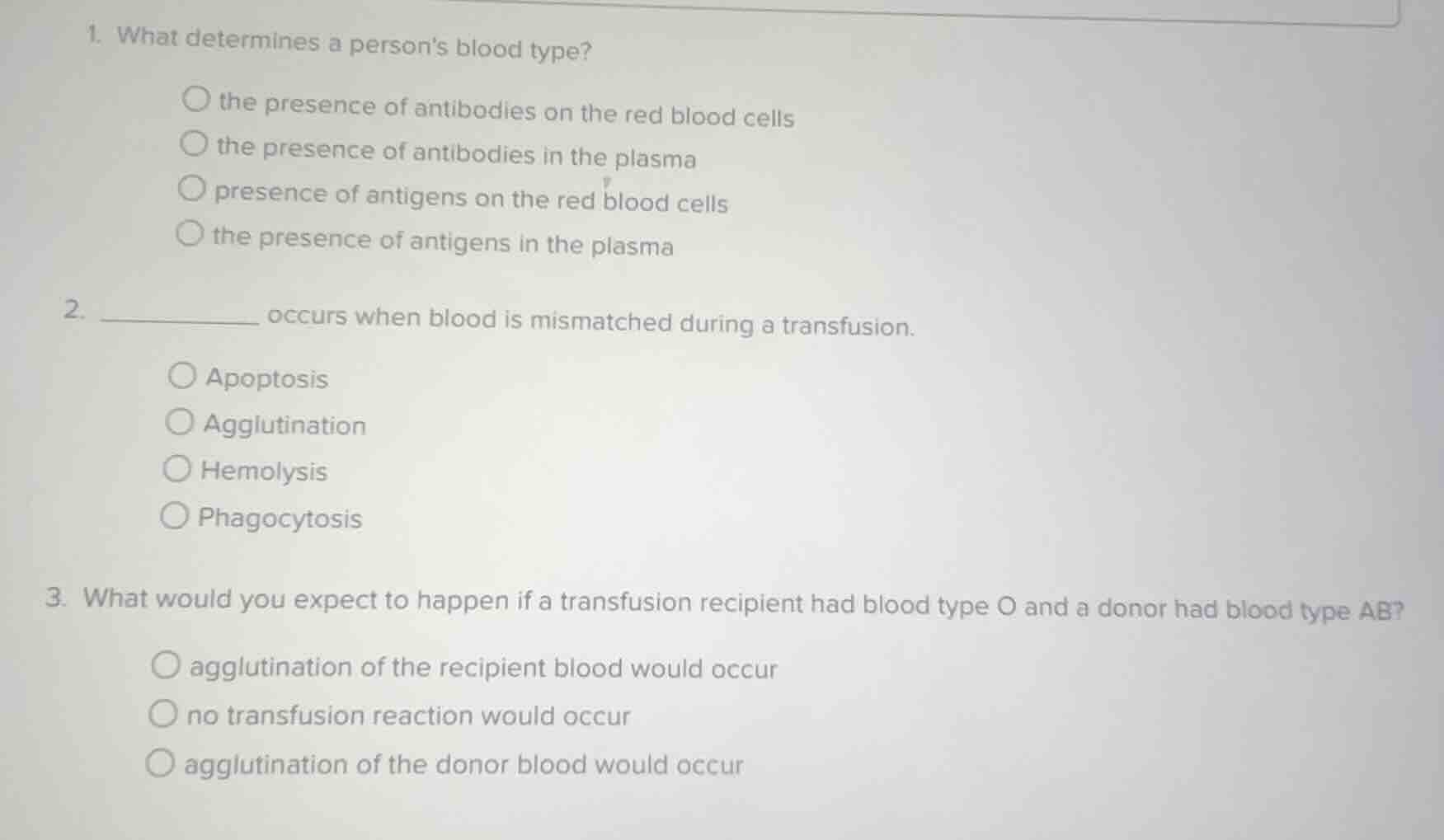
- what determines a persons blood type?
the presence of antibodies on the red blood cells
the presence of antibodies in the plasma
presence of antigens on the red blood cells
the presence of antigens in the plasma
- ________ occurs when blood is mismatched during a transfusion.
apoptosis
agglutination
hemolysis
phagocytosis
- what would you expect to happen if a transfusion recipient had blood type o and a donor had blood type ab?
agglutination of the recipient blood would occur
no transfusion reaction would occur
agglutination of the donor blood would occur
Brief Explanations
- Blood type is defined by specific antigens (A, B, or none for O) present on the surface of red blood cells; antibodies related to blood type are in plasma, not the defining factor of the type itself.
- When mismatched blood is transfused, antibodies in the recipient's plasma bind to antigens on donor red blood cells, causing the cells to clump together, a reaction called agglutination.
- Type O blood has anti-A and anti-B antibodies in its plasma. Type AB donor blood has A and B antigens on its red blood cells. The recipient's antibodies will bind to the donor's red blood cell antigens, causing agglutination of the donor's blood cells.

Snap & solve any problem in the app
Get step-by-step solutions on Sovi AI
Photo-based solutions with guided steps
Explore more problems and detailed explanations
- presence of antigens on the red blood cells
- Agglutination
- agglutination of the donor blood would occur