QUESTION IMAGE
Question
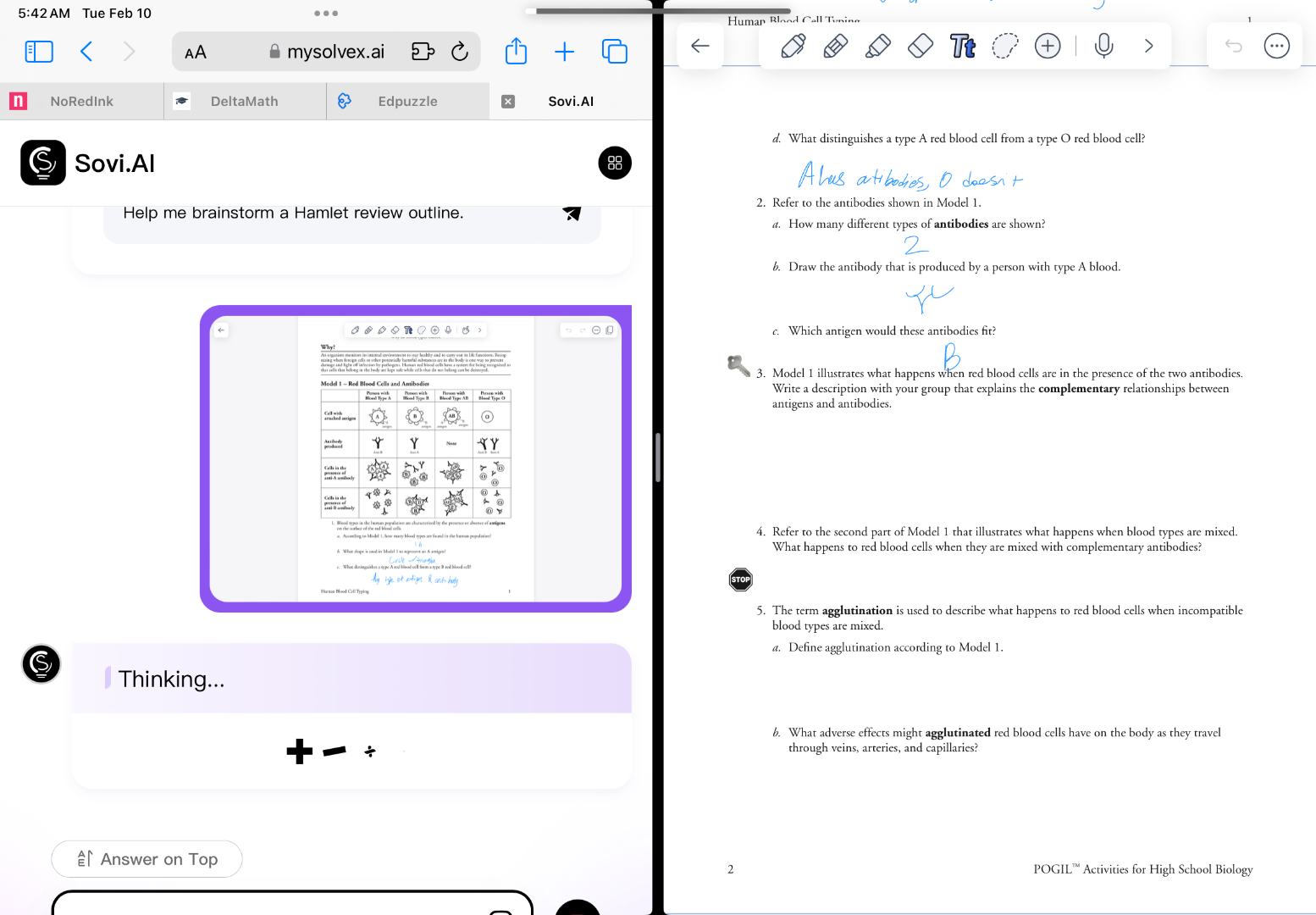
d. what distinguishes a type a red blood cell from a type o red blood cell?
- refer to the antibodies shown in model 1.
a. how many different types of antibodies are shown?
b. draw the antibody that is produced by a person with type a blood.
c. which antigen would these antibodies fit?
- model 1 illustrates what happens when red blood cells are in the presence of the two antibodies. write a description with your group that explains the complementary relationships between antigens and antibodies.
- refer to the second part of model 1 that illustrates what happens when blood types are mixed. what happens to red blood cells when they are mixed with complementary antibodies?
- the term agglutination is used to describe what happens to red blood cells when incompatible blood types are mixed.
a. define agglutination according to model 1.
b. what adverse effects might agglutinated red blood cells have on the body as they travel through veins, arteries, and capillaries?
Brief Explanations
- For d: Based on blood type antigen rules, type A has A antigens, type O has none.
- For 2a: Model 1 shows anti-A and anti-B antibodies, total 2.
- For 2c: Type A blood produces anti-B antibodies, which bind to B antigens.
- For 3: Antigen-antibody interaction follows a complementary lock-and-key model, where each antibody's shape matches only its target antigen.
- For 4: Complementary antibody-antigen binding triggers red blood cell clumping.
- For 5a: Defined by the visible clumping reaction in Model 1 from antibody-antigen binding.
- For 5b: Clumped cells obstruct vascular pathways, impairing circulatory function.

Snap & solve any problem in the app
Get step-by-step solutions on Sovi AI
Photo-based solutions with guided steps
Explore more problems and detailed explanations
d. Type A red blood cells have A antigens on their surface; type O red blood cells have no antigens on their surface.
- a. 2
- c. B antigen
- Antigens are surface markers on red blood cells; antibodies are proteins that bind specifically to complementary antigen shapes, like a lock and key.
- The red blood cells clump together (agglutinate).
- a. Agglutination is the clumping of red blood cells that occurs when complementary antibodies bind to antigens on the surface of red blood cells.
- b. Agglutinated red blood cells can block blood vessels, restricting blood flow and oxygen delivery to tissues, which can cause organ damage, pain, or potentially life-threatening complications.