QUESTION IMAGE
Question
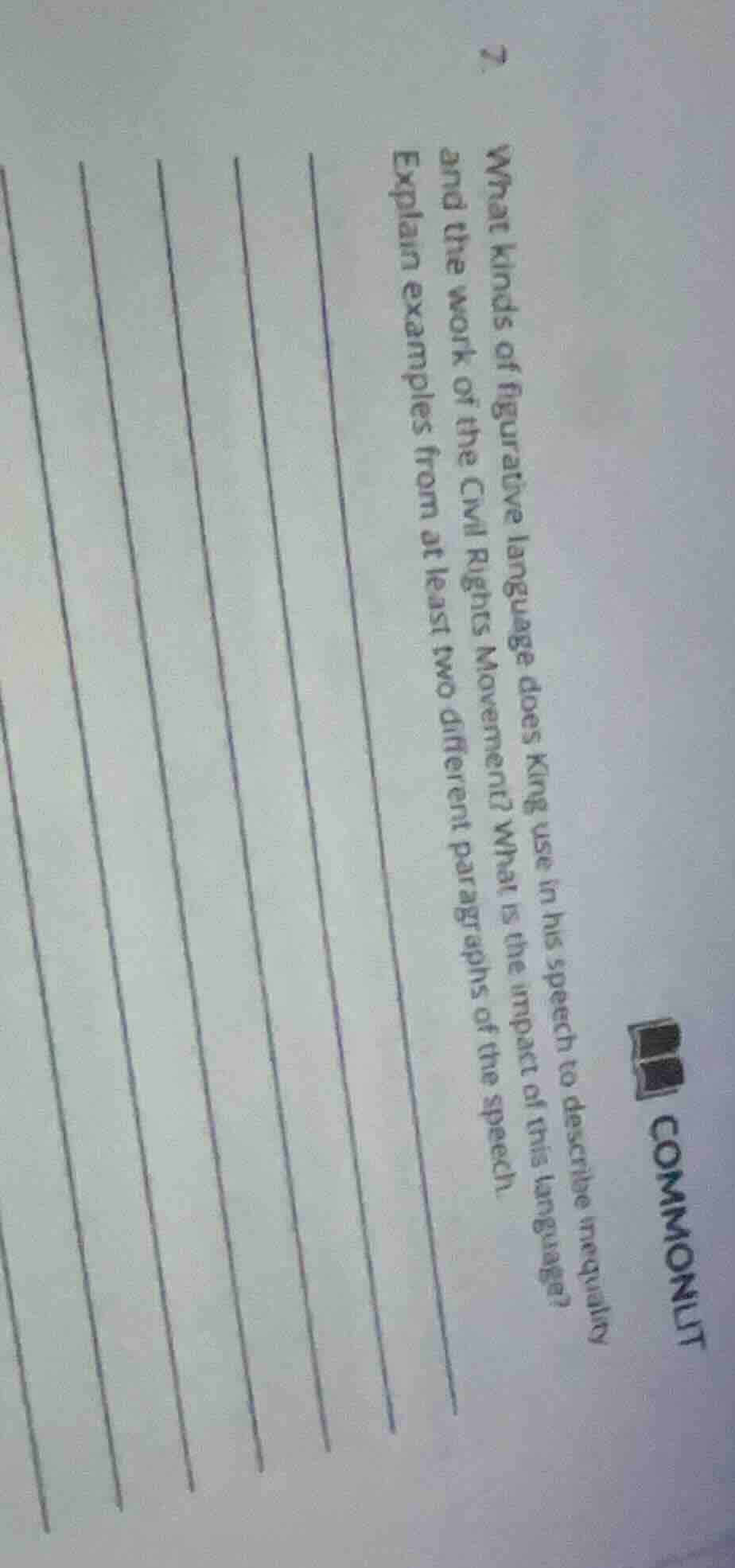
- what kinds of figurative language does king use in his speech to describe inequality and the work of the civil rights movement? what is the impact of this language? explain examples from at least two different paragraphs of the speech.
- Metaphor: King uses financial metaphors in early paragraphs of his "I Have a Dream" speech, like describing unfulfilled civil rights promises as a "bad check" that has come back "marked 'insufficient funds'". This frames inequality as a broken financial agreement, making the denial of rights tangible and unfair to all listeners.
- Simile: Later in the speech, he uses similes such as "justice rolls down like waters, and righteousness like an ever-flowing stream". This figurative language links the Civil Rights Movement's goal of equality to a natural, unstoppable force, emphasizing that justice is an inevitable, moral imperative that will overcome oppression.
The impact of this language is twofold: it makes abstract ideas of inequality and justice relatable to diverse audiences, and it stirs emotional resonance, inspiring solidarity and commitment to the Civil Rights Movement's goals.

Snap & solve any problem in the app
Get step-by-step solutions on Sovi AI
Photo-based solutions with guided steps
Explore more problems and detailed explanations
King uses metaphors and similes (key types of figurative language) to describe inequality and frame the Civil Rights Movement:
- Metaphor (Paragraph 4): He compares the unfulfilled promise of equal rights to a "bad check" from the U.S. government, returned "marked 'insufficient funds'". This frames systemic inequality as a broken, unfair financial contract, making the denial of civil rights concrete and universally understandable.
- Simile (Paragraph 23): He states "justice rolls down like waters, and righteousness like an ever-flowing stream". This compares the arrival of racial justice to an unstoppable natural force, emphasizing that equality is an inevitable, moral outcome, and inspiring hope and resolve in movement participants.
This figurative language makes abstract concepts of oppression and justice relatable, builds emotional connection across diverse audiences, and frames the Civil Rights Movement as a fight for a moral, tangible promise that cannot be ignored.