QUESTION IMAGE
Question
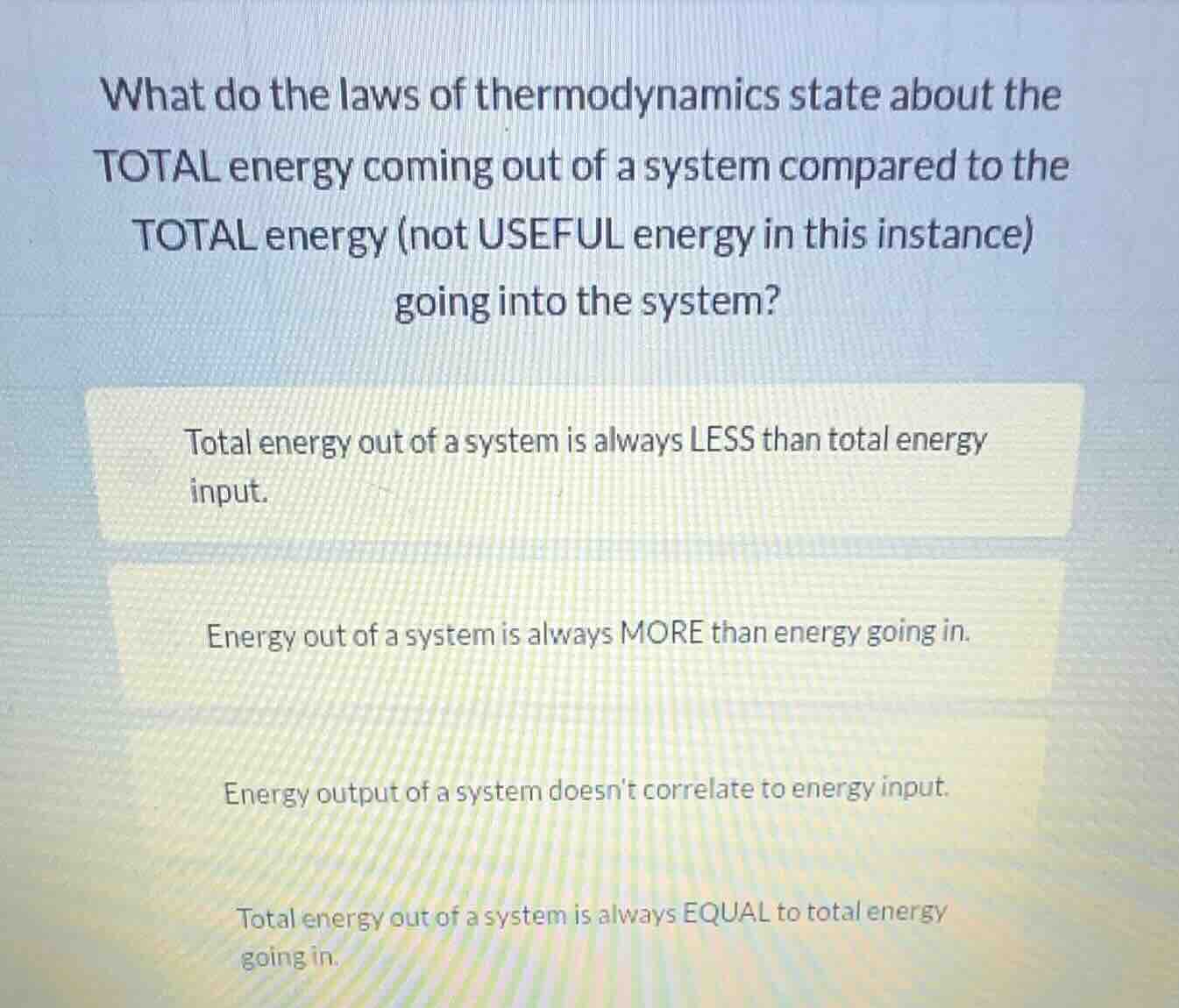
what do the laws of thermodynamics state about the total energy coming out of a system compared to the total energy (not useful energy in this instance) going into the system? total energy out of a system is always less than total energy input. energy out of a system is always more than energy going in. energy output of a system doesnt correlate to energy input. total energy out of a system is always equal to total energy going in.
The first law of thermodynamics (conservation of energy) states that energy cannot be created or destroyed, only transferred or transformed. So the total energy output of a system should equal the total energy input (considering all forms of energy, including non - useful like heat loss). The option "Total energy out of a system is always LESS than total energy input" is incorrect as it goes against energy conservation. "Energy out of a system is always MORE than energy going in" is also wrong as energy can't be created. "Energy output of a system doesn't correlate to energy input" is incorrect because of the conservation principle.

Snap & solve any problem in the app
Get step-by-step solutions on Sovi AI
Photo-based solutions with guided steps
Explore more problems and detailed explanations
D. Total energy out of a system is always EQUAL to total energy going in. (Note: Assuming the last option is labeled D, if the original labels are different, adjust the label accordingly. The key is the statement "Total energy out of a system is always EQUAL to total energy going in" as per the first law of thermodynamics.)