QUESTION IMAGE
Question
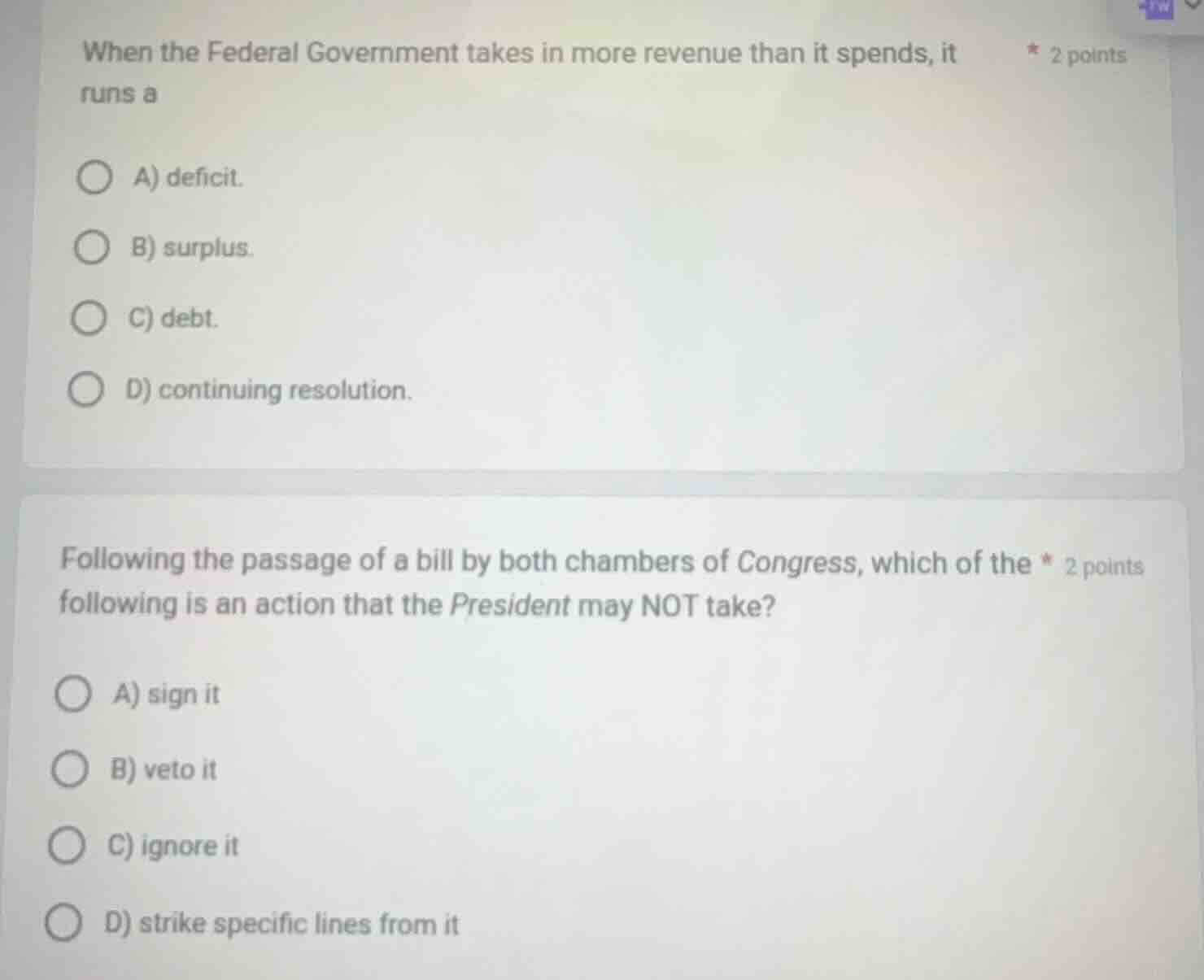
when the federal government takes in more revenue than it spends, it runs a
a) deficit.
b) surplus.
c) debt.
d) continuing resolution.
following the passage of a bill by both chambers of congress, which of the following is an action that the president may not take?
a) sign it
b) veto it
c) ignore it
d) strike specific lines from it
For the first question: A deficit is when spending exceeds revenue, debt is accumulated deficits over time, and a continuing resolution is a temporary spending bill. A surplus occurs when revenue is greater than spending.
For the second question: The President can sign a bill to make it law, veto it (which can be overridden by Congress), or ignore it (resulting in the bill becoming law after 10 days if Congress is in session). Line-item vetoes (striking specific lines) are not a power granted to the President for most bills under the U.S. Constitution.

Snap & solve any problem in the app
Get step-by-step solutions on Sovi AI
Photo-based solutions with guided steps
Explore more problems and detailed explanations
- B) surplus.
- D) strike specific lines from it