QUESTION IMAGE
Question
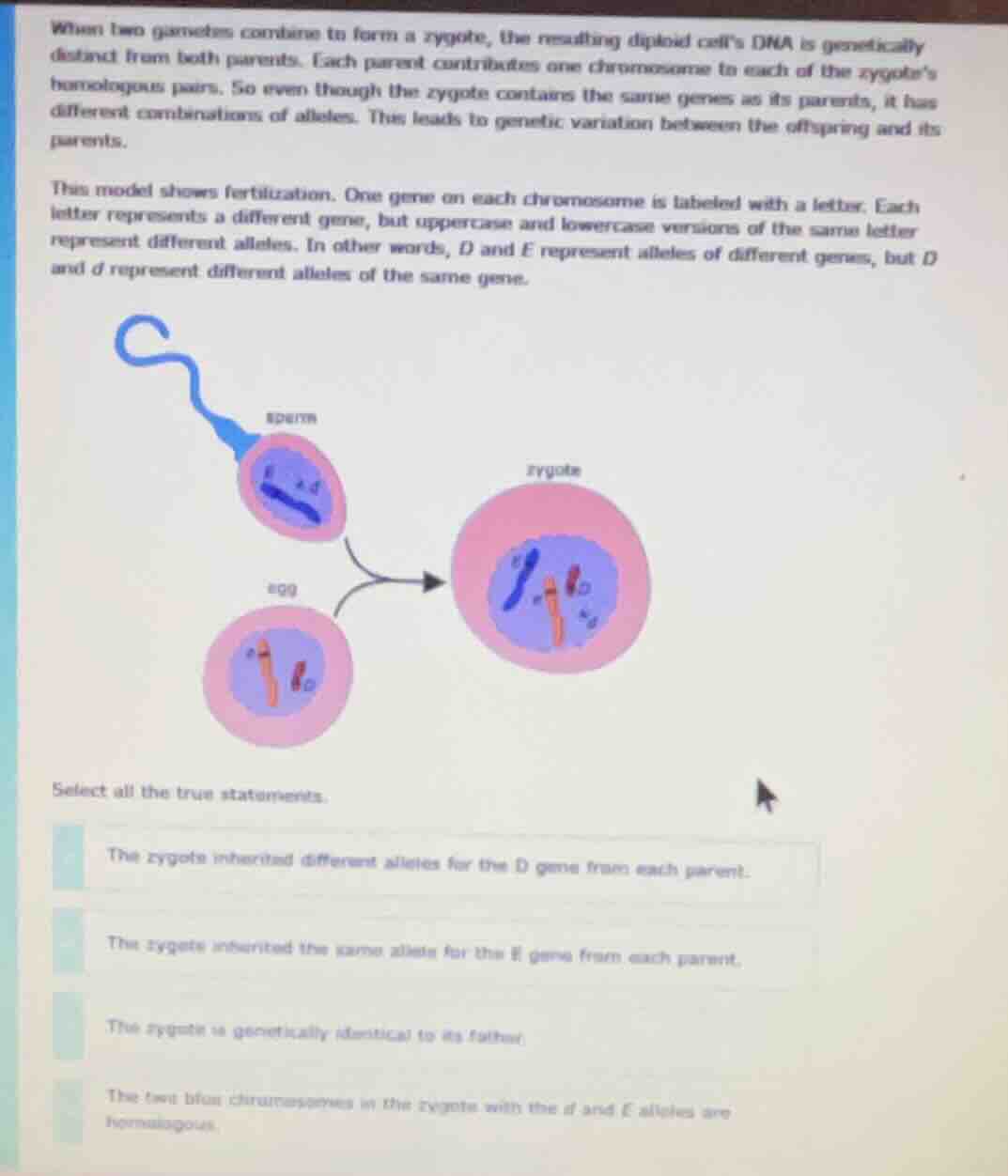
when two gametes combine to form a zygote, the resulting diploid cells dna is genetically distinct from both parents. each parent contributes one chromosome to each of the zygotes homologous pairs. so even though the zygote contains the same genes as its parents, it has different combinations of alleles. this leads to genetic variation between the offspring and its parents.
this model shows fertilization. one gene on each chromosome is labeled with a letter. each letter represents a different gene, but uppercase and lowercase versions of the same letter represent different alleles. in other words, d and e represent alleles of different genes, but d and d represent different alleles of the same gene.
select all the true statements.
the zygote inherited different alleles for the d gene from each parent.
the zygote inherited the same allele for the e gene from each parent.
the zygote is genetically identical to its father.
the two blue chromosomes in the zygote with the d and e alleles are homologous.
- For the D gene: The sperm contributes
Dallele, the egg contributesdallele. The zygote hasDandd, which are different alleles from each parent. This statement is true. - For the E gene: The sperm contributes
Eallele, the egg has no E gene (only the sperm provides the E allele). So the zygote does not inherit the same E allele from both parents. This statement is false. - The zygote has a unique combination of alleles from both parents, so it cannot be genetically identical to its father. This statement is false.
- Homologous chromosomes carry the same genes (one from each parent). The blue chromosomes have different genes (
DandE), so they are not homologous. This statement is false.

Snap & solve any problem in the app
Get step-by-step solutions on Sovi AI
Photo-based solutions with guided steps
Explore more problems and detailed explanations
The zygote inherited different alleles for the D gene from each parent.