QUESTION IMAGE
Question
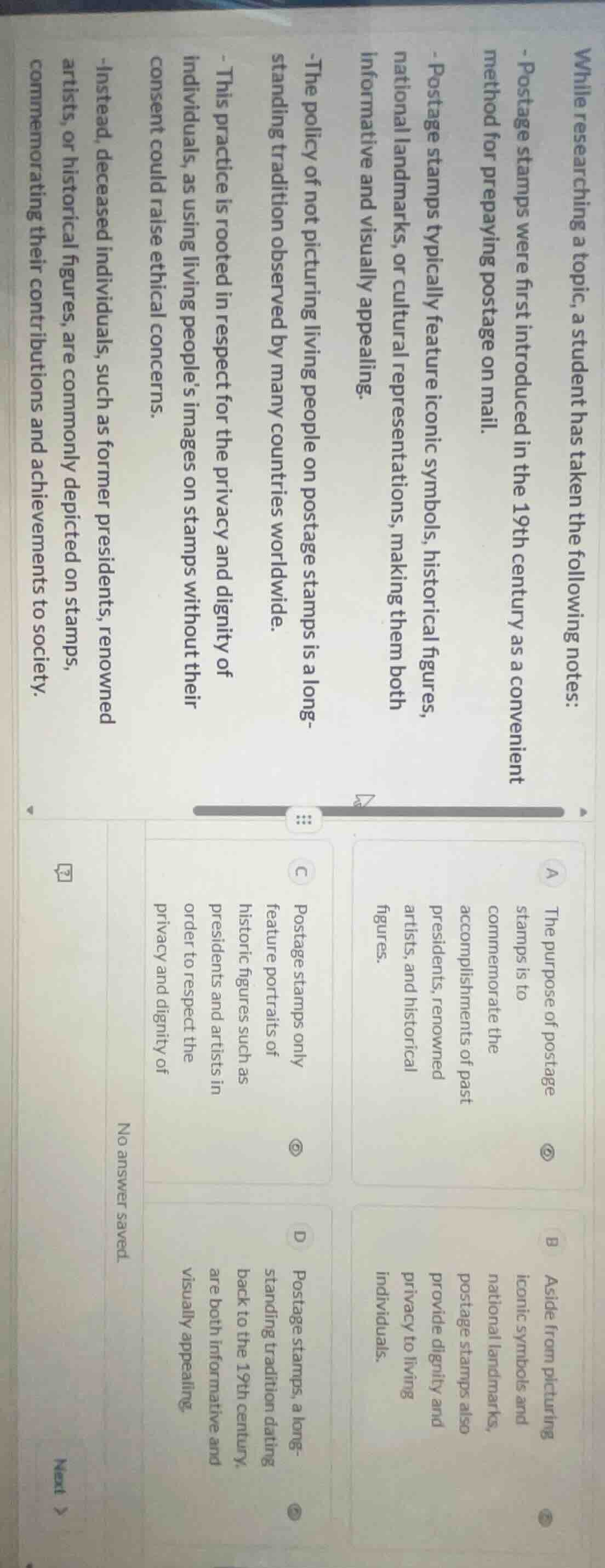
while researching a topic, a student has taken the following notes: - postage stamps were first introduced in the 19th century as a convenient method for prepaying postage on mail. - postage stamps typically feature iconic symbols, historical figures, national landmarks, or cultural representations, making them both informative and visually appealing. - the policy of not picturing living people on postage stamps is a long - standing tradition observed by many countries worldwide. - this practice is rooted in respect for the privacy and dignity of individuals, as using living people’s images on stamps without their consent could raise ethical concerns. - instead, deceased individuals, such as former presidents, renowned artists, or historical figures, are commonly depicted on stamps, commemorating their contributions and achievements to society. a the purpose of postage stamps is to commemorate the accomplishments of past presidents, renowned artists, and historical figures. b aside from picturing iconic symbols and national landmarks, postage stamps also provide dignity and privacy to living individuals. c postage stamps only feature portraits of historic figures such as presidents and artists in order to respect the privacy and dignity of d postage stamps, a long - standing tradition dating back to the 19th century, are both informative and visually appealing.
To solve this multiple - choice question about the purpose or characteristics of postage stamps, we analyze each option by matching it with the given research notes:
Option A
The research notes say that deceased individuals like former presidents, renowned artists, or historical figures are depicted on stamps to commemorate their contributions. Option A states that the purpose of postage stamps is to commemorate the accomplishments of past presidents, renowned artists, and historical figures. This matches the relevant content in the notes.
Option B
The notes mention that the policy of not picturing living people is to respect their privacy and dignity, but there is no content indicating that "aside from picturing iconic symbols and national landmarks, postage stamps also provide dignity and privacy to living individuals" as Option B says. So Option B does not match the notes.
Option C
The notes clearly state that deceased individuals (including former presidents, renowned artists, or historical figures) are commonly depicted on stamps. Option C says "Postage stamps only feature portraits of historic figures such as presidents and artists in order to respect the privacy and dignity of...", the "only" here is wrong because the notes also mention national landmarks and culturally representative things can be on stamps. So Option C is incorrect.
Option D
The notes say that postage stamps were first introduced in the 19th century as a convenient method for prepaying postage on mail, and they are also informative and visually appealing. But Option D says "Postage stamps, a long - standing tradition dating back to the 19th century, are both informative and visually appealing" which ignores the original purpose of postage stamps (prepaying postage) and misinterprets the tradition (the tradition is about not picturing living people, not the existence of stamps since the 19th century as a tradition of being informative and visually appealing). So Option D is incorrect.

Snap & solve any problem in the app
Get step-by-step solutions on Sovi AI
Photo-based solutions with guided steps
Explore more problems and detailed explanations
A. The purpose of postage stamps is to commemorate the accomplishments of past presidents, renowned artists, and historical figures.