QUESTION IMAGE
Question
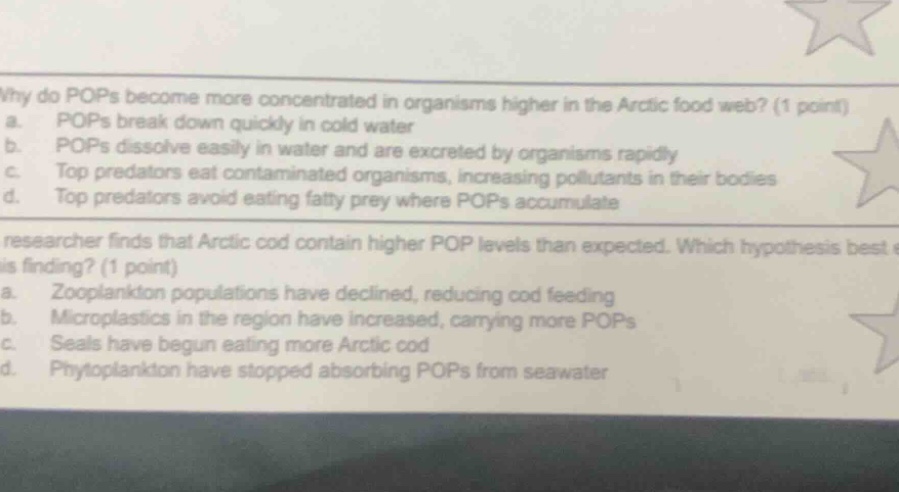
why do pops become more concentrated in organisms higher in the arctic food web? (1 point)
a. pops break down quickly in cold water
b. pops dissolve easily in water and are excreted by organisms rapidly
c. top predators eat contaminated organisms, increasing pollutants in their bodies
d. top predators avoid eating fatty prey where pops accumulate
researcher finds that arctic cod contain higher pop levels than expected. which hypothesis best e
s finding? (1 point)
a. zooplankton populations have declined, reducing cod feeding
b. microplastics in the region have increased, carrying more pops
c. seals have begun eating more arctic cod
d. phytoplankton have stopped absorbing pops from seawater
Para la primera pregunta: Los contaminantes orgánicos persistentes (POPs) no se descomponen fácilmente y se acumulan en tejidos grasos. Los depredadores toman estos contaminantes al consumir organismos contaminados, concentrando los POPs a medida que sube la cadena alimentaria.
Para la segunda pregunta: Las microplásticos pueden absorber y transportar POPs en el medio marino. Si su cantidad aumenta, los organismos como el bacalito ártico que los consumen acumulan mayores niveles de estos contaminantes. Las otras opciones no explican el aumento de POPs: una disminución de zooplancton reduciría la ingesta de alimento (no de contaminantes), los focos que comen más bacalito afectarían a los focos no al bacalito, y si los fitoplancton no absorben POPs, los niveles en el bacalito disminuirían.

Snap & solve any problem in the app
Get step-by-step solutions on Sovi AI
Photo-based solutions with guided steps
Explore more problems and detailed explanations
- c. Top predators eat contaminated organisms, increasing pollutants in their bodies
- b. Microplastics in the region have increased, carrying more POPs