QUESTION IMAGE
Question
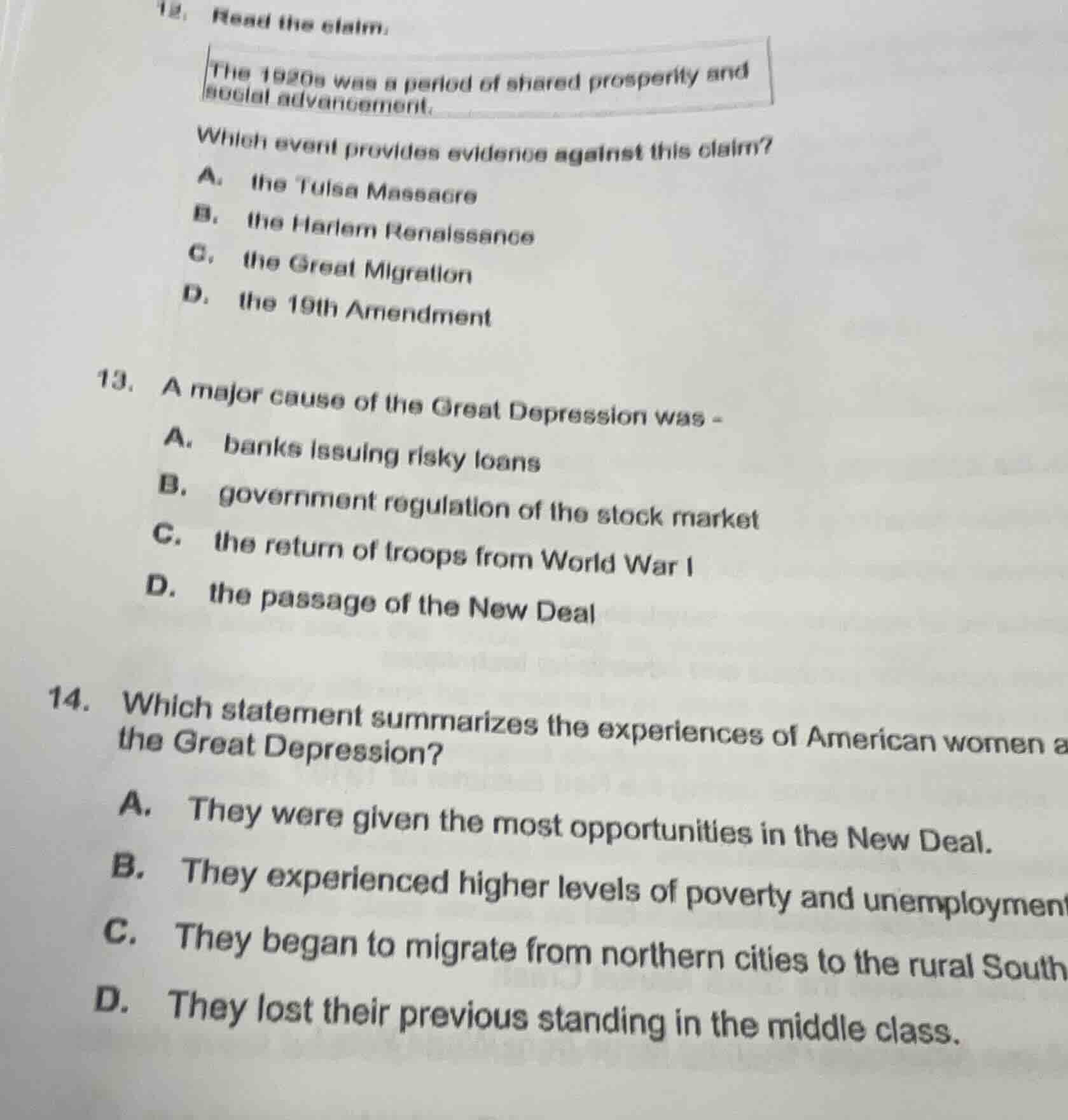
- read the claim:
the 1920s was a period of shared prosperity and social advancement.
which event provides evidence against this claim?
a. the tulsa massacre
b. the harlem renaissance
c. the great migration
d. the 19th amendment
- a major cause of the great depression was -
a. banks issuing risky loans
b. government regulation of the stock market
c. the return of troops from world war i
d. the passage of the new deal
- which statement summarizes the experiences of american women a the great depression?
a. they were given the most opportunities in the new deal.
b. they experienced higher levels of poverty and unemploymen
c. they began to migrate from northern cities to the rural south
d. they lost their previous standing in the middle class.
Brief Explanations
- The claim states the 1920s was a period of shared prosperity and social advancement. The Tulsa Massacre was a violent attack on a prosperous Black community, destroying wealth and lives, proving prosperity was not shared. The other options represent social/cultural advancement or progress.
- Unregulated banks issuing risky loans (including to stock speculators) contributed to financial instability that triggered the Great Depression. Government regulation of the stock market would not cause a crash, returning WWI troops were earlier, and the New Deal was a response to the Depression, not a cause.
- During the Great Depression, women faced disproportionate poverty and unemployment; they were often passed over for jobs, and female-headed households struggled more. The other options are incorrect: New Deal opportunities were limited for women, migration patterns were mostly rural to urban, and not all middle-class women lost their standing.

Snap & solve any problem in the app
Get step-by-step solutions on Sovi AI
Photo-based solutions with guided steps
Explore more problems and detailed explanations
- A. the Tulsa Massacre
- A. banks issuing risky loans
- B. They experienced higher levels of poverty and unemployment