QUESTION IMAGE
Question
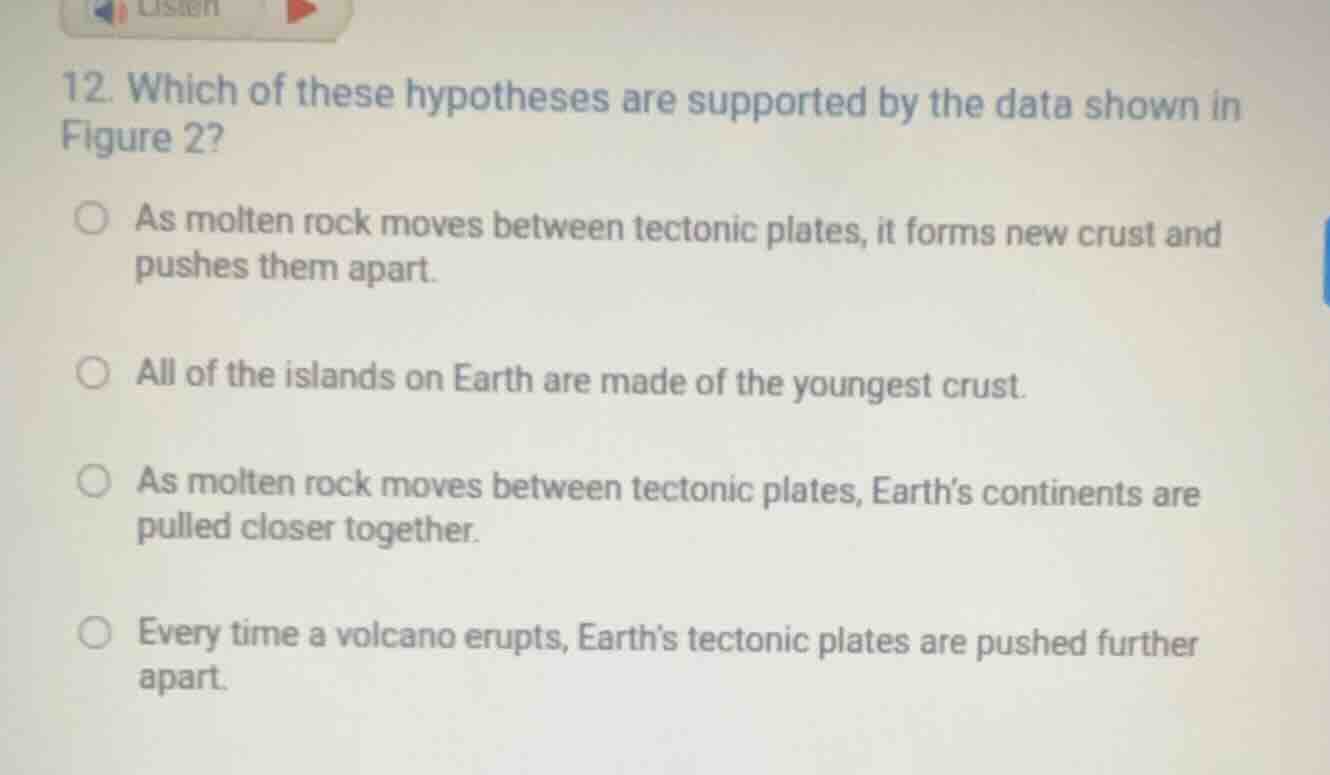
- which of these hypotheses are supported by the data shown in figure 2?
○ as molten rock moves between tectonic plates, it forms new crust and pushes them apart.
○ all of the islands on earth are made of the youngest crust.
○ as molten rock moves between tectonic plates, earth’s continents are pulled closer together.
○ every time a volcano erupts, earth’s tectonic plates are pushed further apart.
Brief Explanations
To determine the supported hypothesis, we analyze each option:
- The first option aligns with the process of seafloor spreading (a key concept in plate tectonics), where molten rock (magma) rises between tectonic plates (at mid - ocean ridges), forms new crust, and pushes the plates apart.
- The second option is incorrect as not all islands have the youngest crust (e.g., continental islands are made of older continental crust).
- The third option is wrong because molten rock at mid - ocean ridges pushes plates apart, not pull continents together.
- The fourth option is incorrect as volcano eruptions at subduction zones don't push plates further apart in the same way as mid - ocean ridge activity, and not all volcanoes are related to plate separation.

Snap & solve any problem in the app
Get step-by-step solutions on Sovi AI
Photo-based solutions with guided steps
Explore more problems and detailed explanations
A. As molten rock moves between tectonic plates, it forms new crust and pushes them apart.