QUESTION IMAGE
Question
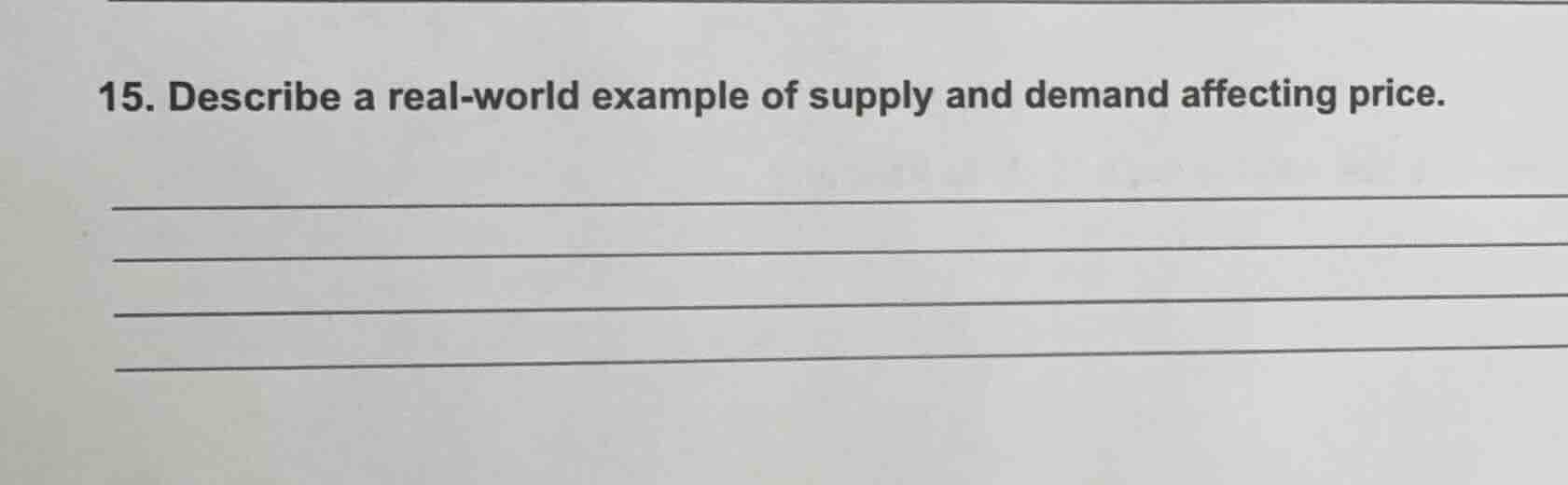
- describe a real-world example of supply and demand affecting price.
A common real-world example is seasonal pumpkin pricing. In the weeks leading up to Halloween, consumer demand for pumpkins surges as people buy them for decorations and cooking. At the same time, the supply of pumpkins is limited to the harvest available that season, which cannot quickly expand to meet the sharp demand increase. This imbalance of high demand and fixed short-term supply leads to a noticeable rise in pumpkin prices. After Halloween, demand drops drastically, while unsold pumpkins still make up available supply, so prices fall significantly, and many sellers discount remaining pumpkins to clear inventory.

Snap & solve any problem in the app
Get step-by-step solutions on Sovi AI
Photo-based solutions with guided steps
Explore more problems and detailed explanations
A real-world example is seasonal pumpkin pricing around Halloween:
- Pre-Halloween: Demand for pumpkins spikes for decorations/cooking, while supply is fixed to the seasonal harvest. This high demand + limited supply drives pumpkin prices upward.
- Post-Halloween: Demand plummets immediately, while unsold pumpkins remain in supply. This low demand + excess supply causes pumpkin prices to drop sharply, with sellers often discounting remaining stock to clear inventory.