QUESTION IMAGE
Question
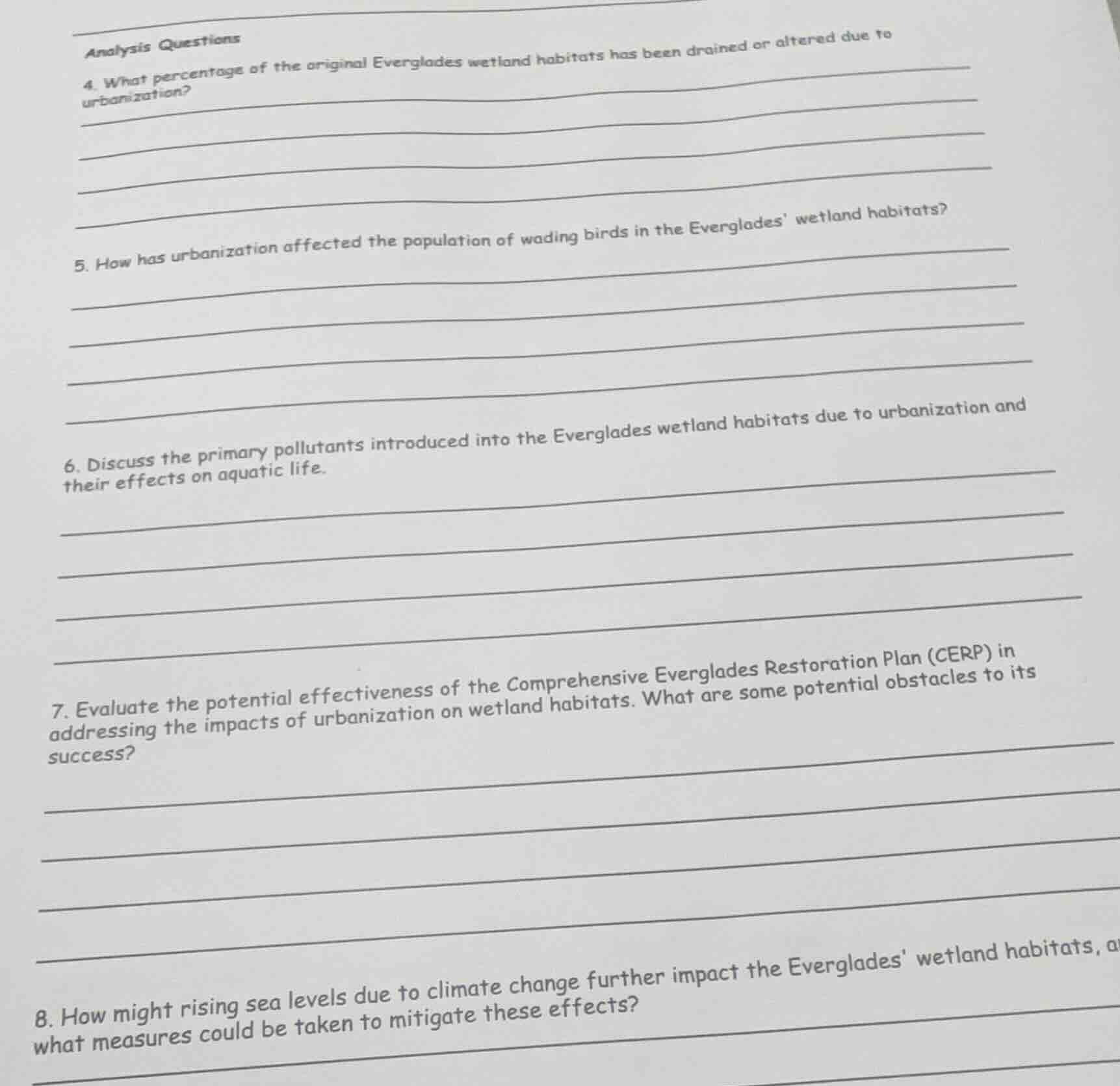
analysis questions
- what percentage of the original everglades wetland habitats has been drained or altered due to urbanization?
- how has urbanization affected the population of wading birds in the everglades wetland habitats?
- discuss the primary pollutants introduced into the everglades wetland habitats due to urbanization and their effects on aquatic life.
- evaluate the potential effectiveness of the comprehensive everglades restoration plan (cerp) in addressing the impacts of urbanization on wetland habitats. what are some potential obstacles to its success?
- how might rising sea levels due to climate change further impact the everglades wetland habitats, a what measures could be taken to mitigate these effects?
Question 4
To determine the percentage of original Everglades wetland habitats drained or altered due to urbanization, one would refer to environmental science research, government reports (like those from the U.S. Geological Survey or the South Florida Water Management District), or scientific publications on Everglades habitat loss. Studies indicate that around 50% of the original Everglades wetlands have been drained or altered for urban development, agriculture, and other human activities.
Urbanization affects wading bird populations in the Everglades by reducing and fragmenting their wetland habitats (due to drainage, development). This leads to less available food (fish, amphibians, invertebrates) as water flow and quality change, nesting sites are lost, and pollution from urban areas (like runoff with nutrients, chemicals) degrades habitats. As a result, wading bird populations (e.g., egrets, herons, ibises) have declined significantly—some species’ numbers dropped by over 90% from historical levels due to these urbanization - driven habitat and ecosystem changes.
Primary pollutants from urbanization in the Everglades include nutrient pollutants (nitrogen, phosphorus from urban runoff, sewage, and fertilizer - laden stormwater), heavy metals (from vehicle emissions, industrial waste), and pesticides (from urban and agricultural areas). Nutrients cause eutrophication: excess algae growth blocks sunlight, depletes oxygen, and disrupts aquatic food webs (killing fish, harming invertebrates). Heavy metals accumulate in aquatic organisms, causing toxicity, reduced growth, and reproductive issues. Pesticides can kill non - target aquatic insects, amphibians, and impact the food chain, while also being toxic to fish and other aquatic life.

Snap & solve any problem in the app
Get step-by-step solutions on Sovi AI
Photo-based solutions with guided steps
Explore more problems and detailed explanations
Approximately 50% of the original Everglades wetland habitats have been drained or altered due to urbanization (and related human activities like agriculture).