QUESTION IMAGE
Question
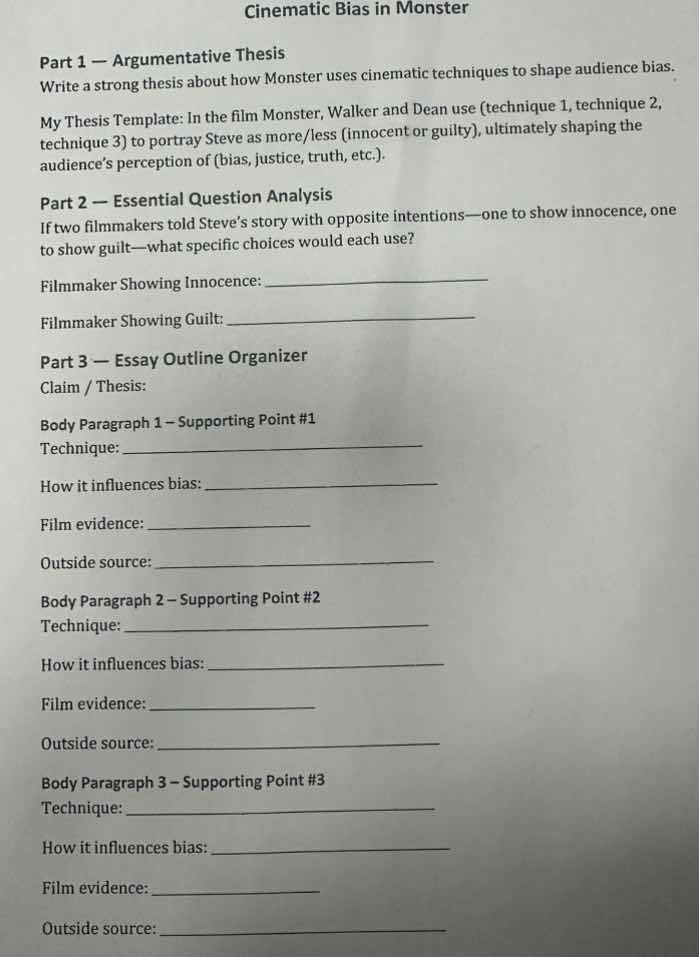
cinematic bias in monster
part 1 — argumentative thesis
write a strong thesis about how monster uses cinematic techniques to shape audience bias.
my thesis template: in the film monster, walker and dean use (technique 1, technique 2, technique 3) to portray steve as more/less (innocent or guilty), ultimately shaping the audience’s perception of (bias, justice, truth, etc.).
part 2 — essential question analysis
if two filmmakers told steve’s story with opposite intentions—one to show innocence, one to show guilt—what specific choices would each use?
filmmaker showing innocence:
filmmaker showing guilt:
part 3 — essay outline organizer
claim / thesis:
body paragraph 1 – supporting point #1
technique:
how it influences bias:
film evidence:
outside source:
body paragraph 2 – supporting point #2
technique:
how it influences bias:
film evidence:
outside source:
body paragraph 3 – supporting point #3
technique:
how it influences bias:
film evidence:
outside source:
Part 1 – Argumentative Thesis
Craft a thesis tying 3 cinematic techniques from Monster to framing Steve's innocence/guilt and audience bias, following the template.
Identify distinct cinematic choices for each filmmaker's opposing goal, focusing on shot type, sound, and editing.
Expand the argumentative thesis into a structured essay outline with specific cinematic techniques, bias impacts, film evidence, and a critical source example.

Snap & solve any problem in the app
Get step-by-step solutions on Sovi AI
Photo-based solutions with guided steps
Explore more problems and detailed explanations
In the film Monster, Walker and Dean use close-up shots of Steve’s anxious, tearful face, diegetic sound of his quiet, self-doubting voiceover, and low-key lighting that softens his features during flashbacks to his normal life to portray Steve as more innocent, ultimately shaping the audience’s perception of his moral truth and potential for redemption.
---