QUESTION IMAGE
Question
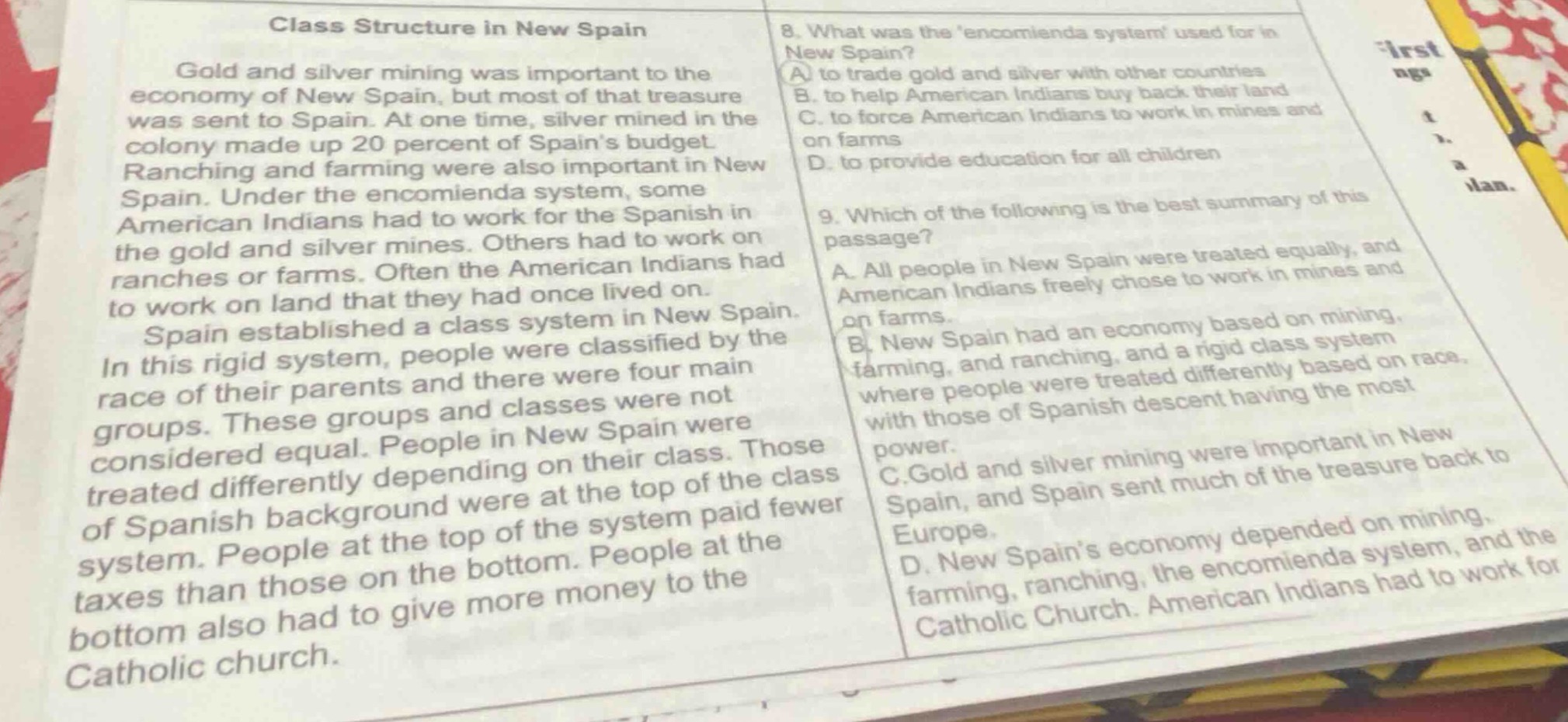
class structure in new spain
gold and silver mining was important to the
economy of new spain, but most of that treasure
was sent to spain. at one time, silver mined in the
colony made up 20 percent of spain’s budget.
ranching and farming were also important in new
spain. under the encomienda system, some
american indians had to work for the spanish in
the gold and silver mines. others had to work on
ranches or farms. often the american indians had
to work on land that they had once lived on.
spain established a class system in new spain.
in this rigid system, people were classified by the
race of their parents and there were four main
groups. these groups and classes were not
considered equal. people in new spain were
treated differently depending on their class. those
of spanish background were at the top of the class
system. people at the top of the system paid fewer
taxes than those on the bottom. people at the
bottom also had to give more money to the
catholic church.
- what was the encomienda system used for in
new spain?
a to trade gold and silver with other countries
b. to help american indians buy back their land
c. to force american indians to work in mines and
on farms
d. to provide education for all children
- which of the following is the best summary of this
passage?
a. all people in new spain were treated equally, and
american indians freely chose to work in mines and
on farms.
b. new spain had an economy based on mining,
farming, and ranching, and a rigid class system
where people were treated differently based on race,
with those of spanish descent having the most
power.
c. gold and silver mining were important in new
spain, and spain sent much of the treasure back to
europe.
d. new spain’s economy depended on mining,
farming, ranching, the encomienda system, and the
catholic church. american indians had to work for
Question 8
The passage says under the encomienda system, American Indians had to work in gold/silver mines or on ranches/farms. Option A is wrong as it's about trading, not the system's purpose. Option B is wrong as the system forced labor, not helping buy land. Option D is wrong as the system is about labor, not education. So C matches the description.
Option A is wrong as the passage says the class system was rigid and Indians were forced to work, not treated equally or choosing freely. Option C only covers mining and treasure sending, not the class system. Option D mentions the Catholic Church, but the passage's class system part doesn't focus on that. Option B covers the economy (mining, farming, ranching) and the rigid class system based on race with Spanish - descent people having power, which matches the passage.

Snap & solve any problem in the app
Get step-by-step solutions on Sovi AI
Photo-based solutions with guided steps
Explore more problems and detailed explanations
C. to force American Indians to work in mines and on farms