QUESTION IMAGE
Question
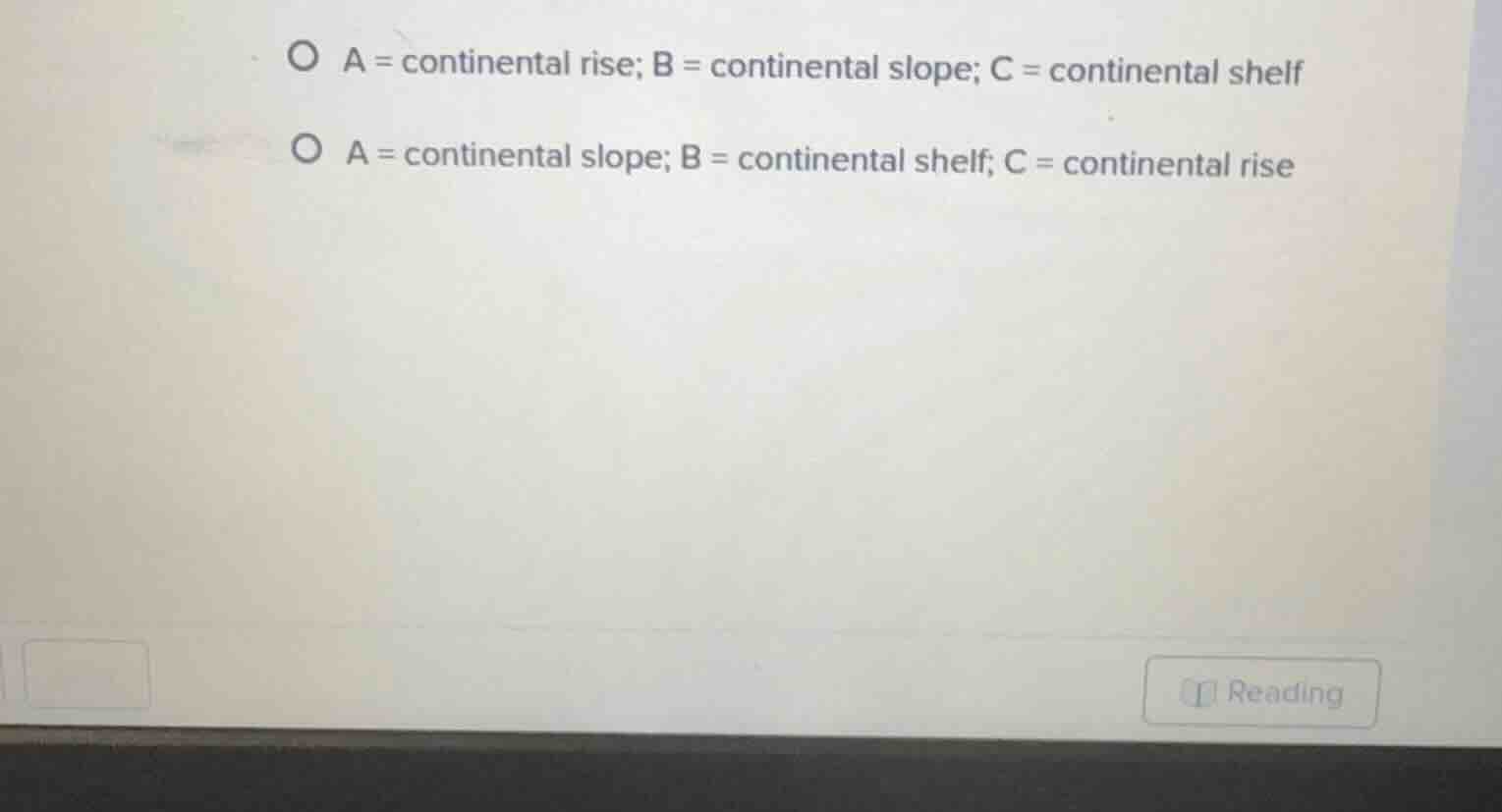
a = continental rise; b = continental slope; c = continental shelf
a = continental slope; b = continental shelf; c = continental rise
To determine the correct answer, we recall the structure of the continental margin. The continental shelf is the shallow, submerged part of the continent near the shore. The continental slope is the steeply sloping area between the continental shelf and the continental rise. The continental rise is the gently sloping area at the base of the continental slope, where sediment accumulates. So the correct order (from the continent - ward to the ocean - ward or in the typical continental margin structure) should be: continental shelf (shallowest, near shore), then continental slope (steeper drop), then continental rise (gentle slope at the bottom). Wait, no, actually, the order from the continent outwards is continental shelf (closest to land, shallow), then continental slope (steeper, going down to the deep ocean), then continental rise (at the base of the slope, where sediments pile up). But in the options, let's analyze:
First option: A = continental rise; B = continental slope; C = continental shelf. But continental shelf is near land, so C being shelf would be closest to land, but A is rise (farthest), B slope (middle). That's reversed.
Second option: A = continental slope; B = continental shelf; C = continental rise. Wait, no, wait: Wait, maybe the diagram (even though not shown) has A, B, C in the order from, say, the deep ocean towards the land? Wait, no, let's re - recall. The continental shelf is the area from the shoreline to the shelf break (where the slope starts). Then the continental slope is from the shelf break to the rise. The continental rise is from the base of the slope to the abyssal plain. So if we consider the order from the ocean (deep) towards the land: first continental rise (at the base, deep), then continental slope (steeper, moving towards land), then continental shelf (shallow, near land). But in the options, the first option is A = rise, B = slope, C = shelf. But that would be ocean - to - land: A (rise, deep) → B (slope, middle) → C (shelf, shallow, near land). But the second option is A = slope, B = shelf, C = rise. That would be slope (middle) → shelf (shallow) → rise (deep), which is land - to - ocean: shelf (land - ward) → slope (middle) → rise (ocean - ward). Wait, maybe the diagram has A, B, C in the order of land - to - ocean. So land side first: continental shelf (B), then continental slope (A), then continental rise (C)? No, the second option is A = slope, B = shelf, C = rise. So B is shelf (closest to land), A is slope (next, steeper), C is rise (farthest, at the base). That matches the land - to - ocean order: shelf (land) → slope (middle) → rise (ocean). Wait, no, the continental shelf is adjacent to the land, then the slope drops off from the shelf break, then the rise is at the bottom of the slope. So from land to ocean: shelf (B) → slope (A) → rise (C). So the second option: A = continental slope; B = continental shelf; C = continental rise is correct. Because B (shelf) is near land, A (slope) is the next (steeper), C (rise) is at the base (farthest from land, towards the deep ocean). The first option has A as rise (farthest), B as slope (middle), C as shelf (closest), which is ocean - to - land, but if the diagram is land - to - ocean, the second option is correct.

Snap & solve any problem in the app
Get step-by-step solutions on Sovi AI
Photo-based solutions with guided steps
Explore more problems and detailed explanations
A = continental slope; B = continental shelf; C = continental rise