QUESTION IMAGE
Question
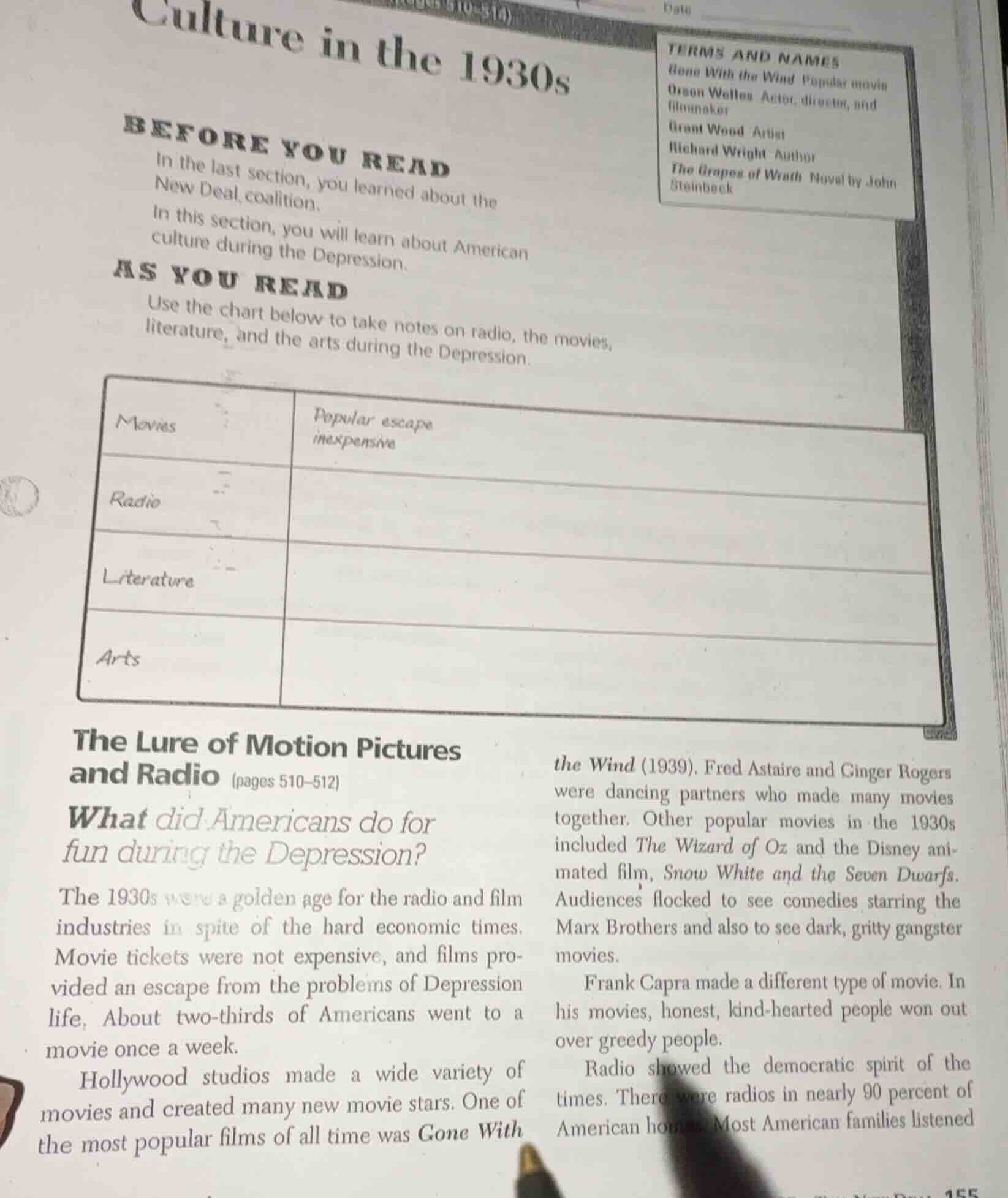
culture in the 1930s
before you read
in the last section, you learned about the new deal, coalition.
in this section, you will learn about american culture during the depression.
as you read
use the chart below to take notes on radio, the movies, literature, and the arts during the depression.
terms and names
gone with the wind popular movie
orson welles actor, director, and filmmaker
grant wood artist
richard wright author
the grapes of wrath novel by john steinbeck
the lure of motion pictures and radio (pages 510–512)
what did americans do for fun during the depression?
the 1930s were a golden age for the radio and film industries in spite of the hard economic times. movie tickets were not expensive, and films provided an escape from the problems of depression life. about two - thirds of americans went to a movie once a week.
hollywood studios made a wide variety of movies and created many new movie stars. one of the most popular films of all time was gone with the wind (1939). fred astaire and ginger rogers were dancing partners who made many movies together. other popular movies in the 1930s included the wizard of oz and the disney animated film, snow white and the seven dwarfs. audiences flocked to see comedies starring the marx brothers and also to see dark, gritty gangster movies.
frank capra made a different type of movie. in his movies, honest, kind - hearted people won out over greedy people.
radio showed the democratic spirit of the times. there were radios in nearly 90 percent of american homes. most american families listened
To fill out the chart about radio, movies, literature, and arts during the Depression, we analyze the text:
Movies
From the text: "Movie tickets were not expensive, and films provided an escape from the problems of Depression life. About two - thirds of Americans went to a movie once a week. Hollywood studios made a wide variety of movies and created many new movie stars... Popular movies included Gone With the Wind (1939), The Wizard of Oz, Disney’s Snow White and the Seven Dwarfs, comedies with the Marx Brothers, gangster movies, and Frank Capra’s movies where honest people triumphed over greedy ones."
Radio
From the text: "Radio showed the democratic spirit of the times. There were radios in nearly 90 percent of American homes. Most American families listened [to radio]." We can infer that radio was widespread, provided entertainment (implied by its popularity), and reflected the democratic spirit of the era.
Literature
The text mentions "Richard Wright (Author)" and "The Grapes of Wrath (Novel by John Steinbeck)". We can assume that literature during the Depression often reflected the hardships of the time (like The Grapes of Wrath which deals with the Dust Bowl and migrant workers) or provided stories that resonated with the struggles of the era.
Arts
The text mentions "Grant Wood (Artist)". We can infer that art during the Depression, like Grant Wood’s work, may have depicted aspects of American life, including rural or regional scenes (Wood is known for American Gothic which was created in the 1930s and reflects rural American life).
Now, filling the chart:
| Category | Notes |
|---|---|
| Radio | Widespread (90% of homes), democratic spirit, family entertainment |
| Literature | Featured works reflecting Depression struggles (e.g., The Grapes of Wrath), authors like Richard Wright |
| Arts | Artists like Grant Wood depicted American life |

Snap & solve any problem in the app
Get step-by-step solutions on Sovi AI
Photo-based solutions with guided steps
Explore more problems and detailed explanations
To fill out the chart about radio, movies, literature, and arts during the Depression, we analyze the text:
Movies
From the text: "Movie tickets were not expensive, and films provided an escape from the problems of Depression life. About two - thirds of Americans went to a movie once a week. Hollywood studios made a wide variety of movies and created many new movie stars... Popular movies included Gone With the Wind (1939), The Wizard of Oz, Disney’s Snow White and the Seven Dwarfs, comedies with the Marx Brothers, gangster movies, and Frank Capra’s movies where honest people triumphed over greedy ones."
Radio
From the text: "Radio showed the democratic spirit of the times. There were radios in nearly 90 percent of American homes. Most American families listened [to radio]." We can infer that radio was widespread, provided entertainment (implied by its popularity), and reflected the democratic spirit of the era.
Literature
The text mentions "Richard Wright (Author)" and "The Grapes of Wrath (Novel by John Steinbeck)". We can assume that literature during the Depression often reflected the hardships of the time (like The Grapes of Wrath which deals with the Dust Bowl and migrant workers) or provided stories that resonated with the struggles of the era.
Arts
The text mentions "Grant Wood (Artist)". We can infer that art during the Depression, like Grant Wood’s work, may have depicted aspects of American life, including rural or regional scenes (Wood is known for American Gothic which was created in the 1930s and reflects rural American life).
Now, filling the chart:
| Category | Notes |
|---|---|
| Radio | Widespread (90% of homes), democratic spirit, family entertainment |
| Literature | Featured works reflecting Depression struggles (e.g., The Grapes of Wrath), authors like Richard Wright |
| Arts | Artists like Grant Wood depicted American life |