QUESTION IMAGE
Question
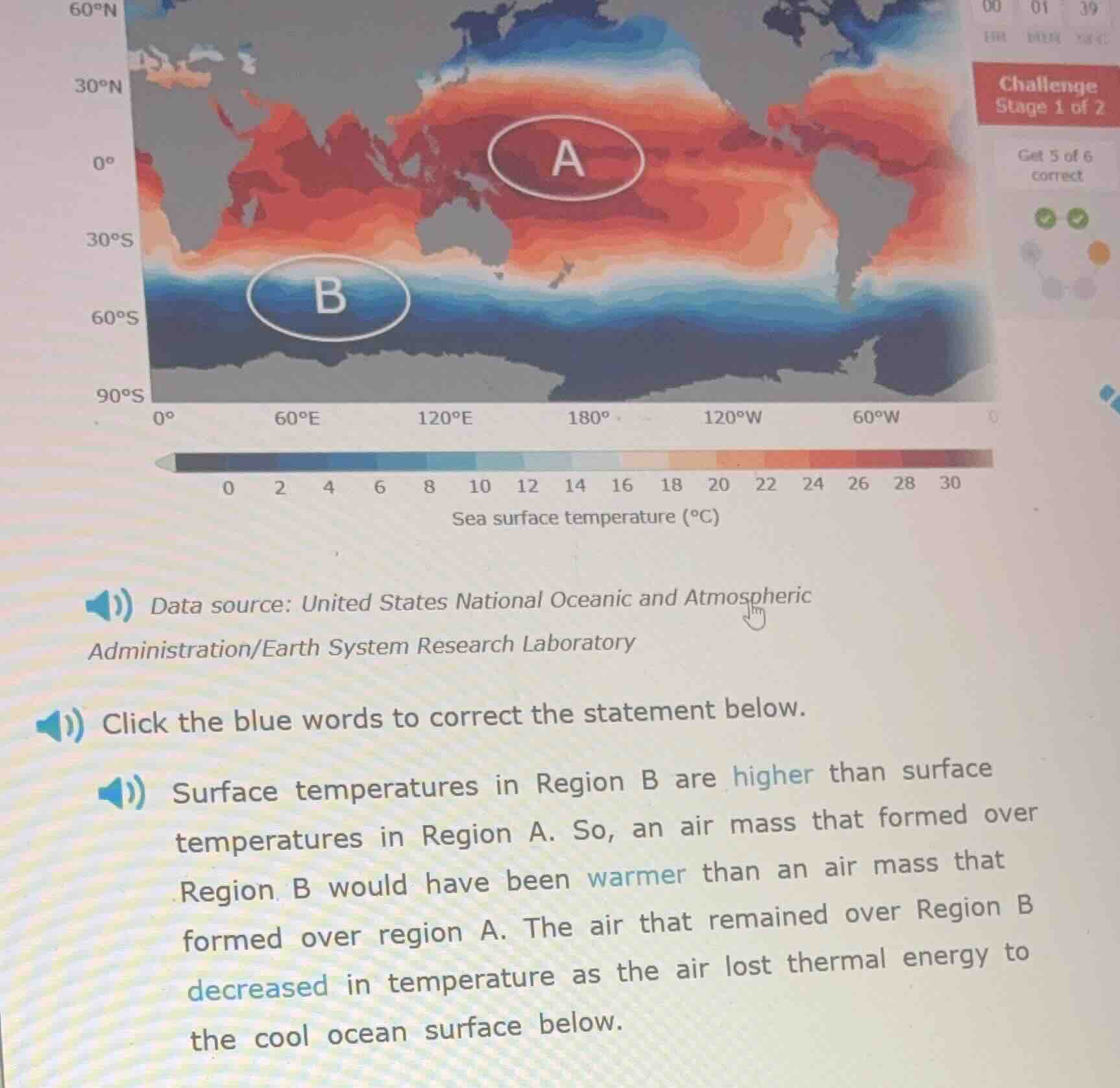
data source: united states national oceanic and atmospheric administration/earth system research laboratory
click the blue words to correct the statement below.
surface temperatures in region b are higher than surface temperatures in region a. so, an air mass that formed over region b would have been warmer than an air mass that formed over region a. the air that remained over region b decreased in temperature as the air lost thermal energy to the cool ocean surface below.
- Compare the sea surface temperatures of Region A and B using the color scale: Region A is in the red/orange range (24-30°C), while Region B is in the dark blue range (0-4°C). So Region B's temperatures are lower, not higher.
- Air masses take on the temperature of the surface they form over. Since Region B is colder, an air mass formed there would be cooler, not warmer, than one from Region A.
- If air loses thermal energy to a cooler surface, its temperature would decrease, which matches the final statement, so this part is correct.

Snap & solve any problem in the app
Get step-by-step solutions on Sovi AI
Photo-based solutions with guided steps
Explore more problems and detailed explanations
Corrected statement:
Surface temperatures in Region B are lower than surface temperatures in Region A. So, an air mass that formed over Region B would have been cooler than an air mass that formed over region A. The air that remained over Region B decreased in temperature as the air lost thermal energy to the cool ocean surface below.