QUESTION IMAGE
Question
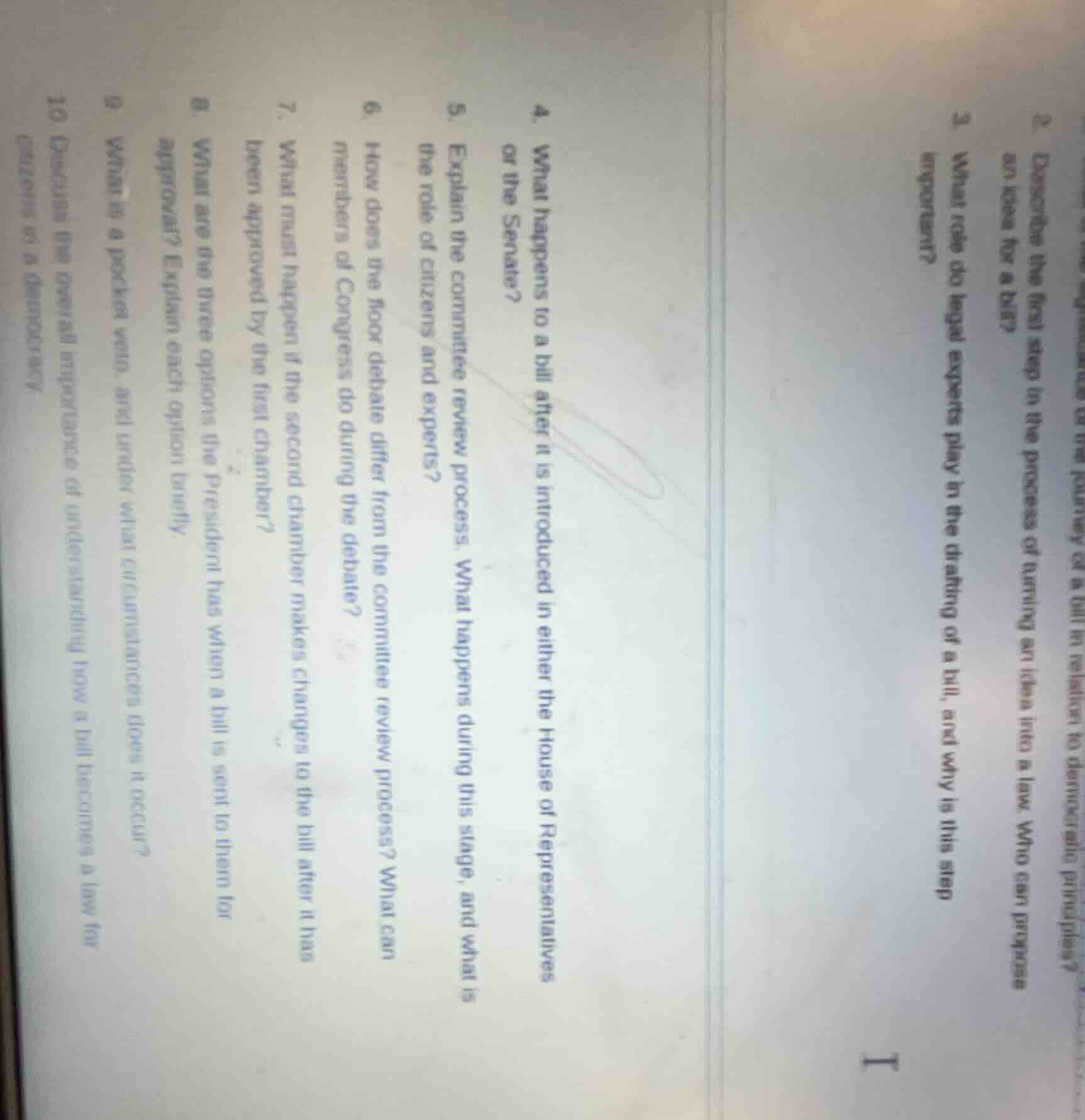
- describe the first step in the process of turning an idea into a law. who can propose an idea for a bill?
- what role do legal experts play in the drafting of a bill, and why is this step important?
- what happens to a bill after it is introduced in either the house of representatives or the senate?
- explain the committee review process. what happens during this stage, and what is the role of citizens and experts?
- how does the floor debate differ from the committee review process? what can members of congress do during the debate?
- what must happen if the second chamber makes changes to the bill after it has been approved by the first chamber?
- what are the three options the president has when a bill is sent to them for approval? explain each option briefly.
- what is a pocket veto, and under what circumstances does it occur?
- discuss the overall importance of understanding how a bill becomes a law for citizens in a democracy

Snap & solve any problem in the app
Get step-by-step solutions on Sovi AI
Photo-based solutions with guided steps
Explore more problems and detailed explanations
- The first step is forming a bill idea; members of Congress, the President, or citizens can propose an idea for a bill.
- Legal experts draft the bill to ensure it is legally sound, clear, and aligns with existing law; this step is important to avoid legal flaws and ensure the bill can function effectively if enacted.
- The bill is sent to a standing committee relevant to its subject matter.
- Committees hold hearings, revise, and vote on whether to send the bill to the full chamber. Citizens can provide input via hearings; experts advise on technical/legal details.
- Floor debate is open to all chamber members, who can offer amendments; committee review is a closed process where members refine the bill before floor consideration. Members can amend, support, or oppose the bill during floor debate.
- The amended bill must go back to the first chamber for approval of the changes; if approved, it goes to the President.
- 1. Sign the bill: it becomes law. 2. Veto the bill: it returns to Congress, which can override with a 2/3 vote in both chambers. 3. Do nothing: if Congress is in session, it becomes law after 10 days; if Congress adjourns, it is a pocket veto.
- A pocket veto is when the President takes no action on a bill and Congress adjourns within 10 days of sending it, killing the bill. It occurs when Congress adjourns before the 10-day period ends.
- Understanding the process lets citizens engage with their representatives, advocate for/against bills, hold officials accountable, and participate effectively in democratic governance.