QUESTION IMAGE
Question
determine central idea
annotate: mark the print and graphic details on this page that refer to asking and answering questions.
draw conclusions: what inferences can you make from these details?
Brief Explanations
- Details about asking/answering questions:
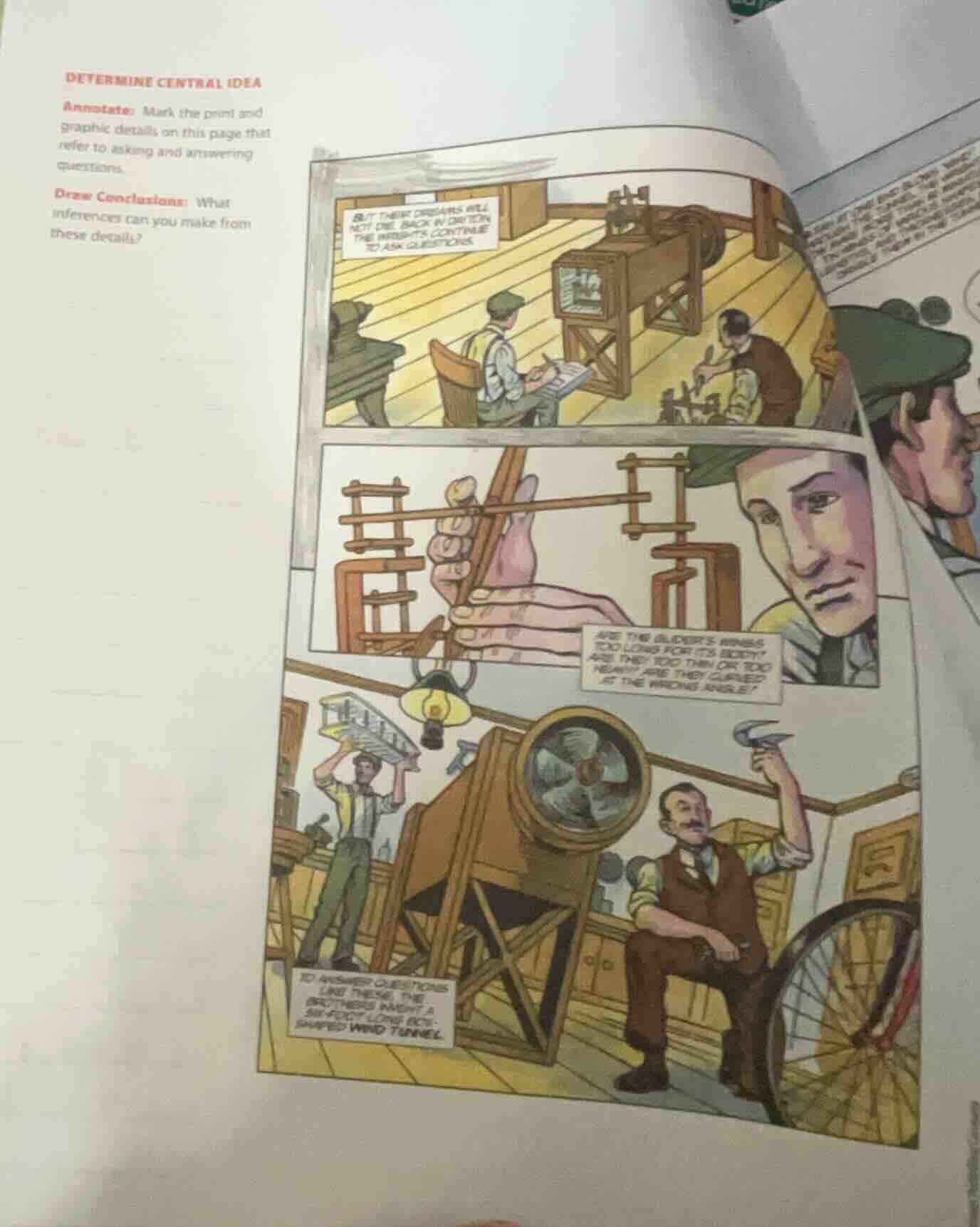
- Text box: "BUT THEIR DREAMS WILL NOT DIE. BACK IN DAYTON THE WRIGHTS CONTINUE TO ASK QUESTIONS"
- Text box: "ARE THE GLIDER'S WINGS TOO LONG FOR ITS BODY? ARE THEY TOO THIN OR TOO HEAVY? ARE THEY CURVED AT THE WRONG ANGLE?"
- Text box: "TO ANSWER QUESTIONS LIKE THESE, THE BROTHERS BUILT A SIX-FOOT-LONG BOX-SHAPED WIND TUNNEL."
- Graphic: The Wright brother in the first panel writing/recording questions/observations; the brothers constructing and using the wind tunnel to test answers to their questions.
- Inferences:
- The Wright brothers' progress relied on systematic inquiry—asking targeted questions about their glider's design flaws.
- They used hands-on, experimental methods (building a wind tunnel) to answer their engineering questions, linking curiosity to practical problem-solving.
- Their persistence (continuing to ask questions despite setbacks) was key to their work in flight technology.

Snap & solve any problem in the app
Get step-by-step solutions on Sovi AI
Photo-based solutions with guided steps
Explore more problems and detailed explanations
- Annotated details:
- Print: "THE WRIGHTS CONTINUE TO ASK QUESTIONS"; the list of specific wing design questions; "TO ANSWER QUESTIONS LIKE THESE, THE BROTHERS BUILT... A WIND TUNNEL"
- Graphics: The brother writing notes/question; the brothers building and using the wind tunnel to test solutions.
- Inferences:
- The Wright brothers used a question-driven, experimental approach to solve flight engineering problems.
- Persistent curiosity and hands-on testing were central to their efforts to develop functional aircraft.
- They translated theoretical questions about design into tangible experiments to find evidence-based answers.