QUESTION IMAGE
Question
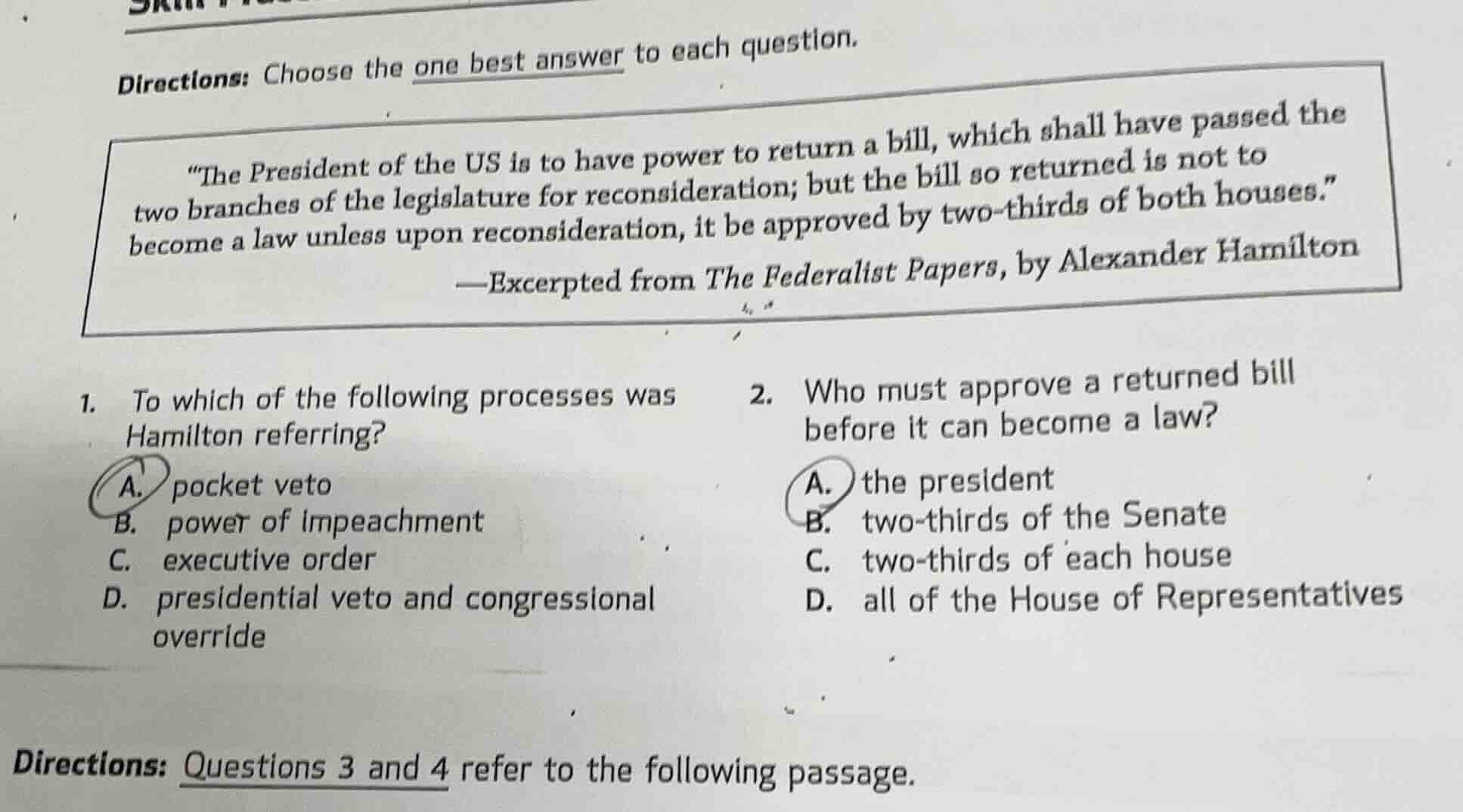
directions: choose the one best answer to each question.
\the president of the us is to have power to return a bill, which shall have passed the two branches of the legislature for reconsideration; but the bill so returned is not to become a law unless upon reconsideration, it be approved by two - thirds of both houses.\
—excerpted from the federalist papers, by alexander hamilton
- to which of the following processes was hamilton referring?
a. pocket veto
b. power of impeachment
c. executive order
d. presidential veto and congressional override
- who must approve a returned bill before it can become a law?
a. the president
b. two - thirds of the senate
c. two - thirds of each house
d. all of the house of representatives
directions: questions 3 and 4 refer to the following passage.
Question 1
The excerpt describes the President returning a bill (veto) and the need for two - thirds of both houses to override it. Option A (pocket veto) is when the President doesn't sign a bill and Congress adjourns. Option B (impeachment power) is about removing officials. Option C (executive order) is a presidential directive. Option D matches the described presidential veto and congressional override process.
The excerpt says "it be approved by two - thirds of both houses" for a returned bill to become law. Option A is incorrect as the President returned the bill. Option B only mentions the Senate, but it needs both houses. Option D says all of the House, which is not what the excerpt states. Option C matches the "two - thirds of both houses" (each house refers to both the Senate and the House of Representatives) requirement.

Snap & solve any problem in the app
Get step-by-step solutions on Sovi AI
Photo-based solutions with guided steps
Explore more problems and detailed explanations
D. presidential veto and congressional override