QUESTION IMAGE
Question
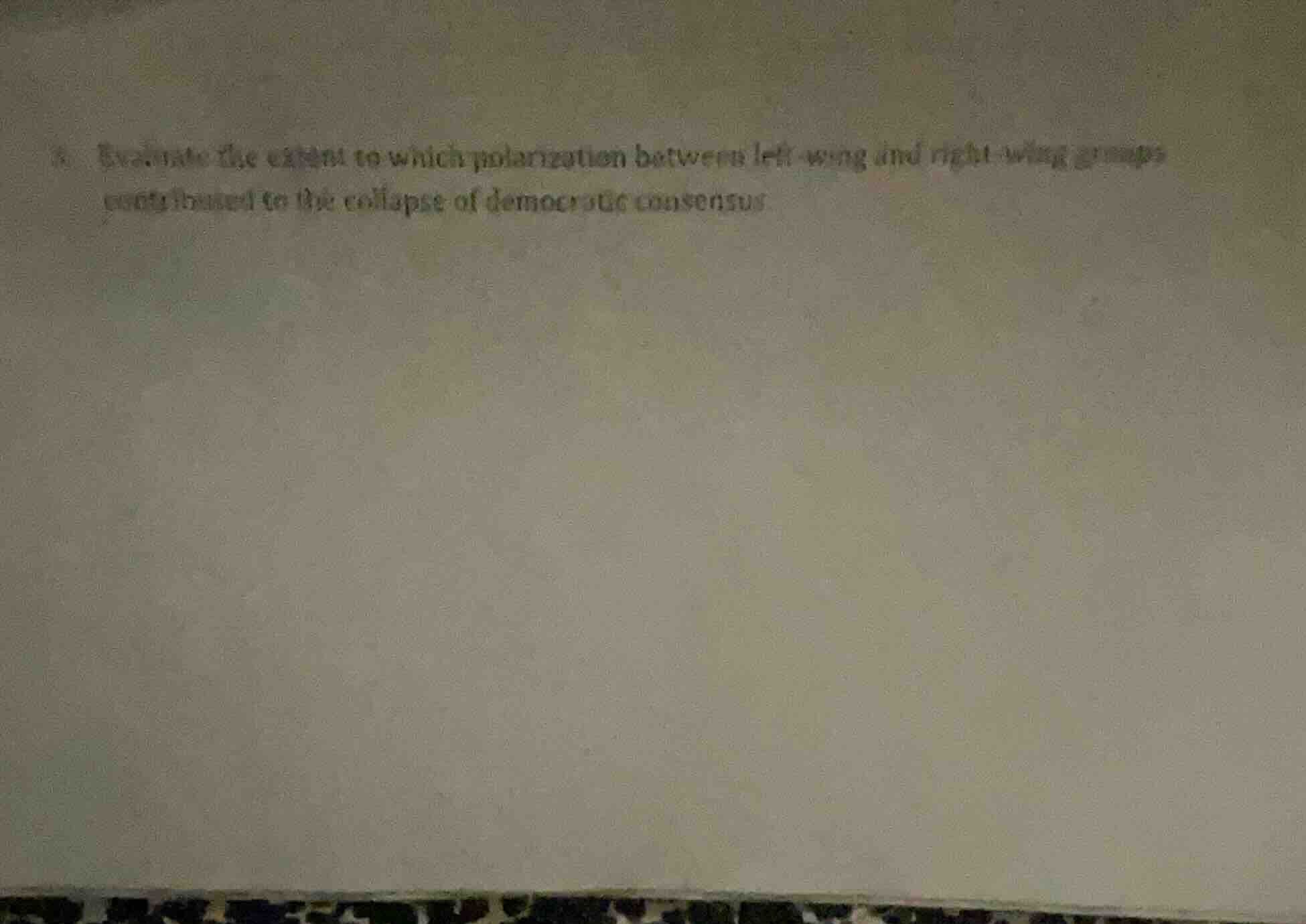
- evaluate the extent to which polarization between left - wing and right - wing groups contributed to the collapse of democratic consensus
To evaluate this, we analyze how left - right polarization affects democratic consensus. Polarization creates ideological divides, reducing willingness to compromise. In political systems, this leads to gridlock, erosion of shared values, and distrust. For example, in some democracies, extreme polarization has led to election - related unrest as groups reject outcomes. We also consider counter - arguments, like strong institutions sometimes mitigating polarization's impact. Overall, polarization is a significant factor as it undermines the mutual respect and cooperation needed for democratic consensus.

Snap & solve any problem in the app
Get step-by-step solutions on Sovi AI
Photo-based solutions with guided steps
Explore more problems and detailed explanations
Polarization between left - wing and right - wing groups contributes significantly to the collapse of democratic consensus. It creates ideological divides, reduces compromise, causes political gridlock, erodes shared values, and breeds distrust. While strong institutions can sometimes mitigate this, in many cases, the lack of mutual respect and cooperation due to polarization undermines the basis of democratic consensus.