QUESTION IMAGE
Question
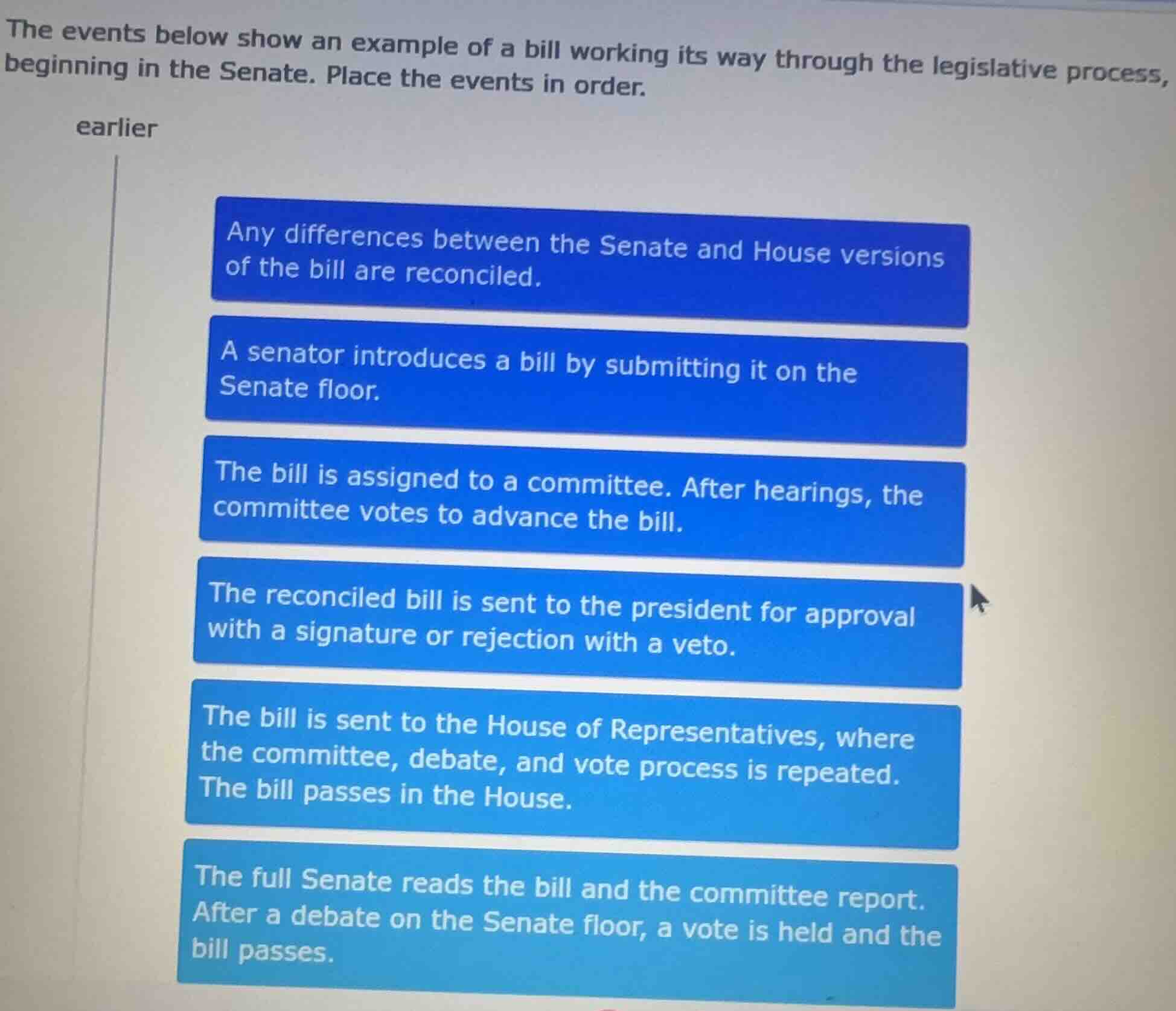
the events below show an example of a bill working its way through the legislative process, beginning in the senate. place the events in order.
earlier
any differences between the senate and house versions of the bill are reconciled.
a senator introduces a bill by submitting it on the senate floor.
the bill is assigned to a committee. after hearings, the committee votes to advance the bill.
the reconciled bill is sent to the president for approval with a signature or rejection with a veto.
the bill is sent to the house of representatives, where the committee, debate, and vote process is repeated. the bill passes in the house.
the full senate reads the bill and the committee report. after a debate on the senate floor, a vote is held and the bill passes.
This follows the standard U.S. legislative process for a bill starting in the Senate: it begins with introduction, moves to committee review, floor debate/vote in the Senate, then goes to the House for its own process, differences are reconciled, and finally it goes to the president.

Snap & solve any problem in the app
Get step-by-step solutions on Sovi AI
Photo-based solutions with guided steps
Explore more problems and detailed explanations
- A senator introduces a bill by submitting it on the Senate floor.
- The bill is assigned to a committee. After hearings, the committee votes to advance the bill.
- The full Senate reads the bill and the committee report. After a debate on the Senate floor, a vote is held and the bill passes.
- The bill is sent to the House of Representatives, where the committee, debate, and vote process is repeated. The bill passes in the House.
- Any differences between the Senate and House versions of the bill are reconciled.
- The reconciled bill is sent to the president for approval with a signature or rejection with a veto.