QUESTION IMAGE
Question
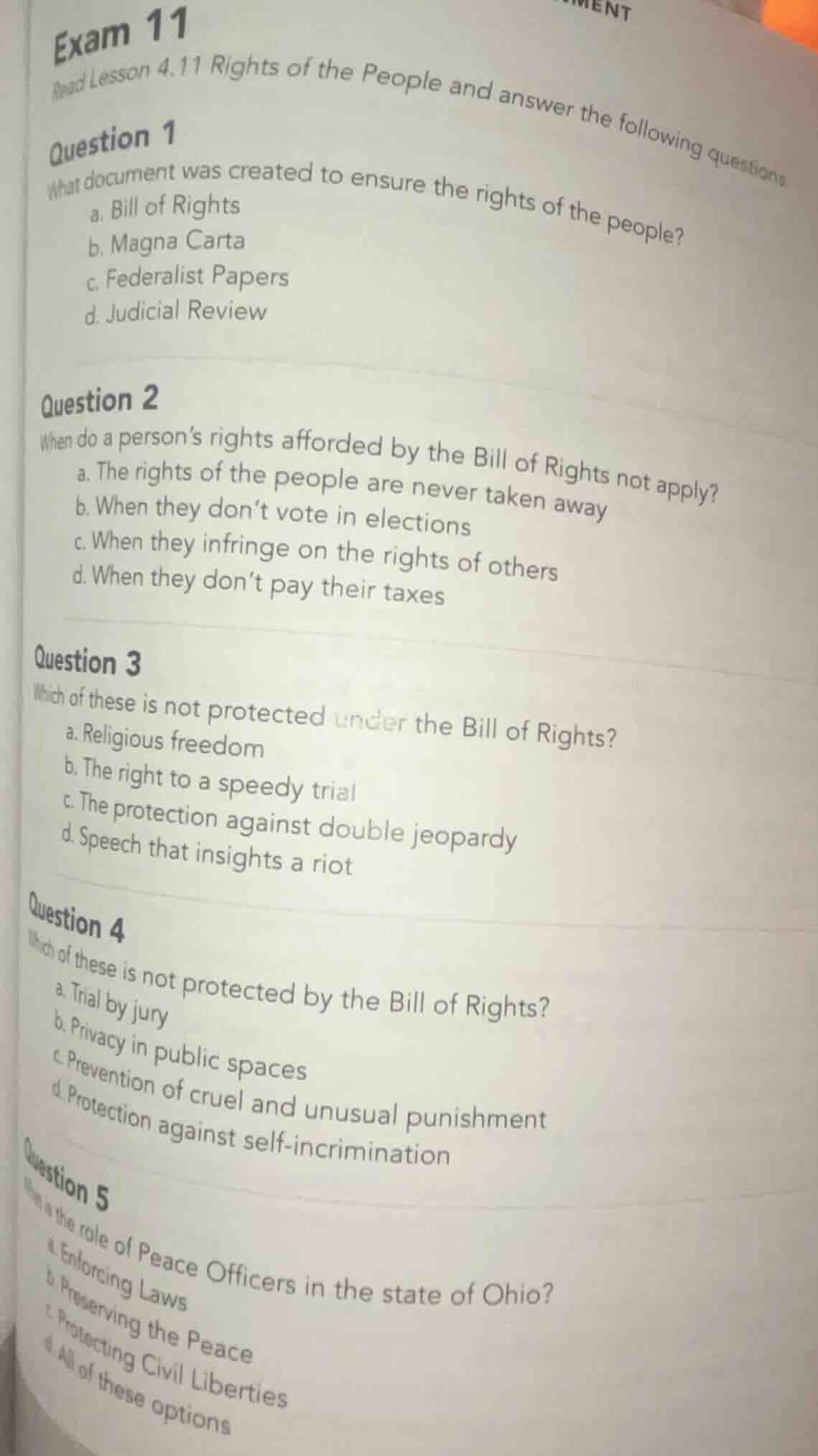
exam 11
read lesson 4.11 rights of the people and answer the following questions
question 1
what document was created to ensure the rights of the people?
a. bill of rights
b. magna carta
c. federalist papers
d. judicial review
question 2
when do a person’s rights afforded by the bill of rights not apply?
a. the rights of the people are never taken away
b. when they don’t vote in elections
c. when they infringe on the rights of others
d. when they don’t pay their taxes
question 3
which of these is not protected under the bill of rights?
a. religious freedom
b. the right to a speedy trial
c. the protection against double jeopardy
d. speech that insights a riot
question 4
which of these is not protected by the bill of rights?
a. trial by jury
b. privacy in public spaces
c. prevention of cruel and unusual punishment
d. protection against self - incrimination
question 5
what is the role of peace officers in the state of ohio?
a. enforcing laws
b. preserving the peace
c. protecting civil liberties
d. all of these options
- Question 1: The Bill of Rights is the U.S. document explicitly created to guarantee fundamental rights of citizens. The Magna Carta is a precursor, Federalist Papers argued for the Constitution, and Judicial Review is a court power, not a rights-guaranteeing document.
- Question 2: Bill of Rights rights are limited when they harm others; for example, speech that endangers others is not protected. Non-voting or non-tax payment does not revoke rights, and rights can be restricted in valid cases.
- Question 3: Inciting a riot is unprotected speech, as it causes harm. Religious freedom, speedy trial, and protection from double jeopardy are all explicit Bill of Rights protections.
- Question 4: Privacy in public spaces is not a protected right under the Bill of Rights; privacy protections apply to private contexts. Trial by jury, protection from cruel punishment, and self-incrimination protection are all in the Bill of Rights.
- Question 5: Ohio peace officers enforce laws, preserve public peace, and protect civil liberties as part of their official duties, so all roles apply.

Snap & solve any problem in the app
Get step-by-step solutions on Sovi AI
Photo-based solutions with guided steps
Explore more problems and detailed explanations
- a. Bill of Rights
- c. When they infringe on the rights of others
- d. Speech that insights a riot
- b. Privacy in public spaces
- d. All of these options