QUESTION IMAGE
Question
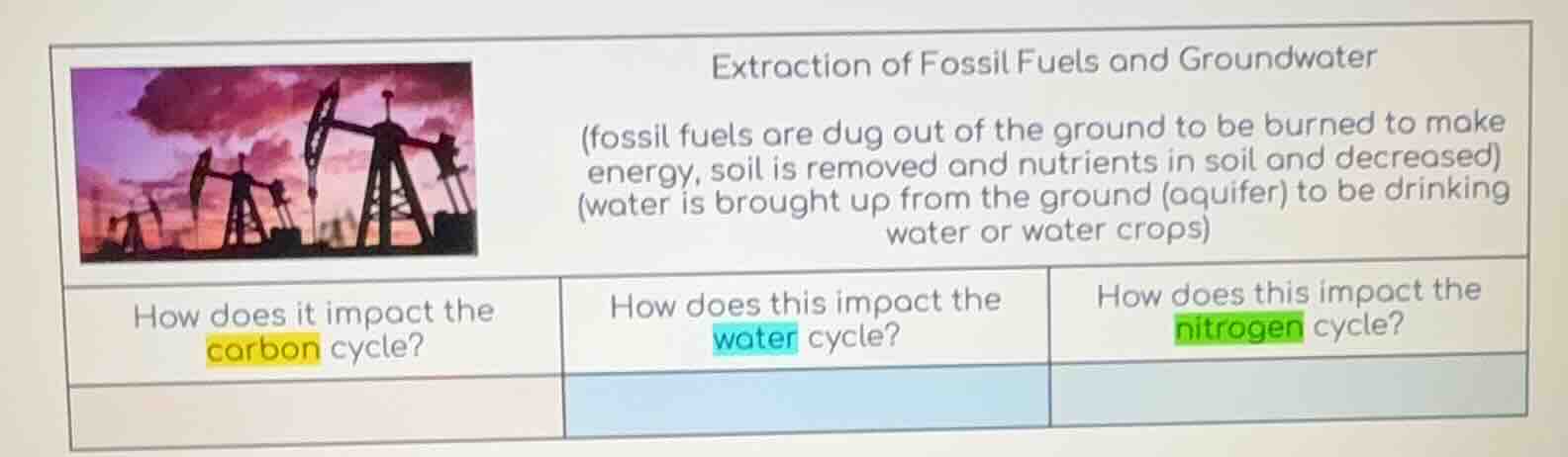
extraction of fossil fuels and groundwater (fossil fuels are dug out of the ground to be burned to make energy, soil is removed and nutrients in soil and decreased) (water is brought up from the ground (aquifer) to be drinking water or water crops) how does it impact the carbon cycle? how does this impact the water cycle? how does this impact the nitrogen cycle?
Brief Explanations
- Carbon Cycle Impact: Burning extracted fossil fuels releases stored carbon (as CO₂) into the atmosphere, increasing atmospheric carbon levels and disrupting the natural cycle by adding more carbon than natural sinks can absorb.
- Water Cycle Impact: Groundwater extraction lowers aquifer levels, reducing recharge rates and altering surface water flow (e.g., drying streams/lakes). Fossil fuel extraction also contaminates water sources with drilling chemicals, impairing water availability for natural cycle processes.
- Nitrogen Cycle Impact: Soil removal during fossil fuel extraction depletes soil nitrogen stores. Additionally, fossil fuel burning releases nitrogen oxides into the atmosphere, which contribute to acid deposition and add excess nitrogen to ecosystems, disrupting natural nitrogen fixation and uptake balances.

Snap & solve any problem in the app
Get step-by-step solutions on Sovi AI
Photo-based solutions with guided steps
Explore more problems and detailed explanations
- Impact on carbon cycle: Burning extracted fossil fuels releases large amounts of stored carbon dioxide ($\text{CO}_2$) into the atmosphere, increasing atmospheric carbon concentrations and disrupting the natural balance of the carbon cycle by overwhelming natural carbon sinks.
- Impact on water cycle: Groundwater extraction reduces aquifer levels, decreasing groundwater recharge and altering surface water dynamics (such as drying up rivers or wetlands). Fossil fuel extraction processes also introduce pollutants into water sources, further disrupting water availability and natural cycle pathways.
- Impact on nitrogen cycle: Soil removal during extraction depletes soil nitrogen reserves. Burning fossil fuels emits nitrogen oxides ($\text{NO}_x$) into the atmosphere, which cause acid rain and deposit excess nitrogen into ecosystems, disrupting natural nitrogen fixation, uptake, and decomposition processes.