QUESTION IMAGE
Question
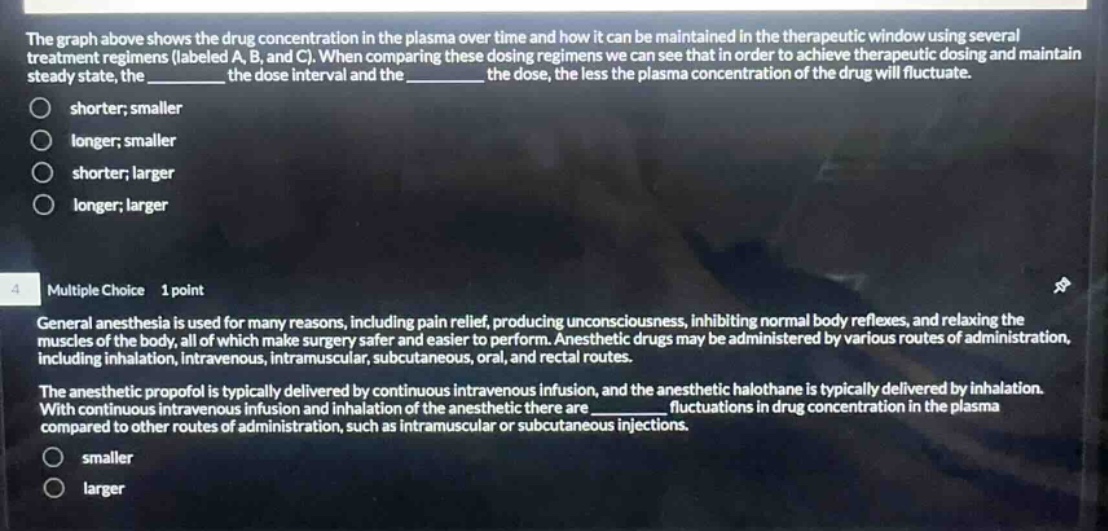
the graph above shows the drug concentration in the plasma over time and how it can be maintained in the therapeutic window using several treatment regimens (labeled a, b, and c). when comparing these dosing regimens we can see that in order to achieve therapeutic dosing and maintain steady state, the ____ the dose interval and the ____ the dose, the less the plasma concentration of the drug will fluctuate.
○ shorter; smaller
○ longer; smaller
○ shorter; larger
○ longer; larger
4 multiple choice 1 point
general anesthesia is used for many reasons, including pain relief, producing unconsciousness, inhibiting normal body reflexes, and relaxing the muscles of the body, all of which make surgery safer and easier to perform. anesthetic drugs may be administered by various routes of administration, including inhalation, intravenous, intramuscular, subcutaneous, oral, and rectal routes.
the anesthetic propofol is typically delivered by continuous intravenous infusion, and the anesthetic halothane is typically delivered by inhalation.
with continuous intravenous infusion and inhalation of the anesthetic there are ______ fluctuations in drug concentration in the plasma compared to other routes of administration, such as intramuscular or subcutaneous injections.
○ smaller
○ larger
---
First Question
Step1: Relate dose interval to fluctuation
Shorter intervals reduce peaks/troughs.
Step2: Relate dose size to fluctuation
Smaller doses lower peak concentration.
Continuous intravenous infusion and inhalation deliver anesthetics gradually, maintaining steady plasma levels. In contrast, routes like intramuscular/subcutaneous injections result in more variable absorption, leading to larger concentration swings.

Snap & solve any problem in the app
Get step-by-step solutions on Sovi AI
Photo-based solutions with guided steps
Explore more problems and detailed explanations
shorter; smaller
---