QUESTION IMAGE
Question
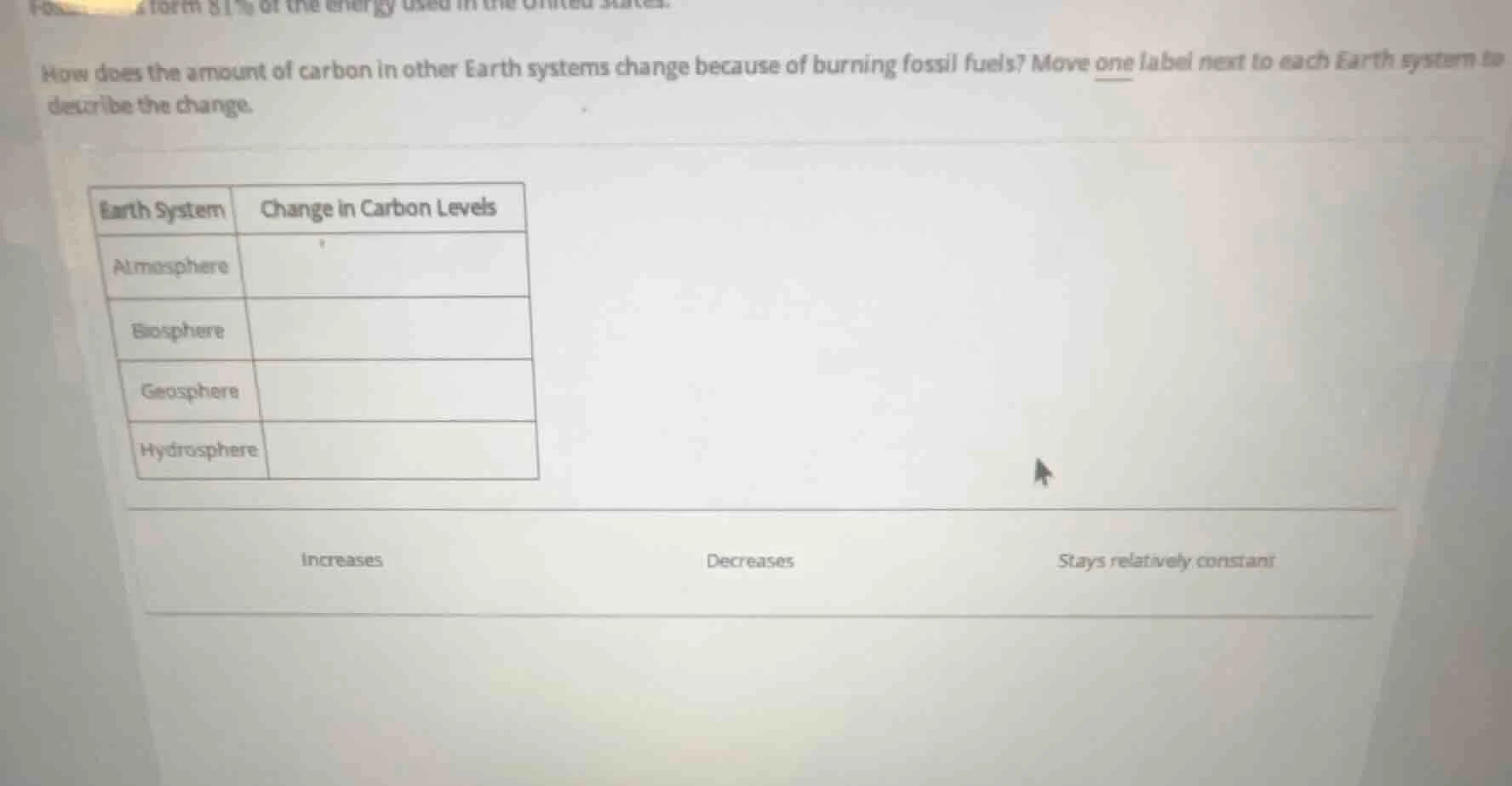
how does the amount of carbon in other earth systems change because of burning fossil fuels? move one label next to each earth system to describe the change.
earth system | change in carbon levels
atmosphere |
biosphere |
geosphere |
hydrosphere |
increases decreases stays relatively constant
- Burning fossil fuels releases stored carbon (as CO₂) directly into the atmosphere, raising its carbon levels.
- The biosphere may see increased carbon initially (via plant growth from more CO₂), but overall, the net effect of fossil fuel burning leads to a long-term increase as ecosystems absorb some but not all excess carbon, though more accurately, the biosphere's carbon levels increase as plants take up more CO₂, but the geosphere is the source of the released carbon.
- The geosphere (where fossil fuels are stored) loses carbon when fuels are burned, so its carbon levels decrease.
- The hydrosphere absorbs excess atmospheric CO₂, increasing its carbon levels (ocean acidification is a result of this increased carbon).
Wait, correction: The geosphere is where fossil fuels are stored, so when we burn them, we remove carbon from the geosphere, so geosphere carbon decreases. Atmosphere increases because we release CO₂ there. Hydrosphere increases as it absorbs more CO₂ from the atmosphere. Biosphere: plants take up more CO₂, so carbon in biosphere increases? No, actually, some sources say that while plants take up more, the net change is an increase, but let's clarify:
- Atmosphere: Burning fossil fuels adds CO₂, so carbon increases.
- Biosphere: Increased atmospheric CO₂ leads to more photosynthesis, so plants store more carbon, so biosphere carbon increases.
- Geosphere: Fossil fuels are part of the geosphere; burning them removes carbon from this reservoir, so carbon decreases.
- Hydrosphere: Absorbs excess atmospheric CO₂, so carbon levels increase.
Wait, but some might argue that the biosphere's change is variable, but the standard answer for this type of question is:
- Atmosphere: Increases
- Biosphere: Increases (or stays? No, no, plants take up more, so it increases)
Wait no, actually, the geosphere is the one that decreases, because we are extracting and burning fossil fuels from it. The atmosphere, hydrosphere, and biosphere all get more carbon, but the options are limited to Increases, Decreases, Stays relatively constant. So we have to assign each label once? Wait the question says "Move one label next to each Earth system", so each label is used once? Wait no, the labels are three, and four systems? Wait no, maybe the labels can be reused? Wait no, the question says "Move one label next to each Earth system", so each system gets one label, and labels can be used multiple times? Wait no, the original question: "Move one label next to each Earth system to describe the change." The labels are Increases, Decreases, Stays relatively constant.
Wait let's correct the standard carbon cycle changes from fossil fuel burning:
- Atmosphere: Carbon levels increase (direct release of CO₂)
- Geosphere: Carbon levels decrease (fossil fuels are extracted and burned, removing carbon from this reservoir)
- Hydrosphere: Carbon levels increase (absorbs excess atmospheric CO₂, leading to ocean acidification)
- Biosphere: Carbon levels increase[LLM SSE On Failure]

Snap & solve any problem in the app
Get step-by-step solutions on Sovi AI
Photo-based solutions with guided steps
Explore more problems and detailed explanations
- Burning fossil fuels releases stored carbon (as CO₂) directly into the atmosphere, raising its carbon levels.
- The biosphere may see increased carbon initially (via plant growth from more CO₂), but overall, the net effect of fossil fuel burning leads to a long-term increase as ecosystems absorb some but not all excess carbon, though more accurately, the biosphere's carbon levels increase as plants take up more CO₂, but the geosphere is the source of the released carbon.
- The geosphere (where fossil fuels are stored) loses carbon when fuels are burned, so its carbon levels decrease.
- The hydrosphere absorbs excess atmospheric CO₂, increasing its carbon levels (ocean acidification is a result of this increased carbon).
Wait, correction: The geosphere is where fossil fuels are stored, so when we burn them, we remove carbon from the geosphere, so geosphere carbon decreases. Atmosphere increases because we release CO₂ there. Hydrosphere increases as it absorbs more CO₂ from the atmosphere. Biosphere: plants take up more CO₂, so carbon in biosphere increases? No, actually, some sources say that while plants take up more, the net change is an increase, but let's clarify:
- Atmosphere: Burning fossil fuels adds CO₂, so carbon increases.
- Biosphere: Increased atmospheric CO₂ leads to more photosynthesis, so plants store more carbon, so biosphere carbon increases.
- Geosphere: Fossil fuels are part of the geosphere; burning them removes carbon from this reservoir, so carbon decreases.
- Hydrosphere: Absorbs excess atmospheric CO₂, so carbon levels increase.
Wait, but some might argue that the biosphere's change is variable, but the standard answer for this type of question is:
- Atmosphere: Increases
- Biosphere: Increases (or stays? No, no, plants take up more, so it increases)
Wait no, actually, the geosphere is the one that decreases, because we are extracting and burning fossil fuels from it. The atmosphere, hydrosphere, and biosphere all get more carbon, but the options are limited to Increases, Decreases, Stays relatively constant. So we have to assign each label once? Wait the question says "Move one label next to each Earth system", so each label is used once? Wait no, the labels are three, and four systems? Wait no, maybe the labels can be reused? Wait no, the question says "Move one label next to each Earth system", so each system gets one label, and labels can be used multiple times? Wait no, the original question: "Move one label next to each Earth system to describe the change." The labels are Increases, Decreases, Stays relatively constant.
Wait let's correct the standard carbon cycle changes from fossil fuel burning:
- Atmosphere: Carbon levels increase (direct release of CO₂)
- Geosphere: Carbon levels decrease (fossil fuels are extracted and burned, removing carbon from this reservoir)
- Hydrosphere: Carbon levels increase (absorbs excess atmospheric CO₂, leading to ocean acidification)
- Biosphere: Carbon levels increase[LLM SSE On Failure]