QUESTION IMAGE
Question
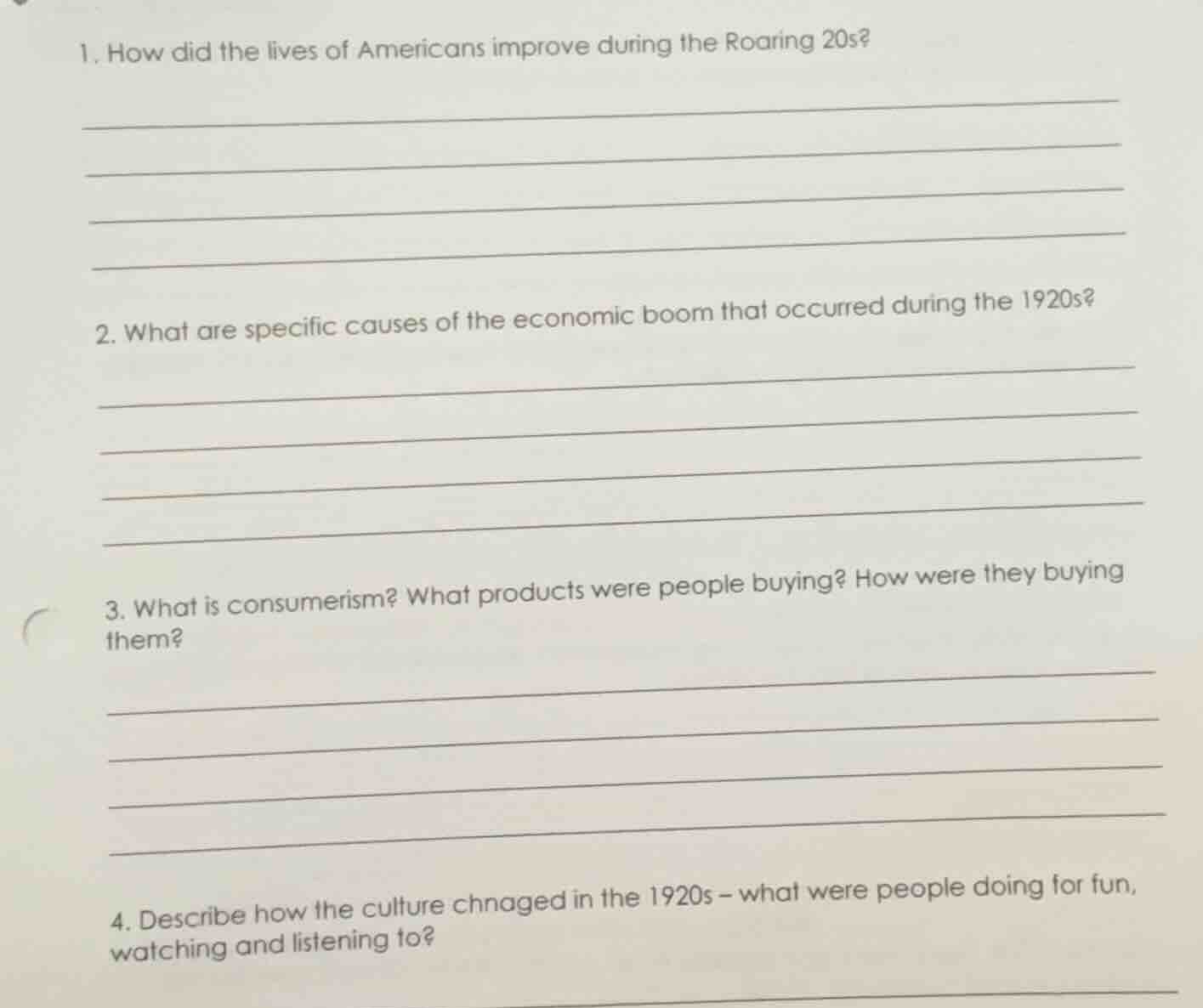
- how did the lives of americans improve during the roaring 20s?
- what are specific causes of the economic boom that occurred during the 1920s?
- what is consumerism? what products were people buying? how were they buying them?
- describe how the culture chnaged in the 1920s – what were people doing for fun, watching and listening to?
Question 1
During the Roaring 20s, Americans' lives improved in several ways. Economically, there was a boom with increased industrial production, leading to more job opportunities and higher wages. Technologically, the widespread adoption of electricity, automobiles (like Ford's Model T), and household appliances (refrigerators, vacuums) made daily life easier. Culturally, there was a shift towards modernity: women gained more social freedom (flappers, right to vote), entertainment flourished (jazz clubs, movies), and consumer culture grew with easier access to goods via credit. Socially, urbanization increased as people moved to cities for jobs, and there was a sense of optimism and breaking from traditional norms.
The 1920s economic boom had specific causes. Industrial efficiency: Henry Ford’s assembly line (mass production of cars) reduced costs, boosting manufacturing. Technological innovation: electricity, radios, and new machinery increased productivity. Post - WWI factors: the US was a creditor nation, European demand for US goods (like food, industrial products) remained high. Consumer credit: installment plans made buying cars, appliances easier, driving demand. Government policies: low taxes on the wealthy and businesses encouraged investment, and laissez - faire economic policies allowed businesses to expand freely.
Consumerism is a social and economic order that encourages the acquisition of goods and services in ever - greater amounts. In the 1920s, people were buying consumer durables like automobiles (Ford Model T), household appliances (refrigerators, washing machines, vacuums), radios, and clothing. They were buying these products through installment plans (credit), where they paid a small down payment and then made regular monthly payments. This made expensive items more accessible as people didn’t have to pay the full price upfront.

Snap & solve any problem in the app
Get step-by-step solutions on Sovi AI
Photo-based solutions with guided steps
Explore more problems and detailed explanations
Americans’ lives improved during the Roaring 20s through economic growth (more jobs, higher wages), technological advancements (electricity, cars, appliances), cultural shifts (women’s liberation, vibrant entertainment), and rising consumerism (easier access to goods via credit). Urbanization also increased as people moved to cities for opportunities, and social norms became more progressive.