QUESTION IMAGE
Question
independent practice
rival plans for reconstruction
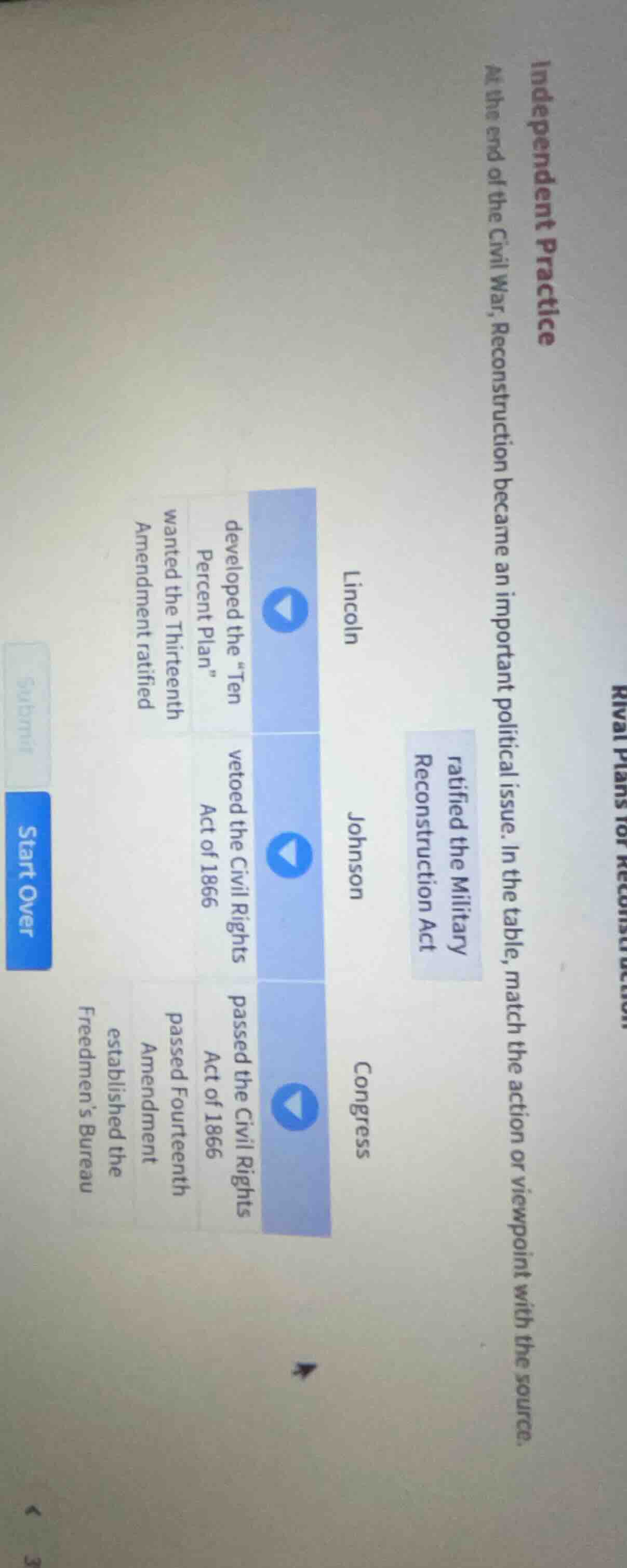
at the end of the civil war, reconstruction became an important political issue. in the table, match the action or viewpoint with the source.
lincoln
developed the \ten percent plan\
wanted the thirteenth amendment ratified
johnson
vetoed the civil rights act of 1866
congress
passed the civil rights act of 1866
passed fourteenth amendment
established the freedmens bureau
ratified the military reconstruction act
Brief Explanations
- Lincoln's moderate Reconstruction framework was the "Ten Percent Plan", and he pushed for the 13th Amendment (ending slavery) before his death.
- President Andrew Johnson opposed Republican Reconstruction efforts, vetoing the 1866 Civil Rights Act (Congress overrode this veto).
- Radical Republicans in Congress led stricter Reconstruction: they passed the Civil Rights Act 1866, the 14th Amendment (granting citizenship), created the Freedmen's Bureau to aid formerly enslaved people, and passed the Military Reconstruction Act to enforce Reconstruction in the South.

Snap & solve any problem in the app
Get step-by-step solutions on Sovi AI
Photo-based solutions with guided steps
Explore more problems and detailed explanations
- Lincoln: developed the "Ten Percent Plan", wanted the Thirteenth Amendment ratified
- Johnson: vetoed the Civil Rights Act of 1866
- Congress: passed the Civil Rights Act of 1866, passed Fourteenth Amendment, established the Freedmen's Bureau, ratified the Military Reconstruction Act