QUESTION IMAGE
Question
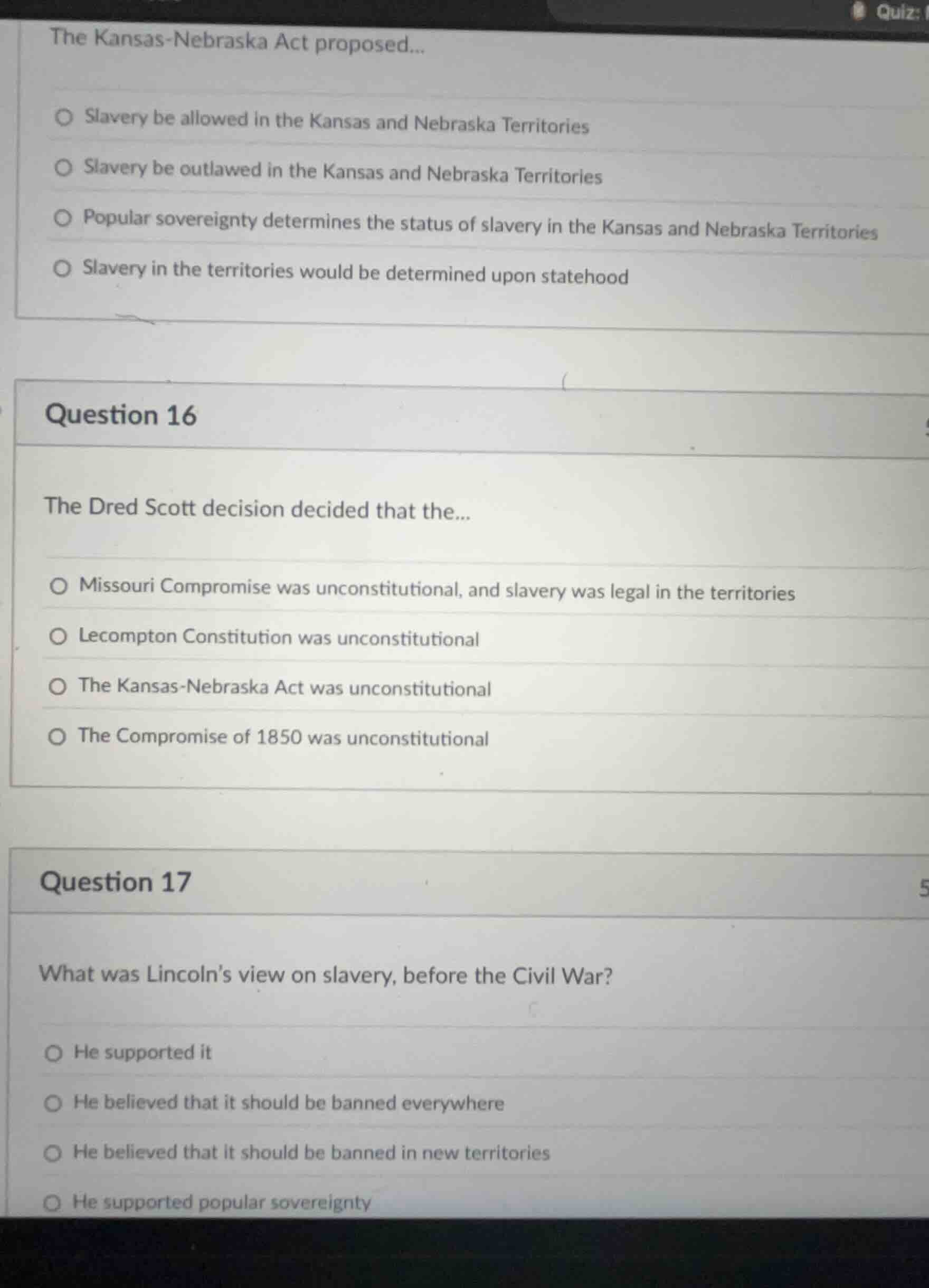
the kansas-nebraska act proposed...
slavery be allowed in the kansas and nebraska territories
slavery be outlawed in the kansas and nebraska territories
popular sovereignty determines the status of slavery in the kansas and nebraska territories
slavery in the territories would be determined upon statehood
question 16
the dred scott decision decided that the...
missouri compromise was unconstitutional, and slavery was legal in the territories
lecompton constitution was unconstitutional
the kansas-nebraska act was unconstitutional
the compromise of 1850 was unconstitutional
question 17
what was lincolns view on slavery, before the civil war?
he supported it
he believed that it should be banned everywhere
he believed that it should be banned in new territories
he supported popular sovereignty
Kansas - Nebraska Act Question
The Kansas - Nebraska Act (1854) introduced the concept of popular sovereignty, which meant that the residents of the Kansas and Nebraska territories would vote (through their representatives or directly) to decide whether slavery would be allowed in those territories. Option A is incorrect as the act didn't just allow slavery; it let the territories decide. Option B is incorrect as it didn't outlaw slavery. Option D is incorrect as the act was about territorial status before statehood, and the key was popular sovereignty for the slavery status during the territorial period.
The Dred Scott decision (1857) ruled that the Missouri Compromise (which had banned slavery north of the 36°30′ parallel) was unconstitutional because Congress had no right to restrict slavery in the territories. It also stated that slaves were not citizens and that slavery was legal in the territories. The Lecompton Constitution was related to Kansas statehood and not the focus of the Dred Scott decision. The Kansas - Nebraska Act and the Compromise of 1850 were not the main targets of this decision.
Before the Civil War, Lincoln was against the expansion of slavery into new territories. He did not support slavery (so A is wrong), nor did he believe it should be banned everywhere immediately (he was more focused on containment, so B is wrong). He was against popular sovereignty as he thought it could lead to the spread of slavery (so D is wrong). His view was that slavery should be banned in new territories to prevent its expansion.

Snap & solve any problem in the app
Get step-by-step solutions on Sovi AI
Photo-based solutions with guided steps
Explore more problems and detailed explanations
C. Popular sovereignty determines the status of slavery in the Kansas and Nebraska Territories