QUESTION IMAGE
Question
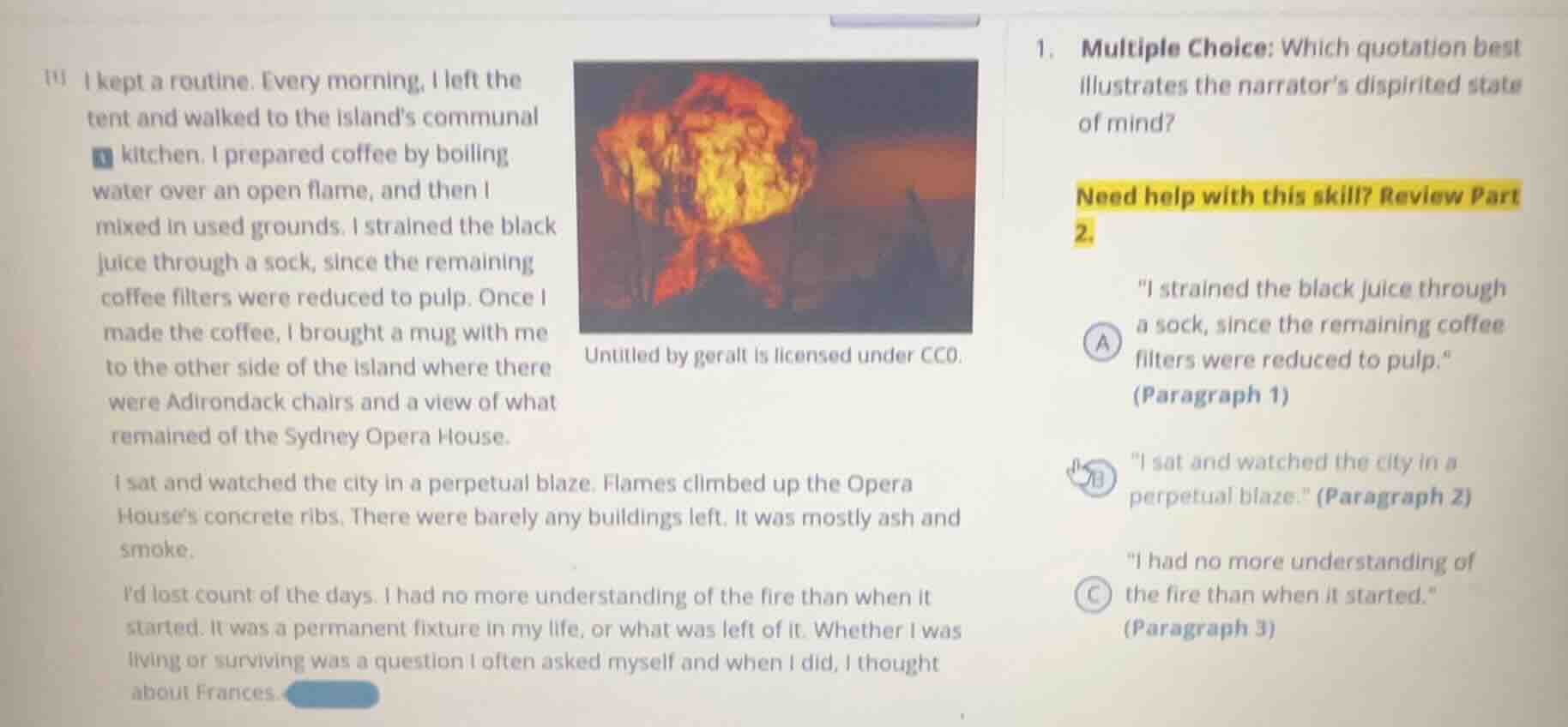
(1) i kept a routine. every morning, i left the tent and walked to the island’s communal kitchen. i prepared coffee by boiling water over an open flame, and then i mixed in used grounds. i strained the black juice through a sock, since the remaining coffee filters were reduced to pulp. once i made the coffee, i brought a mug with me to the other side of the island where there were adirondack chairs and a view of what remained of the sydney opera house. i sat and watched the city in a perpetual blaze. flames climbed up the opera house’s concrete ribs. there were barely any buildings left. it was mostly ash and smoke. i’d lost count of the days. i had no more understanding of the fire than when it started. it was a permanent fixture in my life, or what was left of it. whether i was living or surviving was a question i often asked myself and when i did, i thought about frances. 1. multiple choice: which quotation best illustrates the narrator’s dispirited state of mind? need help with this skill? review part 2. a “i strained the black juice through a sock, since the remaining coffee filters were reduced to pulp.” (paragraph 1) b “i sat and watched the city in a perpetual blaze.” (paragraph 2) c “i had no more understanding of the fire than when it started.” (paragraph 3)
Option A describes a practical, resourceful act of making coffee, which does not show dispiritedness. Option B is an observation of the destroyed city, but it is a factual description rather than a reflection of the narrator's emotional state. Option C reveals the narrator's lack of comprehension of their ongoing traumatic situation, loss of track of time, and uncertainty about whether they are living or surviving—all signs of a dispirited, defeated mindset.

Snap & solve any problem in the app
Get step-by-step solutions on Sovi AI
Photo-based solutions with guided steps
Explore more problems and detailed explanations
C. "I had no more understanding of the fire than when it started." (Paragraph 3)