QUESTION IMAGE
Question
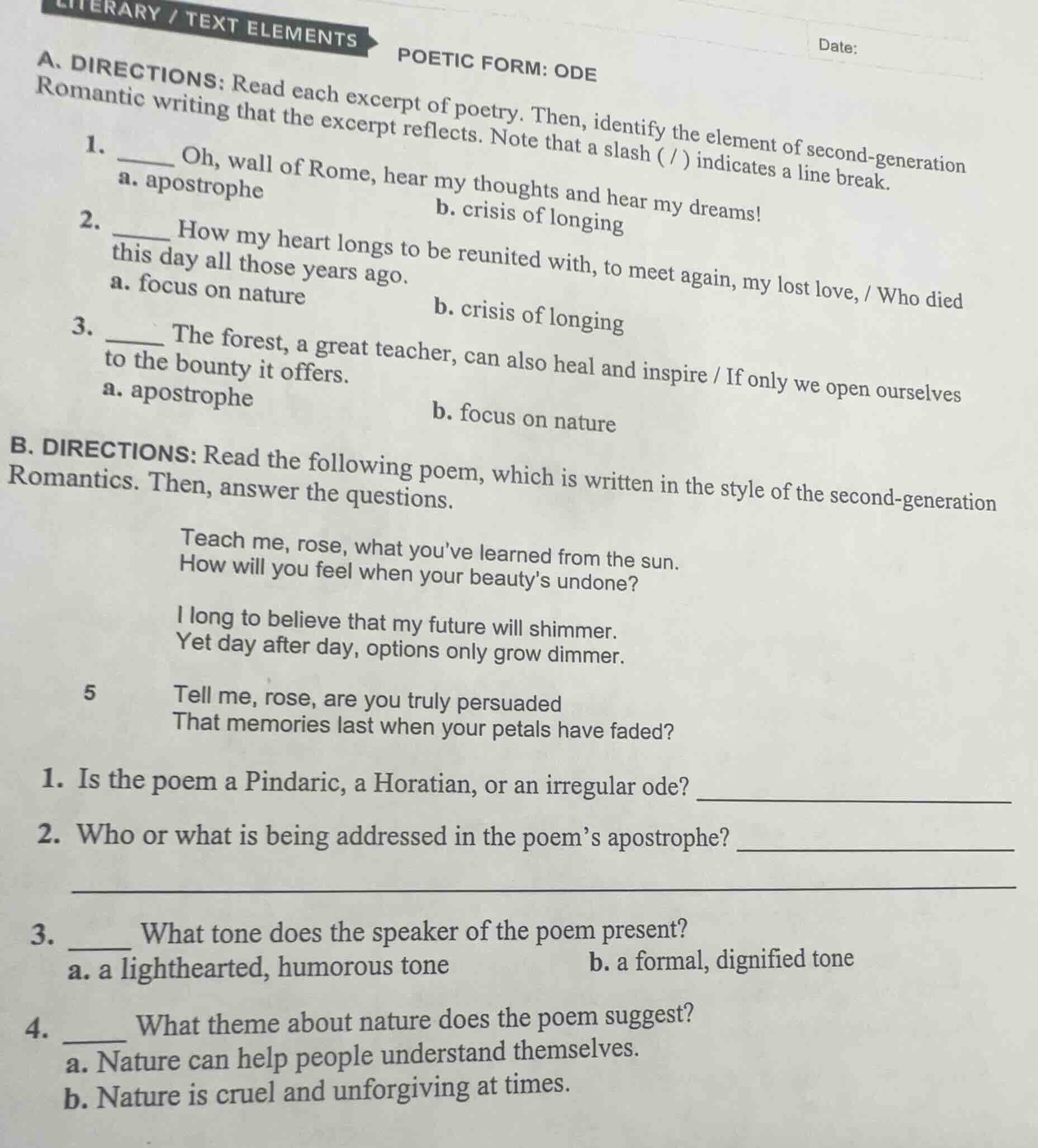
literary / text elements
poetic form: ode
date:
a. directions: read each excerpt of poetry. then, identify the element of second - generation romantic writing that the excerpt reflects. note that a slash ( / ) indicates a line break.
- ____ oh, wall of rome, hear my thoughts and hear my dreams!
a. apostrophe
b. crisis of longing
- ____ how my heart longs to be reunited with, to meet again, my lost love, / who died this day all those years ago.
a. focus on nature
b. crisis of longing
- ____ the forest, a great teacher, can also heal and inspire / if only we open ourselves to the bounty it offers.
a. apostrophe
b. focus on nature
b. directions: read the following poem, which is written in the style of the second - generation romantics. then, answer the questions.
teach me, rose, what youve learned from the sun.
how will you feel when your beautys undone?
i long to believe that my future will shimmer.
yet day after day, options only grow dimmer.
5 tell me, rose, are you truly persuaded
that memories last when your petals have faded?
- is the poem a pindaric, a horatian, or an irregular ode? ____
- who or what is being addressed in the poem’s apostrophe? ____
- ____ what tone does the speaker of the poem present?
a. a lighthearted, humorous tone
b. a formal, dignified tone
- ____ what theme about nature does the poem suggest?
a. nature can help people understand themselves.
b. nature is cruel and unforgiving at times.
Part A
Question 1
Apostrophe is addressing a non - present or non - human entity. Here, the speaker is addressing the wall of Rome (a non - human, inanimate object), so it's apostrophe.
The excerpt shows a strong longing to be reunited with a lost love, which fits the "crisis of longing" description.
The excerpt focuses on the forest (a natural element) and its ability to heal and inspire, so it's a focus on nature.

Snap & solve any problem in the app
Get step-by-step solutions on Sovi AI
Photo-based solutions with guided steps
Explore more problems and detailed explanations
a. apostrophe