QUESTION IMAGE
Question
main ideas and details in historical texts - instruction - level e
she decided not to move to the back like she was
supposed to. though she only rode in the front for one
block, imogene knew it was dangerous to ignore the law in
this way. but by staying seated, she was standing against
segregation.
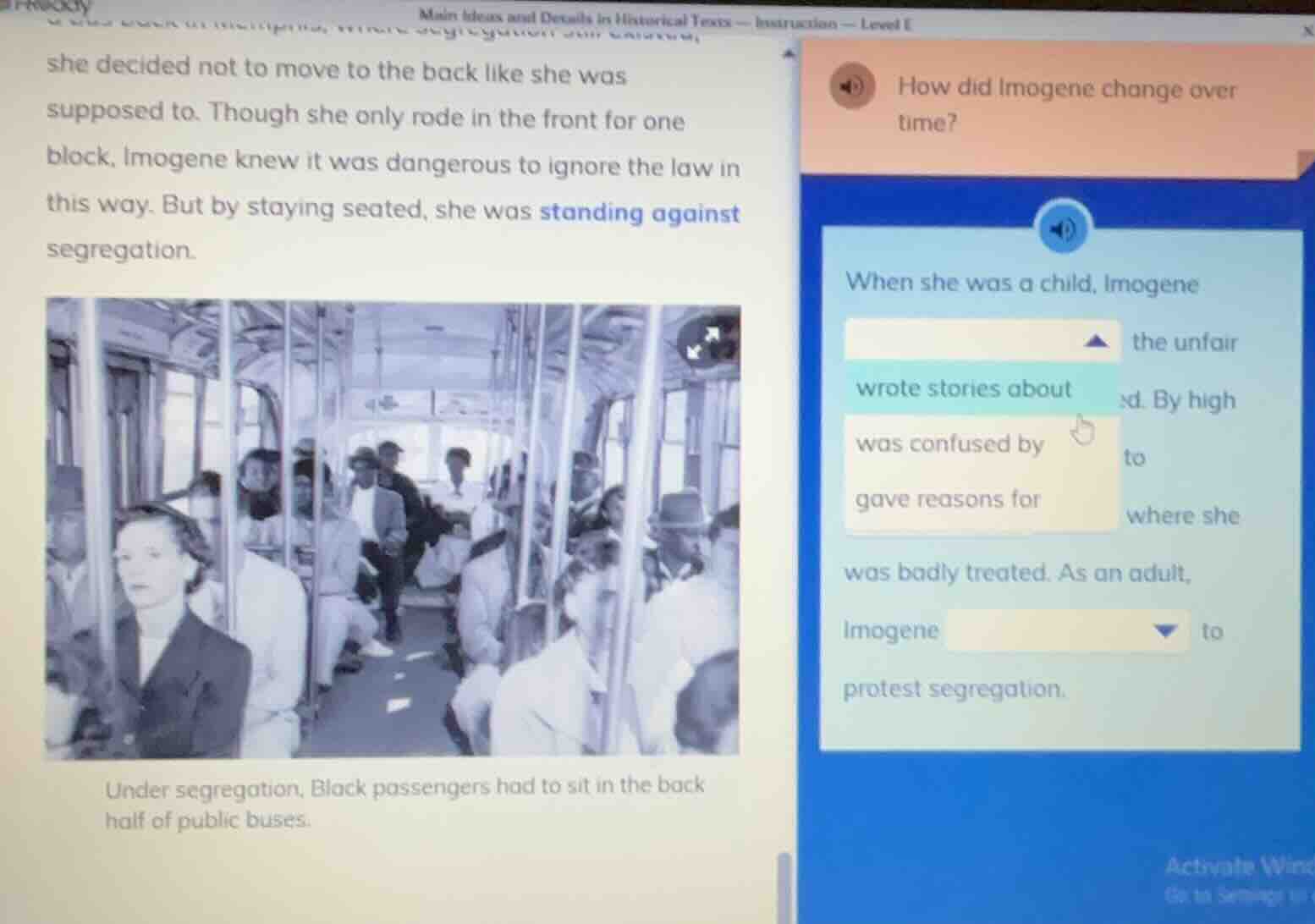
under segregation, black passengers had to sit in the back
half of public buses.
how did imogene change over
time?
when she was a child, imogene
________ the unfair
d. by high
to
where she
was badly treated. as an adult,
imogene ________ to
protest segregation.
options:
wrote stories about
was confused by
gave reasons for
- For the first blank, the context refers to Imogene's childhood experience with unfair treatment; "was badly treated" matches this scenario as it describes the unfair experience she had.
- For the second blank, the text shows adult Imogene took direct action by refusing to move to the back of the bus, which is an act of protest. The phrase that fits this action is "refused to move" (inferred from the provided text about her staying seated to protest segregation, as this is the action that aligns with protesting segregation).

Snap & solve any problem in the app
Get step-by-step solutions on Sovi AI
Photo-based solutions with guided steps
Explore more problems and detailed explanations
When she was a child, Imogene was badly treated by the unfair [system]. By high [school], she [understood] where she was badly treated. As an adult, Imogene refused to move to protest segregation.