QUESTION IMAGE
Question
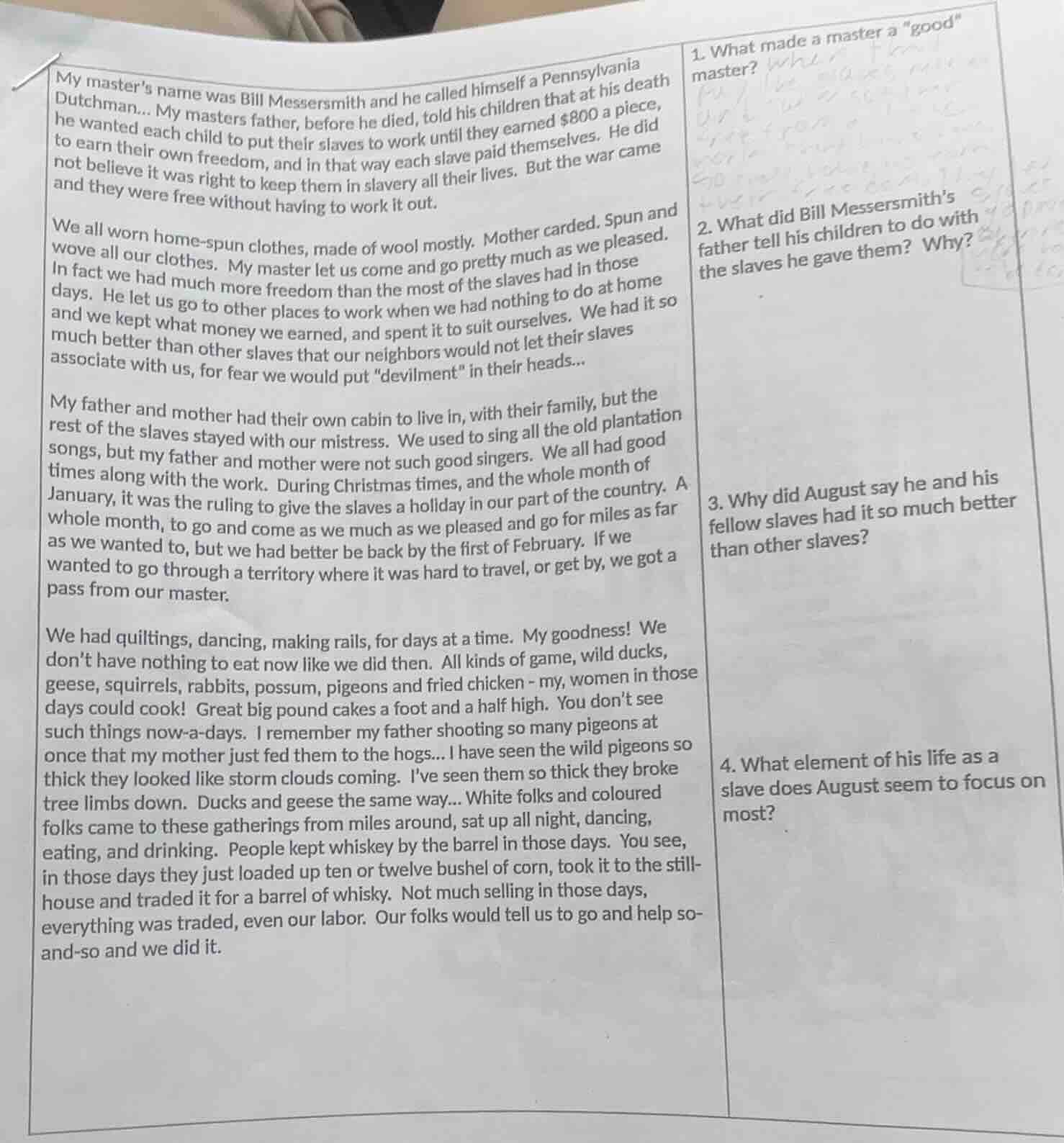
my masters name was bill messersmith and he called himself a pennsylvania dutchman... my masters father, before he died, told his children that at his death he wanted each child to put their slaves to work until they earned $800 a piece, to earn their own freedom, and in that way each slave paid themselves. he did not believe it was right to keep them in slavery all their lives. but the war came and they were free without having to work it out.
we all worn home-spun clothes, made of wool mostly. mother carded. spun and wove all our clothes. my master let us come and go pretty much as we pleased. in fact we had much more freedom than the most of the slaves had in those days. he let us go to other places to work when we had nothing to do at home and we kept what money we earned, and spent it to suit ourselves. we had it so much better than other slaves that our neighbors would not let their slaves associate with us, for fear we would put \devilment\ in their heads...
my father and mother had their own cabin to live in, with their family, but the rest of the slaves stayed with our mistress. we used to sing all the old plantation songs, but my father and mother were not such good singers. we all had good times along with the work. during christmas times, and the whole month of january, it was the ruling to give the slaves a holiday in our part of the country. a whole month, to go and come as we much as we pleased and go for miles as far as we wanted to, but we had better be back by the first of february. if we wanted to go through a territory where it was hard to travel, or get by, we got a pass from our master.
we had quiltings, dancing, making rails, for days at a time. my goodness! we dont have nothing to eat now like we did then. all kinds of game, wild ducks, geese, squirrels, rabbits, possum, pigeons and fried chicken - my, women in those days could cook! great big pound cakes a foot and a half high. you dont see such things now-a-days. i remember my father shooting so many pigeons at once that my mother just fed them to the hogs... i have seen the wild pigeons so thick they looked like storm clouds coming. ive seen them so thick they broke tree limbs down. ducks and geese the same way... white folks and coloured folks came to these gatherings from miles around, sat up all night, dancing, eating, and drinking. people kept whiskey by the barrel in those days. you see, in those days they just loaded up ten or twelve bushel of corn, took it to the still-house and traded it for a barrel of whisky. not much selling in those days, everything was traded, even our labor. our folks would tell us to go and help so-and-so and we did it.
- what made a master a \good\ master?
- what did bill messersmiths father tell his children to do with the slaves he gave them? why?
- why did august say he and his fellow slaves had it so much better than other slaves?
- what element of his life as a slave does august seem to focus on most?
- He was considered a "good" master because he allowed his slaves significant freedom: they could come and go as they pleased, work elsewhere when idle, keep their earned money, have their own cabin, and enjoy extended holidays.
- Bill Messersmith's father told his children to make each slave work until they earned $800. He believed this meant the slave "paid for themselves" and justified keeping them enslaved for life.
- August said they had it better because their master gave them far more freedom than neighboring slaveholders gave their slaves: they could move freely, work outside the plantation, keep their earnings, and neighbors feared their freedom would influence their own slaves.
- August focuses most on the relative freedoms, privileges, and positive social/community aspects of his enslaved life, like holidays, gatherings, food, and the autonomy he had compared to other slaves.

Snap & solve any problem in the app
Get step-by-step solutions on Sovi AI
Photo-based solutions with guided steps
Explore more problems and detailed explanations
- He let slaves have significant freedom: come/go freely, keep earned money, have their own cabin, and take long holidays.
- He told them to make each slave work until they earned $800. He thought this meant the slave "paid for themselves" and justified lifelong slavery.
- They had far more freedom than other slaves: they could work elsewhere, keep their money, move freely, and neighbors restricted their own slaves from associating with them over this.
- He focuses most on the relative freedoms, privileges, and positive social/community experiences (like holidays, food, gatherings) of his enslaved life.