QUESTION IMAGE
Question
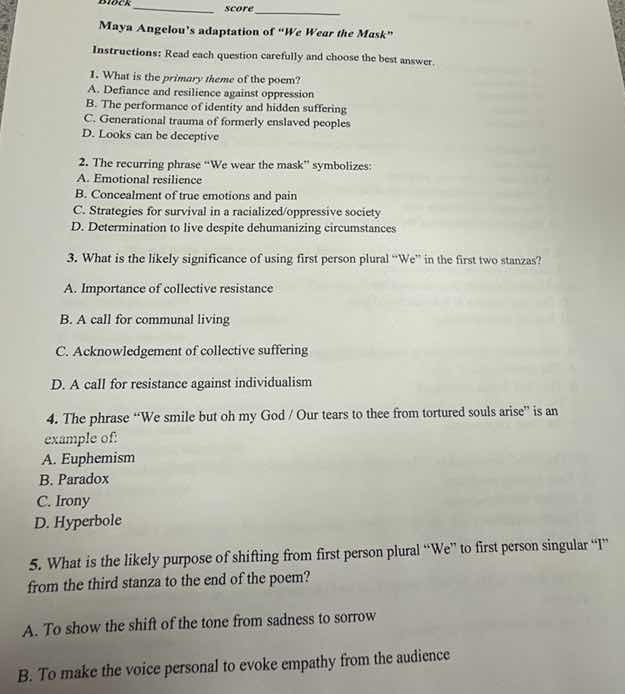
maya angelou’s adaptation of “we wear the mask”
instructions: read each question carefully and choose the best answer.
- what is the primary theme of the poem?
a. defiance and resilience against oppression
b. the performance of identity and hidden suffering.
c. generational trauma of formerly enslaved peoples
d. looks can be deceptive
- the recurring phrase “we wear the mask” symbolizes:
a. emotional resilience
b. concealment of true emotions and pain
c. strategies for survival in a racialized/oppressive society
d. determination to live despite dehumanizing circumstances
- what is the likely significance of using first person plural “we” in the first two stanzas?
a. importance of collective resistance
b. a call for communal living
c. acknowledgement of collective suffering
d. a call for resistance against individualism
- the phrase “we smile but oh my god / our tears to thee from tortured souls arise” is an
example of:
a. euphemism
b. paradox
c. irony
d. hyperbole
- what is the likely purpose of shifting from first person plural “we” to first person singular “i”
from the third stanza to the end of the poem?
a. to show the shift of the tone from sadness to sorrow
b. to make the voice personal to evoke empathy from the audience
- The core of Maya Angelou's adaptation of We Wear the Mask centers on the experience of oppressed groups hiding their pain while enduring hardship, with the mask as a key symbol of this hidden suffering and performative identity.
- The phrase "We wear the mask" directly represents the act of covering one's true, hurt feelings and pain to navigate the world.
- The first-person plural "We" unites the speaker with a group, highlighting that the suffering described is shared by many, not just an individual.
- The line contrasts a public smile (a show of happiness) with private tears from tortured souls, which is a contradiction between appearance and reality, a defining feature of irony.
- Shifting to "I" narrows the perspective to an individual, making the personal experience of suffering more intimate, which helps the audience connect and feel empathy for the speaker's pain.

Snap & solve any problem in the app
Get step-by-step solutions on Sovi AI
Photo-based solutions with guided steps
Explore more problems and detailed explanations
- B. The performance of identity and hidden suffering
- B. Concealment of true emotions and pain
- C. Acknowledgement of collective suffering
- C. Irony
- B. To make the voice personal to evoke empathy from the audience