QUESTION IMAGE
Question
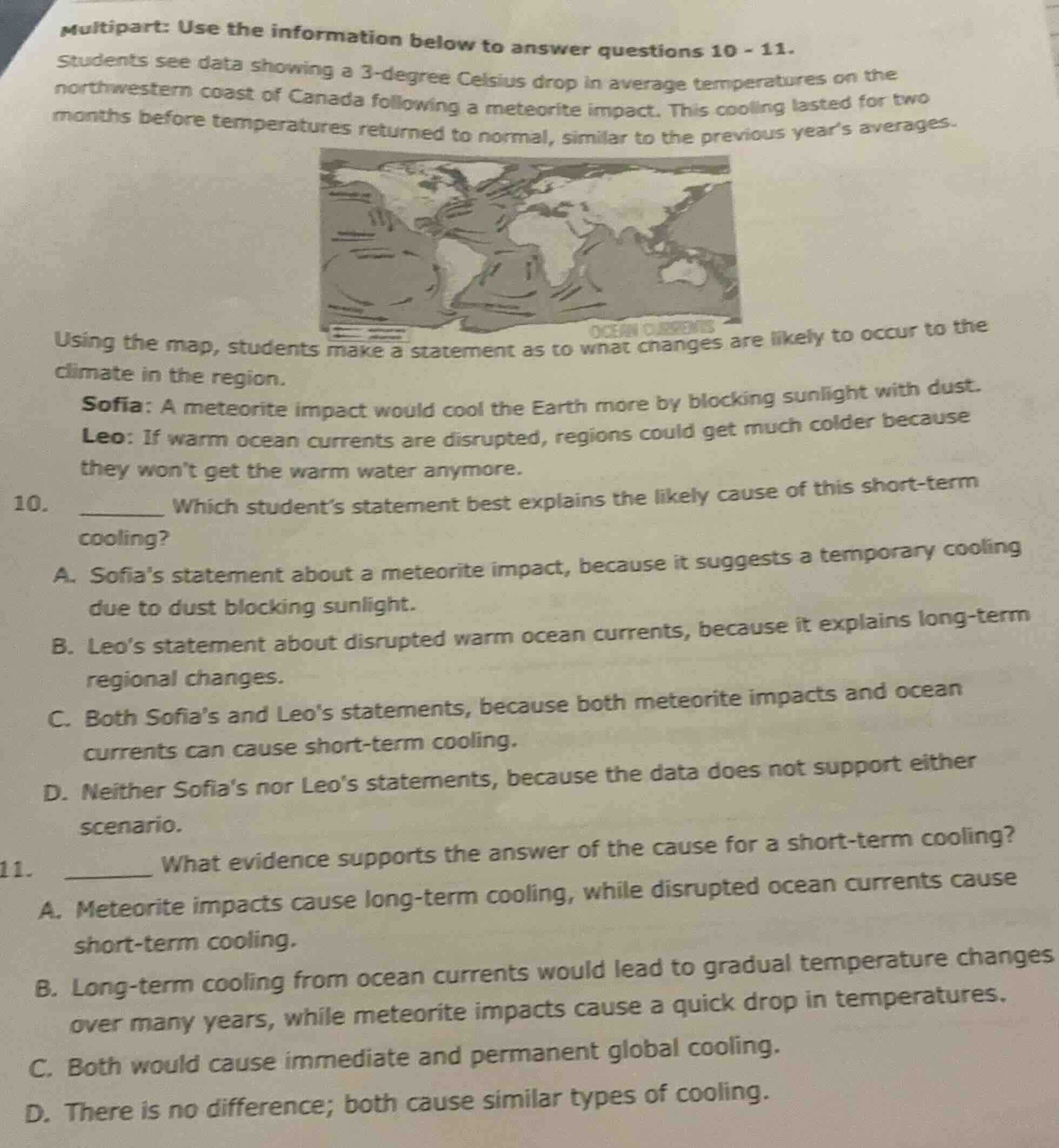
multipart: use the information below to answer questions 10 - 11.students see data showing a 3 - degree celsius drop in average temperatures on the northwestern coast of canada following a meteorite impact. this cooling lasted for two months before temperatures returned to normal, similar to the previous year’s averages.using the map, students make a statement as to what changes are likely to occur to the climate in the region.sofia: a meteorite impact would cool the earth more by blocking sunlight with dust.leo: if warm ocean currents are disrupted, regions could get much colder because they wont get the warm water anymore.10. ____ which student’s statement best explains the likely cause of this short - term cooling?a. sofias statement about a meteorite impact, because it suggests a temporary cooling due to dust blocking sunlight.b. leo’s statement about disrupted warm ocean currents, because it explains long - term regional changes.c. both sofia’s and leo’s statements, because both meteorite impacts and ocean currents can cause short - term cooling.d. neither sofia’s nor leo’s statements, because the data does not support either scenario.11. ____ what evidence supports the answer of the cause for a short - term cooling?a. meteorite impacts cause long - term cooling, while disrupted ocean currents cause short - term cooling.b. long - term cooling from ocean currents would lead to gradual temperature changes over many years, while meteorite impacts cause a quick drop in temperatures.c. both would cause immediate and permanent global cooling.d. there is no difference; both cause similar types of cooling.
For Question 10:
The scenario describes short-term (2-month) cooling after a meteorite impact. Sofia's statement addresses temporary cooling from sunlight-blocking dust, which matches the short timeline. Leo's statement refers to ocean current disruption, which causes long-term changes, not the short cooling observed.
For Question 11:
The key evidence is the difference in cooling timelines: ocean current disruption leads to slow, long-term regional changes, while meteorite impact dust causes rapid, short-term cooling that aligns with the 2-month temperature drop described.

Snap & solve any problem in the app
Get step-by-step solutions on Sovi AI
Photo-based solutions with guided steps
Explore more problems and detailed explanations
- A. Sofia's statement about a meteorite impact, because it suggests a temporary cooling due to dust blocking sunlight.
- B. Long-term cooling from ocean currents would lead to gradual temperature changes over many years, while meteorite impacts cause a quick drop in temperatures.